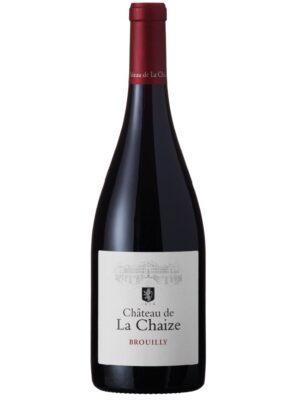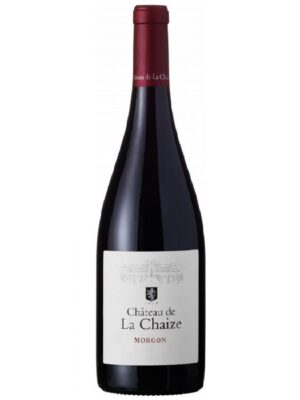

Located in Odenas (Rhône), the Domaine de la Chaize extends over 250 hectares, including 99 hectares of vines, which makes it the largest property in one piece in Beaujolais cru. Today, the Château is the emblem of the most prestigious Beaujolais Cru estate.
“Morgon” is a blend of a selection of vineyard sites located in the Morgon appellation, on deep very altered granites and ancient alluvials of 40 years (average) vines.
The Durup family, winegrowers from father to son, have been cultivating vines in Chablis for fifteen generations. The succession of Jean Durup, who reconstituted the vineyard of Château de Maligny, is ensured by Jean-Paul and Valérie Durup, assisted by Romain Ménissier, operations director. The different wines marketed under the prestigious labels “Château de Maligny”, with the best exposures, and “Églantière” all come from the unique variety of grape varieties used in Chablis: Chardonnay.
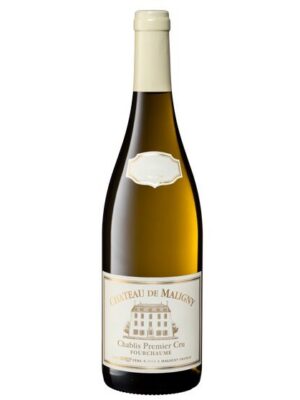
The Chablis Premier Cru Fourchaume is the most famous and the most commercial one of the Premiers Crus of Chablis, due first to its area (130 hectares for 850 hectares of Premiers Crus) and to its closeness to the Grands Crus. With 18 hectares planted in the appellation Chablis Premier Cru Fourchaume, Durup estate is the major producer of this appellation in the area.
The wine produced in this appellation is certainly the rounder of all those ones produced in the Chablis vineyard. It is also the suppler but with a good structure typical of the Premiers Crus.
For more info, visit Jean Durup – Château de Maligny website.
The Durup family, winegrowers from father to son, have been cultivating vines in Chablis for fifteen generations. The succession of Jean Durup, who reconstituted the vineyard of Château de Maligny, is ensured by Jean-Paul and Valérie Durup, assisted by Romain Ménissier, operations director. The different wines marketed under the prestigious labels “Château de Maligny”, with the best exposures, and “Églantière” all come from the unique variety of grape varieties used in Chablis: Chardonnay.
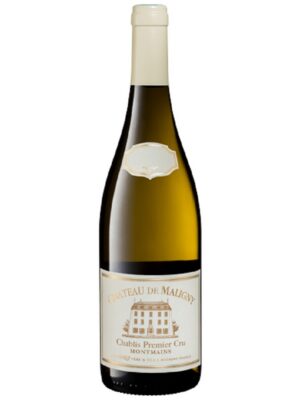
The Chablis Premier Cru « Montmain » is one of the most renowned Premier Crus of Chablis. The “Montmains” are located on a medium-size hill between parcels of “Vaillons” and “Chablis”. The original name was “the Mont moyen” and became “Montmain” through the centuries.
The Chablis Premier Cru Montmains is a wine a bit heavier than the other Chablis. Deep and very subtle, its characteristics are often neighbouring to those of the best white wines harvested in Côte d’Or.
For more info, visit Jean Durup – Château de Maligny website.
The Durup family, winegrowers from father to son, have been cultivating vines in Chablis for fifteen generations. The succession of Jean Durup, who reconstituted the vineyard of Château de Maligny, is ensured by Jean-Paul and Valérie Durup, assisted by Romain Ménissier, operations director. The different wines marketed under the prestigious labels “Château de Maligny”, with the best exposures, and “Églantière” all come from the unique variety of grape varieties used in Chablis: Chardonnay.
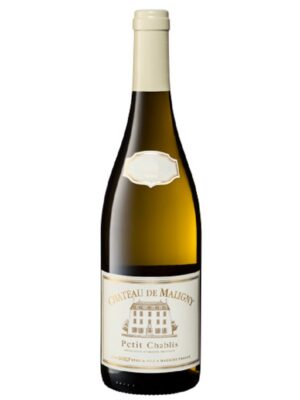
The Petit Chablis of Domaine Durup is produced on about 30 hectares. It is the major estate in the appellation Petit Chablis. The vines representative of this appellation are in average 30 years old. The vinification is made in the tradition of Chablis.
For more info, visit Jean Durup – Château de Maligny website.
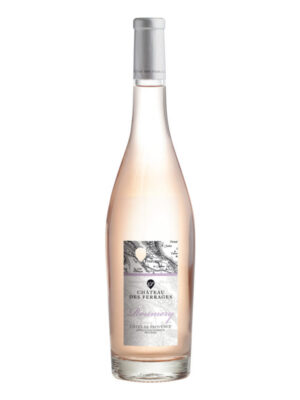
Cherry-picked by Mathilde Chapoutier Selection, the Château des Ferrages domain is in Pourcieux, in the prime plots of the Sainte-Victoire appellation.
It is here that Côtes de Provence wine finds its unique origins.
Vin biologique – Organic wine.
For more info, visit Château des Ferrages by M. Chapoutierwebsite.
VARIETALS
Cinsault, Grenache, Syrah, Rolle and Clairette
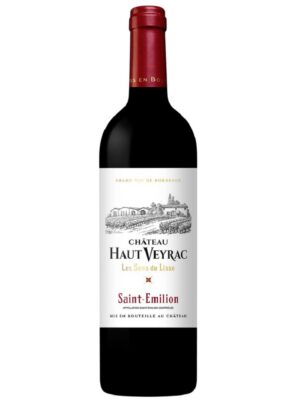
The Château Haut-Veyrac property, owned by the Castaing family, is located on one of the hills overlooking the village of Saint-Émilion in Saint-Étienne de Lisse. The vineyard now extends over an exceptional terroir of 9 hectares in one piece. The clay-limestone soil makes it possible to cultivate the Merlot Noir and Cabernet Franc grape varieties in the best conditions.
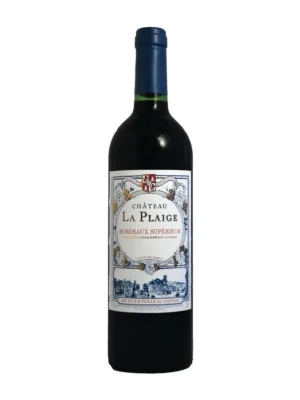
Château La Plaige sits on a hillside overlooking the river Dordogne on the eastern edge of the Bordeaux appellation. The combination of clay and limestone in the soil means that the owner Frédéric Naud can make a wine that is powerful and elegant at the same time. Since 2000, Frédéric Naud and his wife Lise have been managing the vineyard with passion and respect for the family’s winemaking tradition, established by the Naud family for five generations.
A really solid Bordeaux Supérieur, with an immediately recognizable Bordeaux’s profile, unusual balance and great value.
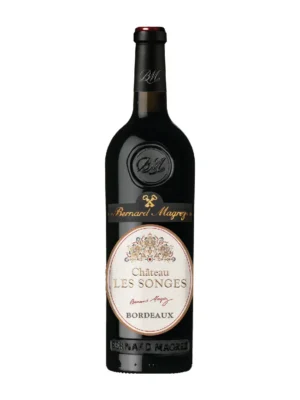
Bernard Magrez’s journey is that of passion, a constant desire for improvement, know-how and exceptional success which has its roots first in Bordeaux, in the Grands Crus Classés, then in other prestigious terroirs in France and around the world. Bernard Magrez’s journey is that of passion, a constant desire for improvement, know-how and exceptional success which has its roots first in Bordeaux, in the Grands Crus Classés, then in other prestigious terroirs in France and around the world.
Located in the town of Pompignac, “Château Les Songes boasts a beautiful clay and limestone terroir where Merlot, the ‘king’ of grape varieties on
the Right Bank flourishes. This supple, fruity and full-bodied wine reflects the style of the area, lively and energetic.
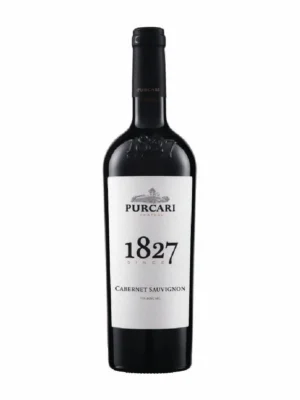
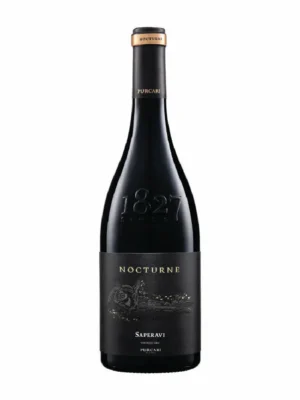
Château Purcari, located in the southwest of the country within the IGP Ștefan Vodă, benefits from rolling hills, limestone bedrock, and fertile black soil — an ideal terroir for grape cultivation. True values do not change with time. Purcari remains Purcari. Since 1827.
Wine has been made in Moldova for thousands of years, but it is only in the last couple of centuries that this small country has drawn international attention for its excellent wines. In 1827 Tsar Nicholas I issued a special decree recognising Château Purcari as the first official winery in Bessarabia which is today known as Moldova. This iconic estate is located close to the Black Sea in the south-eastern corner of Moldova. French settlers in the region quickly noticed the similarities between the local terroir and their native Bordeaux since the area sits at the same latitude as the famous French wine region and also boasts the same rubidium-rich soil types.
This makes it particularly well-suited to Bordeaux varietals like Cabernet Sauvignon which thrive here.
Château Purcari, located in the southwest of the country within the IGP Ștefan Vodă, benefits from rolling hills, limestone bedrock, and fertile black soil — an ideal terroir for grape cultivation. True values do not change with time. Purcari remains Purcari. Since 1827.
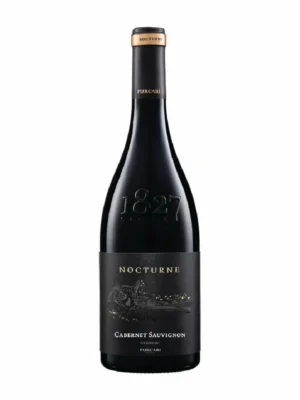
The Nocturne range from Chateau Purcari brings together a series of excellent value wines made with grapes harvested manually at night to preserve their freshness and the richness of their aromas.
Nocturne Cabernet Sauvignon is both powerful and robust, complex and well structured.
Château Purcari, located in the southwest of the country within the IGP Ștefan Vodă, benefits from rolling hills, limestone bedrock, and fertile black soil — an ideal terroir for grape cultivation. True values do not change with time. Purcari remains Purcari. Since 1827.
The Nocturne range from Chateau Purcari brings together a series of excellent value wines made with grapes harvested manually at night to preserve their freshness and the richness of their aromas.
This 100% Saperavi wine is endowed with rich scents of plum, cassis and blackberries. Characteristic of the Georgian grape, it is deep ruby in colour, with glints of violet.
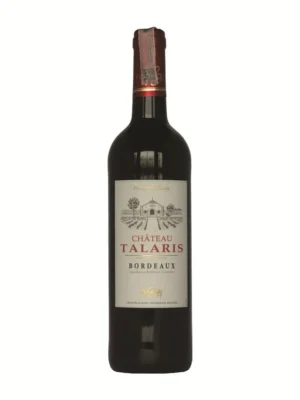
Created in 1936, Château Talaris is a family estate of 7 hectares located in Tauriac (Gironde), close to the Pair-non-pair caves.
The vineyard of Château Talaris, lead by its owner Ms. Christelle Rios, has been certified sustainableHVE (High Environmental Value) and has been in the process of conversion to organic farming since 2020.
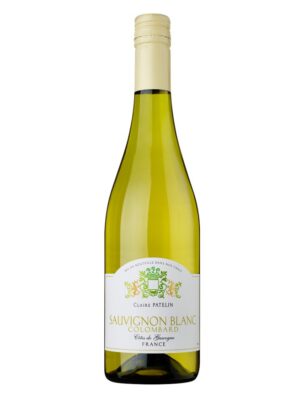
From France, this crisp and zesty blend will take you through a wine experience, having Claire Patelin encapsulated in this bottle a bit of the French way of life.
The Codex Reserve brand is the result of mixed inspirations. Its enigma comes from the winemakers and their desire to protect the terroirs from which they sourced the grapes. Specially selected to create this premium range, these vineyards offer the perfect conditions to grow juicy, full-flavoured grapes that make uniquely flavoured wines.
This specific Cabernet Sauvignon comes from carefully selected terroirs from the South of France, benefiting from hot sunny days and cooler nights at the end of summer. This aspect allows the harvest of balanced grapes, with lovely natural acidity and fruit-forward profile. The vines are planted on well-drained silty soils, with gravels retaining heat.
Of course, the exact location of such rare terroirs is a well-kept secret which is why the Codex brand is so mysterious…
Casa Santos Lima was created to ensure the continuous development of Santos Lima’s wine producing activity created several generations ago. This activity was first started by Joaquim Santos Lima, who, by the turn of 19th century, was already a great producer and exporter of Portuguese wines. Still a family owned company, today is present in the regions of Lisboa, Algarve, Alentejo, Vinho Verde and Douro.
This wine was made quite close to Lisboa, in a place where the vineyards sprawl through smooth hills also offering unique landscapes. With an excellent colour and aromatic exuberance, this is a wine with notes of red ripe fruits and spices, having been partially aged inoak barrels. With a good body and firm tannins, it finishes long and balanced.