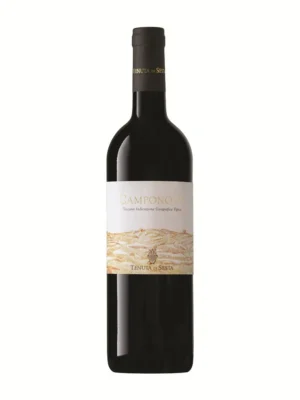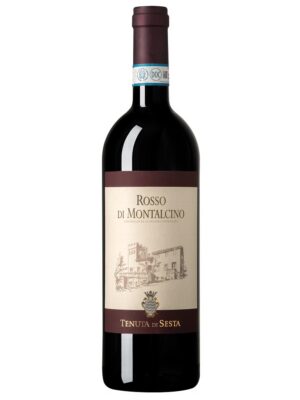

Owned and run by the Ciacci family, Tenuta di Sesta is recognized as one of the historical estates in Montalcino. The Ciacci’s rely on traditional ageing in big oak barrels and renewed vineyard management based on climatic changes and in favor of the territory to obtain wines that best express the territory of Montalcino. The Brunellos in particular are marked by exotic perfumes and rich complexities.
Young and fresh wine a strong character linked to the Montalcino territory: it originates from the union of two local varieties, Sangiovese and Colorino, which blend together giving at first the structure and then the intense color. After ageing in stainless steel vats, it shows a ruby red color, hints of red fruit on the nose and fresh and balanced flavor. A pleasant wine to drink every day because of its freshness and aroma. Even though it is so drinkable and very approachable on the palate, it maintains the typical strong characteristics of Montalcino wines.
Owned and run by the Ciacci family, Tenuta di Sesta is recognized as one of the historical estates in Montalcino. The Ciacci’s rely on traditional ageing in big oak barrels and renewed vineyard management based on climatic changes and in favor of the territory to obtain wines that best express the territory of Montalcino. The Brunellos in particular are marked by exotic perfumes and rich complexities.
Sangiovese in its natural state, considered to be the younger brother of Brunello. It unites the imposing structure of Brunello with the freshness and vivacity of a young wine. It should be drunk young, although it does last with ageing. It shows a well-orchestrated structure with good length and without aggressive tannins, very balanced, intense and elegant.
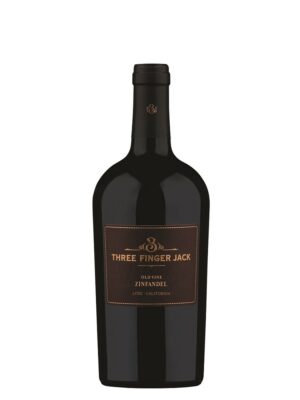
Inspired by the daring character of the legendary outlaw who roamed the Sierra foothills of California during the Gold Rush days in search of riches. This wine boasts immense structure worthy of Jack’s name.
Lodi lies between the San Francisco Bay and the Sierra Nevada Mountains, with a classic Mediterranean-like climate featuring warm days and cool evenings. As the Zinfandel Capital of the World, Lodi produces over 40 percent of California’s premium Zinfandel. It has long been recognized globally as the home of highly acclaimed Old Vine Zinfandels, with some plantings dating back to 1888, taken care by 4th and 5th generation winegrowers.
For more info, visit Three Finger Jack by Delicato Family Wines website.
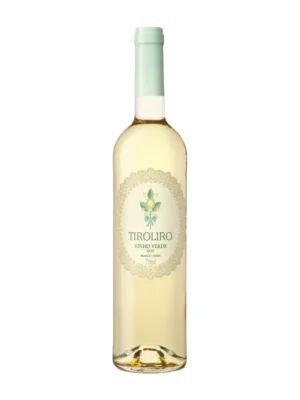
Located in the Demarcated Region of Vinhos Verdes, in Lousada, about 40 km from the city of Oporto, the record of agricultural production of Casa de Vila Verde dates to sec. XVII, being therefore long the tradition of the production of Vinho Verde.
Perfect combination between the aromas of four of the most famous grape varieties of the region.The result is a young, fresh, fruity wine, with a great crispy acidity.
The Cantina Produttori di Valdobbiadene Val D’Oca is one of the leading producers of Prosecco, the most famous Italian sparkling wine made with Glera grape, cultivated and vinified in the hills of Valdobbiadene, the birthplace of Valdobbiadene Prosecco Superiore DOCG. However Val d’Oca also produce Prosecco DOC coming from lands in the province of Treviso in a beautiful setting amid rolling hills between Asolo and Conegliano.
This sparkling wine is made with grapes harvested exclusively by hand and coming from a single production year which you will find indicated on the label together with the wording “Millesimato”, a guarantee of quality.
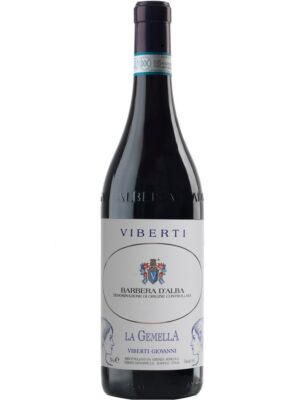
Last born in the Viberti house, her name is a dedication to Maria (twin by birth), wife of Giovanni Viberti, a woman of humble origins who made a fundamental contribution to the growth of the company and her family. Cook for over 50 years of the family inn, alias Buon Padre, tenacious and severe mother, and great passionate of Barbera, in 2004 observed how many of the most beautiful vineyards of Barbera had been substituted with the variety Nebbiolo, more profitable grape than the same Barbera considered for years the “wine of the poor”, thanks to a marked acidity and a difficult drinkability. The project stems from the intuition of Claudio, the youngest and newest son in the management of the family business, The plant of a new vineyard with a higher plant density is born. The goal, then achieved over time is a wine with a great concentration, a particular amiability and a nose with a clear and intense red fruit. The acidity that accompanies the concentration makes the wine extremely elegant and fascinating.
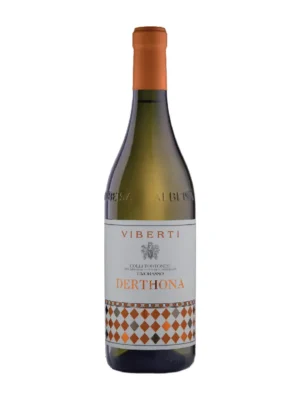
Derthona represents the finest expression of the Timorasso grape in its place of origin. The name itself evokes a connection to the land: “Derthona” is the ancient Latin name for the city of Tortona, the urban center and heart of the four valleys that have always cultivated this rare and precious grape. Already cultivated in the Middle Ages, Timorasso is the oldest and rarest native white grape variety in Piedmont, as well as one of the few capable of producing great white wines that can be aged for a long time.
The Viberti Giovanni vineyards are located in the municipality of Monleale, a historic medieval stronghold and protagonist of the Timorasso Renaissance in the 1980s, thanks to the vision and determination of the young winemaker Walter Massa. The 9.5 hectares of vineyards extend across the upper part of the town, at 400 meters above sea level, along the road connecting Monleale to the municipality of Montemarzino. The east-southeast exposures ensure balanced ripening, while the light-colored, clayey soils with a good presence of limestone provide an ideal habitat for Timorasso.
Often referred to as the “White Barolo” due to its full body and significant aging potential, this wine is made from the native Timorasso, a delicate yet distinctive grape variety: while fresh in its youth, it is highly regarded for its ability to evolve, developing hydrocarbon or kerosene-like notes similar to aged Riesling.
Since 1885, the Vicente Gandía seal gives all its products common characteristics: high quality, reasonable prices, and stability between one harvest and another. Wines that transmit elegance, complexity, softness and balance.
Today, you can find Vicente Gandía in 90 countries on 5 continents, as the largest winery in the Valencian Community. In addition, in 2014 it won the award for the best Spanish winery in the prestigious international competition AWC Vienna. That same year, the World Association of Writers and Journalists of Wines and Spirits included it in their ranking of the top 50 wineries in the world. In 2018, the European Congress of Enogastronomic Brotherhoods (CEUCO) awarded the “Aurum Europa Excellente” Prize to Vicente Gandía as “Best European Winery”, reconfirmed also in 2022.
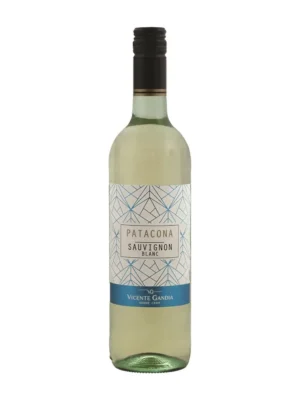
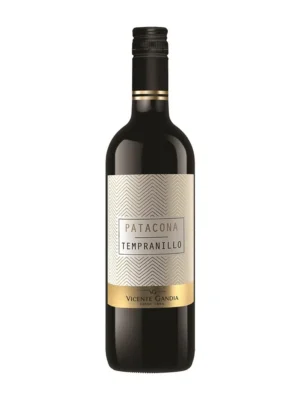
Vicente Gandía Patacona’s line is produced between Utiel-Requena and Valencia and its wines are available in white and red. You can choose from reds as fruity Garnacha or the slightly firmer Tempranillo. While for whites, you can choose from the tropical Verdejo and this fresh Sauvignon Blanc.
Since 1885, the Vicente Gandía seal gives all its products common characteristics: high quality, reasonable prices, and stability between one harvest and another. Wines that transmit elegance, complexity, softness and balance.
Today, you can find Vicente Gandía in 90 countries on 5 continents, as the largest winery in the Valencian Community. In addition, in 2014 it won the award for the best Spanish winery in the prestigious international competition AWC Vienna. That same year, the World Association of Writers and Journalists of Wines and Spirits included it in their ranking of the top 50 wineries in the world. In 2018, the European Congress of Enogastronomic Brotherhoods (CEUCO) awarded the “Aurum Europa Excellente” Prize to Vicente Gandía as “Best European Winery”, reconfirmed also in 2022.
Vicente Gandía Patacona’s line is produced between Utiel-Requena and Valencia and its wines are available in white and red. White is available as fresh Sauvignon Blanc or the more tropical Verdejo. With the red Patacona wines you can choose from the fruity Garnacha and this slightly firmer Tempranillo.
Mottura wines are modern, but have a long history to tell. Since 1927, Mottura has been investing into the wine-making traditions of Salento, into the quality of its product and into modern and sustainable growth: made from native grapes such as Primitivo and Negroamaro, their aromas and bouquets reflect the spirit of this land, its authenticity and its energy.
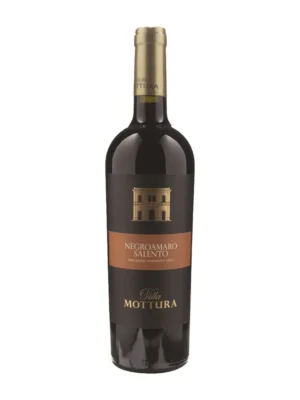
This wines is made from the Negroamaro grape and a very small addition of Malvasia nera di Lecce. Produced in the town of the same name in the province of Lecce, it has been cultivated in the southern area of Puglia since the 6th century BC.
The Kaiserbaum winery, based in Gerolsheim (Palatinate), was named after the purple-blue flowering Paulownia tree (Paulownia tomentosa), which parents Frithjof and Margit Hundinger planted in the courtyard of their winery in 1980 for the birth of their son Gerald. Legend has it that the mystical phoenix bird, which has symbolized immortality, luck and fertility since late antiquity, settles on this tree. The Hammel-Hundinger winery was founded in 1963 by Frithjof Hundinger Senior and has been in family ownership ever since. The winery was given its current name when the 2011 vintage was introduced. Its 25 hectares of vineyards offer a variety of soil types and microclimates. The company’s red wines are traditionally matured in wooden barrels, while the white wines are reductively fermented in stainless steel.
In the third generation, Gerald Hammel-Hundinger has taken the family business to a new level. From “easy drinking” to Piwi to ice wine, everything is produced here sustainably and to an extremely high standard. As a reward, the winemaker, who is certified as a “Partner Company for Nature Conservation”, won several gold awards, such as the “Best Winery Germany – Mundus Vini Summer Tasting 2023”.
“I am realistic, calm and clear in my ideas. My interest in new things and my creativity give me strength and allow me to go my own way.” – Gerald Hammel-Hundinger
For more info, visit Weingut Am Kaiserbaum Hummel-Hundingerwebsite.
The Kaiserbaum winery, based in Gerolsheim (Palatinate), was named after the purple-blue flowering Paulownia tree (Paulownia tomentosa), which parents Frithjof and Margit Hundinger planted in the courtyard of their winery in 1980 for the birth of their son Gerald. Legend has it that the mystical phoenix bird, which has symbolized immortality, luck and fertility since late antiquity, settles on this tree. The Hammel-Hundinger winery was founded in 1963 by Frithjof Hundinger Senior and has been in family ownership ever since. The winery was given its current name when the 2011 vintage was introduced. Its 25 hectares of vineyards offer a variety of soil types and microclimates. The company’s red wines are traditionally matured in wooden barrels, while the white wines are reductively fermented in stainless steel.
In the third generation, Gerald Hammel-Hundinger has taken the family business to a new level. From “easy drinking” to Piwi to ice wine, everything is produced here sustainably and to an extremely high standard. As a reward, the winemaker, who is certified as a “Partner Company for Nature Conservation”, won several gold awards, such as the “Best Winery Germany – Mundus Vini Summer Tasting 2023”.
“I am realistic, calm and clear in my ideas. My interest in new things and my creativity give me strength and allow me to go my own way.” – Gerald Hammel-Hundinger
For more info, visit Weingut Am Kaiserbaum Hummel-Hundingerwebsite.