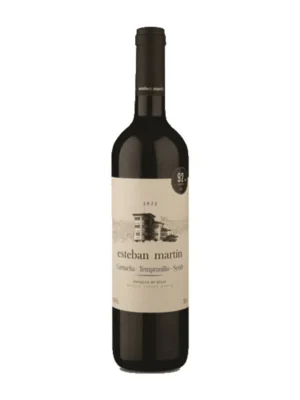

The enterprising Esteban Martín family has always had a very close relationship with the countryside and farming. The family business began in 1964 with the creation of the Granja Virgen del Rosario farm. In addition to the farm, the winery and a transport company also form part of Grupo Esteban Martín, the group fully owned by the Esteban Martín family.
In 1985, Miguel Antonio Esteban decided to buy 150 hectares of vineyards in the best lands of the DOP Cariñena, located at the foot of the Iberian Mountains, in the heart of the Ebro Valley. Year after year he was acquiring new parcels and already in 2003 he decided to build his own winery.
Produced with organic practices and suitable for vegans, this wine reflects Bodegas Esteban Martín’s dedication to quality and respect for nature.
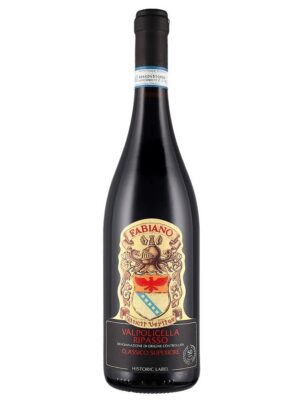
Originally Venetian wine traders in 1912, the Fabiano family moved to Verona in 1956 to produce wine on a larger scale, sourcing fruit from Estate and contract vineyards in Soave, Bardolino, and Valpolicella.
From vineyards located in the hills of Valpolicella Classica, with particular interest in the municipalities of Negrar and S. Pietro in Cariano, on loose red soils with good presence of limestone, this is a wine of ancient origins (hence the historic label) for its conception, where the Ripasso technique represents the tradition of Valpolicella and allows to obtain a wine with a singular complexity and personality.
The name Cielo e Terra (literally Sky and Land, or Heaven and Earth) recreates a perfect marriage, where Heaven is represented by the family of the same name and the Land is identified with the expert hands of the winegrower partners working in the vineyards that yield these wines.
The grapes for this red wine grow in IGT Puglia. The grapes are picked early (hence Primitivo) to ensure the freshness, and youthfullness of the fruit.
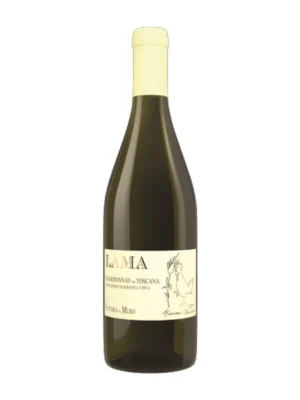
Fattoria Il Muro has been owned by the Pancaro family for about 200 years and has always been dedicated to viticulture, thanks to the favorable environmental conditions. The presence of soils rich in galestro and the climate, characterized by strong temperature variations due to the proximity to the Alpe di Poti, create a micro-environment that enhances the organoleptic qualities and healthiness of the grapes. This allows for the adoption of environmentally friendly cultivation practices. The vineyards and olive groves extend mainly on hilly terrain that gently slopes towards the valley plain of the Castro stream.
The name Lama comes from the name of a close “podere”, in which the family of a farmer used to live during the old times of “mezzadria”. “Mezzadria” was an old way to conduct the farm which envisaged the division of land into small lots (podere) inhabited and cultivated by peasants who paid the estate owners with half the product of their land.
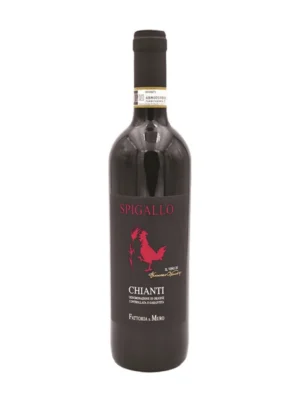
Fattoria Il Muro has been owned by the Pancaro family for about 200 years and has always been dedicated to viticulture, thanks to the favorable environmental conditions. The presence of soils rich in galestro and the climate, characterized by strong temperature variations due to the proximity to the Alpe di Poti, create a micro-environment that enhances the organoleptic qualities and healthiness of the grapes. This allows for the adoption of environmentally friendly cultivation practices. The vineyards and olive groves extend mainly on hilly terrain that gently slopes towards the valley plain of the Castro stream.
At Fattoria Il Muro they started to call their Chianti, Spigallo, in 2011, when they changed the farm’s image and decided to adopt a cock pecking a sheaf of wheat as their logo. The decision was made because they found this picture in their villa since in the past it was used as the family crest. The name Spigallo is a pun because it’s the union for the Italian words “spiga” (sheaf of wheat) and “gallo” (cock) which are both in the final, symbolic logo.
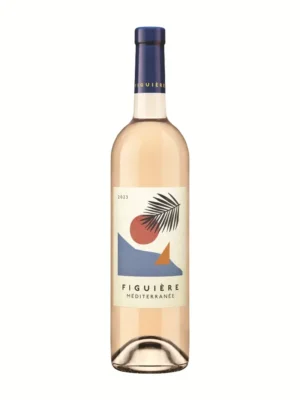
Figuière is a pioneering maker of superior Provence wines and an ambassador of a new generation of top-level winemakers dedicated to their terroir.
Figuière strives to promote the superiority and creativity of the wines of Provence with a novel approach to rosé, designing it just like a “fine wine” in terms of time, craftsmanship and terroir. Figuière wines are the product of an unparalleled union between Provence and Burgundy, the La Londe terroir and the mastery of craft winemakers specialized in great Burgundy whites. The result is mineral and fruity wines that are understated and unexpected, love playing on contrasts and constantly finding groundbreaking combinations with a balanced, authentic and down-to-earth style focused on natural elegance.
New look for Le Saint André with the release of the new range “Méditerranée” definitely without complexes and modern, colorful and elegant. Mediterranée wines celebrate the unique art of living of Southern France, whose true elegance lies in its simplicity : an invitation to pleasure, escape and travel.
Figuière is a pioneering maker of superior Provence wines and an ambassador of a new generation of top-level winemakers dedicated to their terroir.
Figuière strives to promote the superiority and creativity of the wines of Provence with a novel approach to rosé, designing it just like a “fine wine” in terms of time, craftsmanship and terroir. Figuière wines are the product of an unparalleled union between Provence and Burgundy, the La Londe terroir and the mastery of craft winemakers specialized in great Burgundy whites. The result is mineral and fruity wines that are understated and unexpected, love playing on contrasts and constantly finding groundbreaking combinations with a balanced, authentic and down-to-earth style focused on natural elegance.
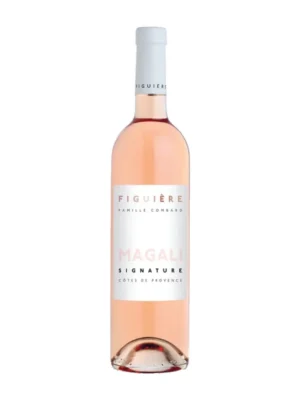
Magali is an easy drinking rosé named after the Estate’s commercial director, the second Combard daughter in the family. Since the acquisition of Château Barbeiranne in 2019, it is a blend of two very beautiful terroirs: La Londe’s schist soils with maritime influence and Pignans’ claylimestone soils, in the inland valley of the Var.
Gnarly Head wines began with a vision and a vine. In 2004, on a mission to make a serious Zinfandel, winemakers journeyed to Lodi in central California in search of the famed old vine Zinfandel vineyards. Grown in the head-trained, spur-pruned method for over a century, these vigorous gnarled vines produced more ripened red fruit than they had ever seen. They took it as a challenge to create the biggest, boldest Zinfandel they had ever made. The result was authentic, structured wines with a hint of something unexpected. Something Gnarly.
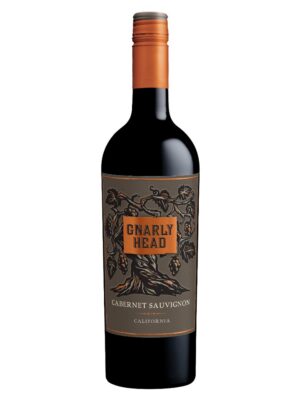
This Cabernet Sauvignon is a bold wine grown from some of the oldest vines in California. Older vines produce fewer grape clusters, but the small berries yield intense, dark fruit flavors.
Gnarly Head wines began with a vision and a vine. In 2004, on a mission to make a serious Zinfandel, winemakers journeyed to Lodi in central California in search of the famed old vine Zinfandel vineyards. Grown in the head-trained, spur-pruned method for over a century, these vigorous gnarled vines produced more ripened red fruit than they had ever seen. They took it as a challenge to create the biggest, boldest Zinfandel they had ever made. The result was authentic, structured wines with a hint of something unexpected. Something Gnarly.
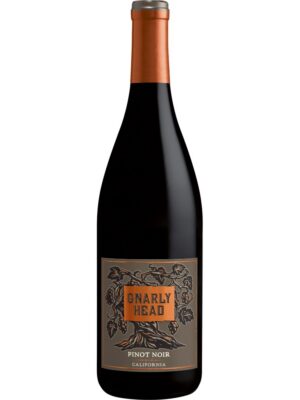
Gnarly Head Pinot Noir takes “the heartbreak grape” for a walk on the wild side. Grapes for this powerful pinot came from California growing regions notorious for growing great Pinot Noir: Monterey, Lodi and the North Coast. Fruit from each area brought a different layer to the overall blend. Vineyards in the Lodi region—a little-known source of fruit for many sparkling wine houses—provided the bold backbone for Gnarly Head Pinot Noir. North Coast fruit brought a wild element of smoky, savory aromas and flavors, while the Monterey fruit added a pure, ripe Bing cherry characteristic made famous by the region.
Graf (Count) Johann IV von Katzenelenbogen was one of the founders of the success of the Riesling grape variety. In 1435, at his behest, vines of a then new, white variety called Riesling were planted.
The grapes for its production are grown on shale and alluvial soils located on the banks of the Rhine, under the influence of a mild, almost Mediterranean climate. The wine-making traditions of the region were laid in the monastic farms in the early Middle Ages.
The wine is named in honor of Count Rheingau – Johann IV Katzelenebogen, who in 1435 ordered to plant 22 vines of a new grape variety in one of his vineyards. The name of the new variety was Riesling. So Johann IV inscribed his name in the history of the greatest white grapes, and his possessions in the Rheingau are still called the “Riesling’s cradle”.
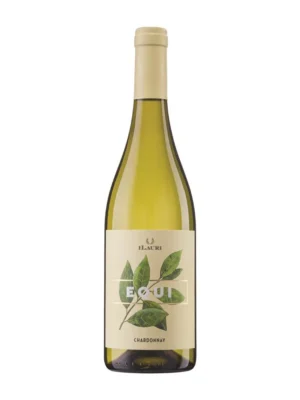
The name “iLauri” stems from the ancient roots of our birth place, Loreto Aprutino, once covered in Laurus nobilis, or laurel trees.
Chardonnay was introduced into the Abruzzi at the end of the nineteenth century and was immediately successful in terms of quality. Today, it is recognized as one of its most popular grape varieties.
Equi is a defense for freedom, a plea for justice and equality after several trademark disputes with industry giants over the name of this wine.
Eco-compatible farming methods. 100% produced with clean and renewable wind-generated energy of sustainability.
Kalfu means “Blue” in Mapudungun, the language of the aboriginal Mapuche people of the region. It represents the color that provides a myriad of sensations: blue, like the Pacific Ocean’s intense blue; and blue, like the free sky, acting as an accomplice of and witness to the mysterious origins of life.
Molu means West or “where the sun sets”. History tells us that the mapuche saw the stars in the sky over the Pacific Ocean and as the earth was rotating, they would hide in the sea and become starfish. At that time no one knew that the earth was round and turning; back then they believed the stars were falling into the deep darkness of the ocean.
Located in the town and region of Robertson, Klippenkop is one of the most famous wineries in South Africa. The estate got established in 1941 as a venture and endeavour when several families came together with the same aim and objective in the district of Cape Winelands. The winery derives its name from two separate terms- “klippen” and “kop.” The former is a topographical or geographical term that refers to a rock’s outcrop. On the other hand, the latter is a word that means head or hillock in the African language.
Produced in an early drinking style with well integrated wood and a soft smooth finish.
Located on a schist Terroir, typical of Languedoc, and with a very sunny Mediterranean microclimate, La Cave de Roquebrun produces wines in AOC Saint-Chinian-Roquebrun, AOC Saint-Chinian, AOC Languedoc and IGP Pays d’Oc, all original and high quality wines.
“La Burgondie” was the historical region of France that gave rise to the term Burgundy. The legendary little knight character that appears on the bottles truly captures the essence of La Burgondie. Courageous, confident and loyal. A forward-thinking, like-minded group of individuals who are fiercely proud of their Burgundian roots, their beautiful region and their wines. The same wines, produced using environmentally friendly farming methods, which are evocative of the hard-working co-operative-winemaker families who give their all, and have done so for generations.
This wine made from the Aligoté grape variety is the result of a plot selection. It draws all its singularity from the Côte Chalonnaise, in the heart of Burgundy. The vines are planted on limestone and marl hills, rich in silica. The soils are strewn with pebbles, flints called “chailles” or “chailloux”.