
The Vermentino of the Lunae winery is one of the best creatures of Paolo Bosoni, founder and soul of this appreciated reality enclosed between the blue mirror of the Ligurian Sea and the green panorama of Lunigiana. Lunae’s philosophy is as simple as it is decisive: to exploit all the knowledge of its territory to transform a deep and rooted link over time into a wine that knows how to weave tradition and recent developments in the wine industry.
The Black Label is a multifaceted and harmonious Vermentino, of great persistence. Vinified and left to mature in steel tanks only, it is a white that enhances the most intimate characteristics of the most typical of the varieties of this beautiful area of Liguria. In fact, it is surprising for its freshness and depth, elegance and fabric. Not only that, it is a Vermentino capable of surprising even after many years from the harvest, if well preserved in the cellar.
The Vermentino of the Lunae winery is one of the best creatures of Paolo Bosoni, founder and soul of this appreciated reality enclosed between the blue mirror of the Ligurian Sea and the green panorama of Lunigiana. Lunae’s philosophy is as simple as it is decisive: to exploit all the knowledge of its territory to transform a deep and rooted link over time into a wine that knows how to weave tradition and recent developments in the wine industry.
The Vermentino Gray Label is a fresh and fruity white, aged in steel, which with its immediate pleasantness well represents the character of Vermentino Ligure, adapted perfectly to the Colli di Luni area, thanks to its preference for the Mediterranean climate, warm, ventilated and for the exposures close to the coast. The Gray Label of Cantina Lunae Bosoni is the most typical direct and immediate interpretation of Vermentino, lean and sapid, with a mouth center with a juicy fruit and a finish of beautiful freshness.
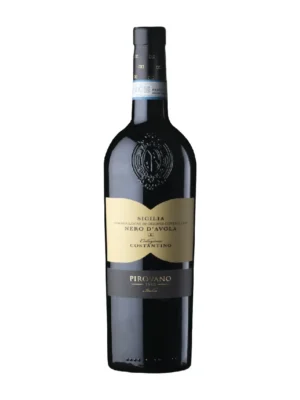
Amadio Pirovano opened the tavern “Da Pirovano” in the mid-800s, selling wine bought mainly from small farmers in southern Italy, especially in Puglia and Sicily, from where this fruity and generous Nero d’Avola comes from. Today, the fourth generation, with commitment and dedication, continues the growth and development of the family business.
Costantino Pirovano is a collection of fine wines that meets the pleasure and expectation of consumers while maintaining a quality that leaves its mark.
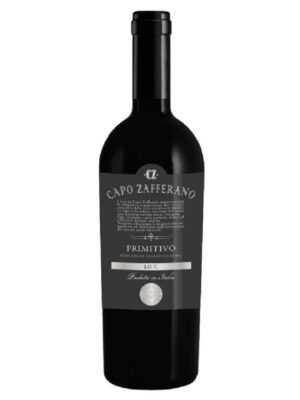
Capo Zafferano is a famous promontory, with a magnificent view of the gulf with turquoise water and a centuries-old white lighthouse, so characteristic to represent the best expression of the wines of Southern Italy: the wines of Puglia.
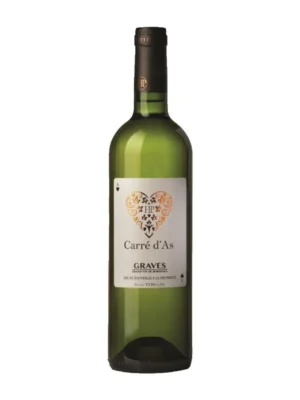
Originally from Schönberg, in the Rhineland, fleeing the consequences of the defeat of Napoleon I, the Yung family origins settled for more than a century in Algeria. Already listed in the first edition of Féret des Vins d’Oranie in 1886, the family developed its vineyard until independence, until forced to abandon the wine estates it had owned since 1859.
In 1862 Charles Young joined his older brother, already settled in Gironde. He then decides to acquire for his 2 children and his 2 nephews, the Château Haut Mondain, a 42-hectare AOC Bordeaux wine estate, followed then by Château Barail, Les Hauts de Palette and Moulin de Tassin.
Since 2020, the Charles Yung & Fils vineyards have been committed to a societal and environmental approach by obtaining High Environmental Value (HVE), level 3 certification.
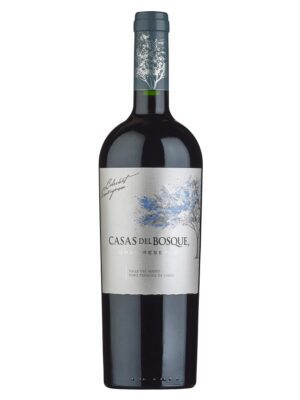
Juan Cúneo Solari founded Casas del Bosque in 1993, at a time when the Chilean wine industry was pursuing quantity over quality. His commitment to quality is evident in the Gran Reserva Cabernet, a wine which is a great exponent of this characteristic variety of Chile that finds one of its most typical expressions in the Maipo Valley.
This wine is a great exponent of this renowned Chilean variety that finds one of its most typical expressions in the alluvial soils of the Maipo Valley.
Juan Cúneo Solari founded Casas del Bosque in 1993, at a time when the Chilean wine industry was pursuing quantity over quality.
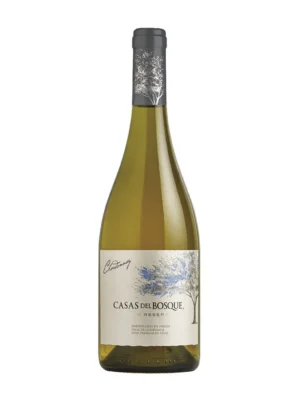
A great Chardonnay from the cool Casablanca Valley, recognized as one of the best places in Chile for this variety. Ungrafted vines of the “Mendoza” clone planted on Tapihue Sandy Loam and Santa Rosa Clay Loam soils between 1997 and 2003. The vineyard is 18 km from the Pacific Ocean at 250 m altitude.
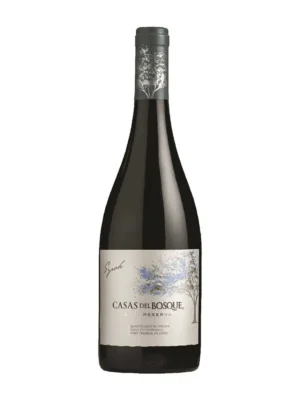
Juan Cúneo Solari founded Casas del Bosque in 1993, at a time when the Chilean wine industry was pursuing quantity over quality. All fruit of this cool climate Syrah was sourced from vineyards located within the coolest, westernmost reaches of the Casablanca Valley.
A blend of 11 to 16 year old vines sourced from hillside blocks with northern exposure, planted on 110 million year old decomposed granite with a thin topsoil of red, iron-rich clay.
Located in Odenas (Rhône), the Domaine de la Chaize extends over 250 hectares, including 99 hectares of vines, which makes it the largest property in one piece in Beaujolais cru. Today, the Château is the emblem of the most prestigious Beaujolais Cru estate.
“Brouilly” is a blend of a selection of our vineyard sites, located around the Château, on granite soils of 30 years (average) vines.
Located in Odenas (Rhône), the Domaine de la Chaize extends over 250 hectares, including 99 hectares of vines, which makes it the largest property in one piece in Beaujolais cru. Today, the Château is the emblem of the most prestigious Beaujolais Cru estate.
“Morgon” is a blend of a selection of vineyard sites located in the Morgon appellation, on deep very altered granites and ancient alluvials of 40 years (average) vines.
The Durup family, winegrowers from father to son, have been cultivating vines in Chablis for fifteen generations. The succession of Jean Durup, who reconstituted the vineyard of Château de Maligny, is ensured by Jean-Paul and Valérie Durup, assisted by Romain Ménissier, operations director. The different wines marketed under the prestigious labels “Château de Maligny”, with the best exposures, and “Églantière” all come from the unique variety of grape varieties used in Chablis: Chardonnay.
The Chablis Premier Cru Fourchaume is the most famous and the most commercial one of the Premiers Crus of Chablis, due first to its area (130 hectares for 850 hectares of Premiers Crus) and to its closeness to the Grands Crus. With 18 hectares planted in the appellation Chablis Premier Cru Fourchaume, Durup estate is the major producer of this appellation in the area.
The wine produced in this appellation is certainly the rounder of all those ones produced in the Chablis vineyard. It is also the suppler but with a good structure typical of the Premiers Crus.
For more info, visit Jean Durup – Château de Maligny website.
The Durup family, winegrowers from father to son, have been cultivating vines in Chablis for fifteen generations. The succession of Jean Durup, who reconstituted the vineyard of Château de Maligny, is ensured by Jean-Paul and Valérie Durup, assisted by Romain Ménissier, operations director. The different wines marketed under the prestigious labels “Château de Maligny”, with the best exposures, and “Églantière” all come from the unique variety of grape varieties used in Chablis: Chardonnay.
The Chablis Premier Cru « Montmain » is one of the most renowned Premier Crus of Chablis. The “Montmains” are located on a medium-size hill between parcels of “Vaillons” and “Chablis”. The original name was “the Mont moyen” and became “Montmain” through the centuries.
The Chablis Premier Cru Montmains is a wine a bit heavier than the other Chablis. Deep and very subtle, its characteristics are often neighbouring to those of the best white wines harvested in Côte d’Or.
For more info, visit Jean Durup – Château de Maligny website.
The Durup family, winegrowers from father to son, have been cultivating vines in Chablis for fifteen generations. The succession of Jean Durup, who reconstituted the vineyard of Château de Maligny, is ensured by Jean-Paul and Valérie Durup, assisted by Romain Ménissier, operations director. The different wines marketed under the prestigious labels “Château de Maligny”, with the best exposures, and “Églantière” all come from the unique variety of grape varieties used in Chablis: Chardonnay.
The Petit Chablis of Domaine Durup is produced on about 30 hectares. It is the major estate in the appellation Petit Chablis. The vines representative of this appellation are in average 30 years old. The vinification is made in the tradition of Chablis.
For more info, visit Jean Durup – Château de Maligny website.
Bernard Magrez’s journey is that of passion, a constant desire for improvement, know-how and exceptional success which has its roots first in Bordeaux, in the Grands Crus Classés, then in other prestigious terroirs in France and around the world. Bernard Magrez’s journey is that of passion, a constant desire for improvement, know-how and exceptional success which has its roots first in Bordeaux, in the Grands Crus Classés, then in other prestigious terroirs in France and around the world.
Located in the town of Pompignac, “Château Les Songes boasts a beautiful clay and limestone terroir where Merlot, the ‘king’ of grape varieties on
the Right Bank flourishes. This supple, fruity and full-bodied wine reflects the style of the area, lively and energetic.