Figuière is a pioneering maker of superior Provence wines and an ambassador of a new generation of top-level winemakers dedicated to their terroir.
Figuière strives to promote the superiority and creativity of the wines of Provence with a novel approach to rosé, designing it just like a “fine wine” in terms of time, craftsmanship and terroir. Figuière wines are the product of an unparalleled union between Provence and Burgundy, the La Londe terroir and the mastery of craft winemakers specialized in great Burgundy whites. The result is mineral and fruity wines that are understated and unexpected, love playing on contrasts and constantly finding groundbreaking combinations with a balanced, authentic and down-to-earth style focused on natural elegance.
Magali is an easy drinking rosé named after the Estate’s commercial director, the second Combard daughter in the family. Since the acquisition of Château Barbeiranne in 2019, it is a blend of two very beautiful terroirs: La Londe’s schist soils with maritime influence and Pignans’ claylimestone soils, in the inland valley of the Var.
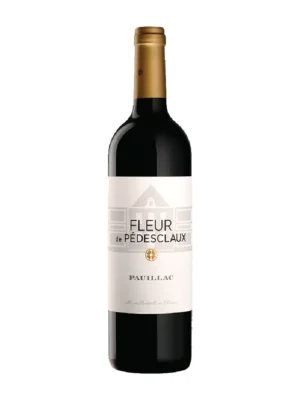
Like all the greatest wines of the appellation, Château Pédesclaux has the complexity that reflects the terroir it springs from. On this mosaic of soils, the clays convey power while the gravels express pure elegance. Pédesclaux embodies the depth that is the quintessence of Pauillac, balanced by a unique sensuality with each vintage, the painstaking work on these excellent plots pays off, while the revolutionary equipment in the winery enables the wine to develop its own unique personality.
Ethereal, fresh, appealing to both the nose and the palate, Pédesclaux’s second wine is a flower that unfurls as you approach. Unusually for Pauillac, the Fleur de Pedesclaux is predominantly made from Merlot along with a dash of Cabernet Sauvignon, Cabernet Franc and Petit Verdot depending on the vintage.
Exhibiting a more high-spirited elegance yet nonetheless showing remarkable length, Fleur de Pédesclaux 2016 is a delight. In this more floral expression, the marvellous complexity of our terroir is once again evident, but in a mouth-watering style that is instantly festive.
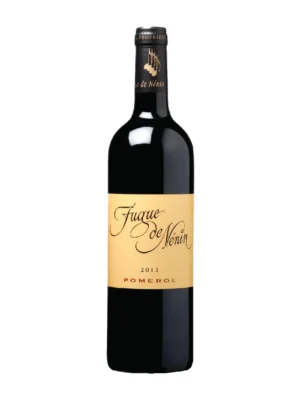
Château Nénin is located in the village of Pomerol, one of the most prestigious areas of Bordeaux. The Domaine was bought by Jean-Hubert Delon in 1997 from his cousins, the Despujols, owners of the estate since 1847. Jean-Hubert had the intention of continuing the centuries-old tradition of the Château, and precisely for this reason, since immediately, extensive renovation and modernization works, including technical ones, were carried out. Under his direction, the land was in fact drained, the vineyards renewed and the cellars modernised, to improve the vinification and aging processes.
Fugue de Nénin was created and first sold in 1997. Fugue comes from sandy-clay soils found in the eastern part of the Château’s vineyards, as well as from the young vines. This second wine is a typical example of the charm of Pomerol. The wines are smooth and silky and can be enjoyed earlier than those of the Grand Vin.
Fugue de Nénin 2013 comes from sandy-clay soils representing the eastern half of the estate’s vineyard and it is made from mainly Merlot, with a floral component by Cabernet Franc.
“Haut” (High) because this nectar has a high quality; “Charmes” (Charms) because it is difficult not to fall under the charm of this wines golden this Sauternes. The micro-climate of the Ciron valley has a major role in its elaboration, to confer a very special character to the wine. Indeed, thanks to the climate, the “botrytis cinerea” appears on the grapes and concentrates the sugar while the acidity decreases. The attention brought to the winemaking and the ageing is the reason of the existence of this exceptional wine.
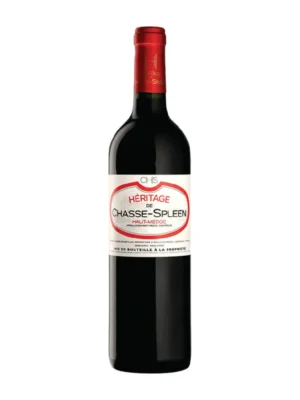
The Héritage de Chasse-Spleen Haut-Médoc is the second wine of the renowned Château Chasse-Spleen.
At first known as Ermitage de Chasse Spleen, this wine had to be given a new name in 2000 because of homonymy reasons. After a birth under the best auspices while inheriting all the care brought to its magnificent senior, this new name seemed very much appropriate.
It is crafted from younger vines and specific parcels within the Haut-Médoc appellation, offering a more accessible version of the estate’s signature style.
For more info, visit Château Chasse-Spleenwebsite.
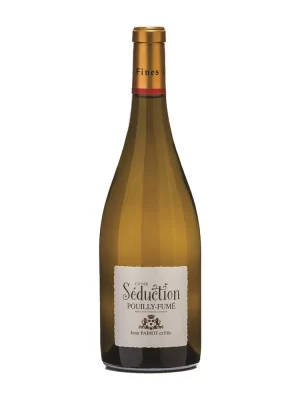
Son and grandson of Jean Pabiot, Alain and Jérôme manage the Domaine des Fines Caillottes within the Pouilly-Fumé appellation. The terroirs, mainly clay limestone, are therefore very varied: white limestone pebbles known as “caillottes”, marl with small fossilized oysters (kimmeridgian) and flint. This diversity of terroirs gives the estate’s wines their aromatic complexity.
The Cuvée Séduction is vinified for one year on the lees, which through prolonged aging and frequent stirring will give the wine a lot of richness, silky and aromatic breadth while preserving the fruity aromas.
Certified TERRA VITIS (for the respect of the environment, Men and wines produced) and HIGH ENVIRONMENTAL VALUE (for the respect of biodiversity and the reduction of the inputs).
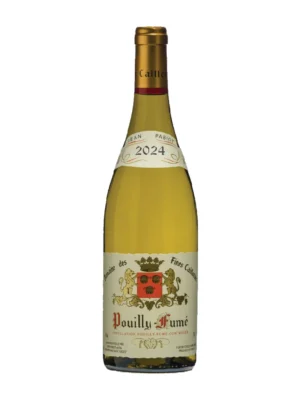
Son and grandson of Jean Pabiot, Alain and Jérôme manage the Domaine des Fines Caillottes within the Pouilly-Fumé appellation. The terroirs, mainly clay limestone, are therefore very varied: white limestone pebbles known as “caillottes”, marl with small fossilized oysters (kimmeridgian) and flint. This diversity of terroirs gives the estate’s wines their aromatic complexity.
The “Domaine des Fines Caillottes” Pouilly-Fumé is the blend of wines from the great diversity of terroirs and vines of various ages from the estate.
Certified TERRA VITIS (for the respect of the environment, Men and wines produced) and HIGH ENVIRONMENTAL VALUE (for the respect of biodiversity and the reduction of the inputs).
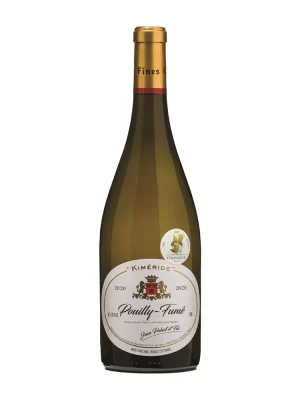
Son and grandson of Jean Pabiot, Alain and Jérôme manage the Domaine des Fines Caillottes within the Pouilly-Fumé appellation. The terroirs, mainly clay limestone, are therefore very varied: white limestone pebbles known as “caillottes”, marl with small fossilized oysters (kimmeridgian) and flint. This diversity of terroirs gives the estate’s wines their aromatic complexity.
“Kiméride” comes from Kimmeridgian, the period of the geological formation of this terroir. This vintage is a selection of plots from this terroir whose limestone stones are dotted with fossils (ammonites, small oysters, etc.). This cuvée is produced only with the best vintages, and exclude grapes from young vines.
Richness, concentration, elegance and intense aromas of ripe fruit characterize this Pouilly-Fumé which expresses the quintessence of Sauvignon.
Certified TERRA VITIS (for the respect of the environment, Men and wines produced) and HIGH ENVIRONMENTAL VALUE (for the respect of biodiversity and the reduction of the inputs).
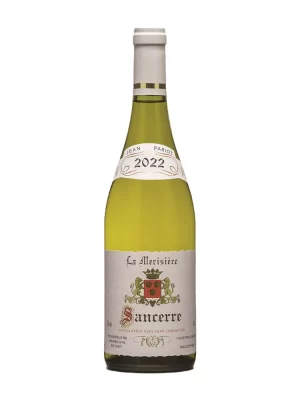
Son and grandson of Jean Pabiot, Alain and Jérôme manage the Domaine des Fines Caillottes within the Pouilly-Fumé appellation. The terroirs, mainly clay limestone, are therefore very varied: white limestone pebbles known as “caillottes”, marl with small fossilized oysters (kimmeridgian) and flint. This diversity of terroirs gives the estate’s wines their aromatic complexity.
The white Sancerre “La Merisière” is produced on clay-limestone soils, sometimes with pebbles and flint.
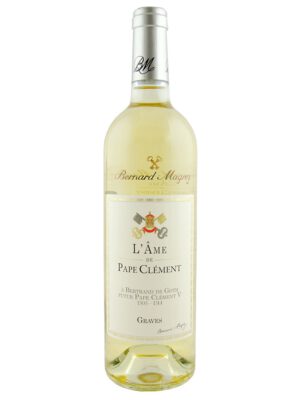
Bernard Magrez’s journey is that of passion, a constant desire for improvement, know-how and exceptional success which has its roots first in Bordeaux, in the Grands Crus Classés, then in other prestigious terroirs in France and around the world.
L’Âme de Pape Clément’s vineyard is nestled in the heart of the Graves region, on the left bank of the Garonne River where the soil and climate are ideal for grapes to ripen and vines to flourish. Dig down into the subsoil and you’ll find gravel and a layer of clay and limestone, which absorbs the sun’s heat during the day and releases it at night to produce remarkably full, ripe grapes. What’s more, the nearby river and the vineyard’s exposure to the sun help create a microclimate which helps protect and nurture the vines.
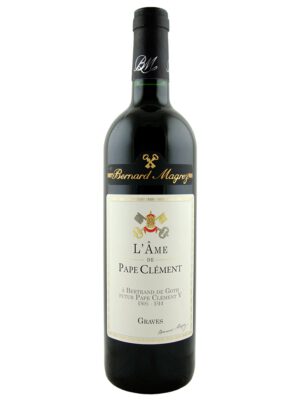
Bernard Magrez’s journey is that of passion, a constant desire for improvement, know-how and exceptional success which has its roots first in Bordeaux, in the Grands Crus Classés, then in other prestigious terroirs in France and around the world.
L’Âme de Pape Clément’s vineyard is nestled in the heart of the Graves region, on the left bank of the Garonne River where the soil and climate are ideal for grapes to ripen and vines to flourish. Dig down into the subsoil and you’ll find gravel and a layer of clay and limestone, which absorbs the sun’s heat during the day and releases it at night to produce remarkably full, ripe grapes. What’s more, the nearby river and the vineyard’s exposure to the sun help create a microclimate which helps protect and nurture the vines.
Owned by the Bernard family since 1983, the magnificent Domaine de Chevalier is at the top of the greatest Crus Classés of Bordeaux.
The estate is located in the heart of the Pessac-Léognan appellation which is located in a green setting south of Bordeaux.
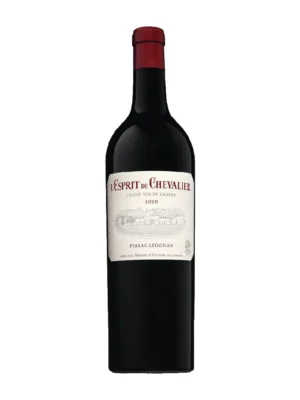
Domaine de Chevalier watches over a rare vineyard with 60 hectares of red vines. The vineyard is based on a gravel terroir with clay-gravelly subsoils. Since 1986, the young vines have been intended to ripen the berries which are used in the blending of the estate’s second wine, L’Esprit de Chevalier.
Three large plots in the best parts of Pauillac form the vineyard of this classified growth, an unusual configuration and a direct inheritance from the estate’s founder, Pierre Ducasse, an eminent lawyer. In the 18th century he gave a single name to a fine vineyard holding, which was put together through inheritance and purchases. When he died in 1797, his son, Pierre, inherited a 60-hectare exploitation, named Ducasse-Grand-Puy-Artigues-Arnaud, of which two third were planted with vines. The estate was classified in 1855, under the name of Artigues Arnaud.
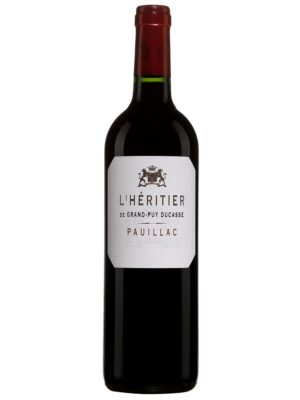
L’Héritier de Grand Puy Ducasse is the second wine of Château Grand-Puy Ducasse. A distinguished red wine that embodies the classic elegance of the Pauillac AOC with rich flavors and refined tannins.
For more info, visit Château Grand-Puy Ducassewebsite.
Bernard Magrez’s journey is that of passion, a constant desire for improvement, know-how and exceptional success which has its roots first in Bordeaux, in the Grands Crus Classés, then in other prestigious terroirs in France and around the world. Bernard Magrez’s journey is that of passion, a constant desire for improvement, know-how and exceptional success which has its roots first in Bordeaux, in the Grands Crus Classés, then in other prestigious terroirs in France and around the world.
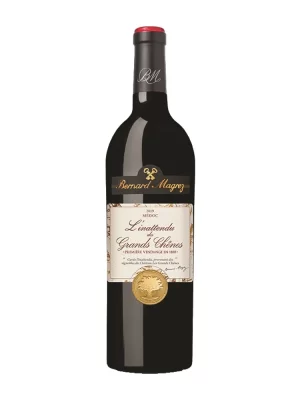
Located in Saint-Christoly-Médoc, a town once renowned for its trading port that became a gateway to the world, “L’inattendu” des Grands Chênes is a wine that is both structured and smooth, making the most of its Garonne gravel terroir.
Located on a schist Terroir, typical of Languedoc, and with a very sunny Mediterranean microclimate, La Cave de Roquebrun produces wines in AOC Saint-Chinian-Roquebrun, AOC Saint-Chinian, AOC Languedoc and IGP Pays d’Oc, all original and high quality wines.



 Download Tasting Note