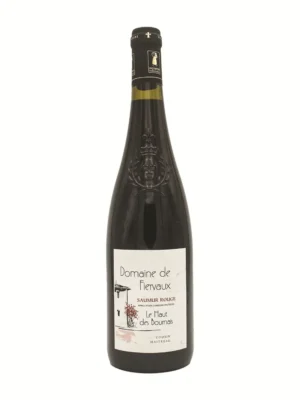
The Domaine de Fiervaux was born from a family farm established in Saumurois with 4ha of vines, and taken over in 1890 by Henri Maitreau. 40 years later, his son Jules succeeded him, constantly improving the vineyard. In 1960, Georges Cousin and his wife Juliette Maitreau, daughter of Jules, took over the reins and developed the estate, hence the origin of the name Cousin-Maitreau, developing the vineyard from 8 ha to 28 ha with the planting of several grape varieties in order to create a wide range.
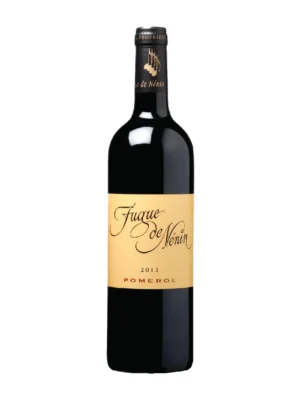
Château Nénin is located in the village of Pomerol, one of the most prestigious areas of Bordeaux. The Domaine was bought by Jean-Hubert Delon in 1997 from his cousins, the Despujols, owners of the estate since 1847. Jean-Hubert had the intention of continuing the centuries-old tradition of the Château, and precisely for this reason, since immediately, extensive renovation and modernization works, including technical ones, were carried out. Under his direction, the land was in fact drained, the vineyards renewed and the cellars modernised, to improve the vinification and aging processes.
Fugue de Nénin was created and first sold in 1997. Fugue comes from sandy-clay soils found in the eastern part of the Château’s vineyards, as well as from the young vines. This second wine is a typical example of the charm of Pomerol. The wines are smooth and silky and can be enjoyed earlier than those of the Grand Vin.
Fugue de Nénin 2013 comes from sandy-clay soils representing the eastern half of the estate’s vineyard and it is made from mainly Merlot, with a floral component by Cabernet Franc.
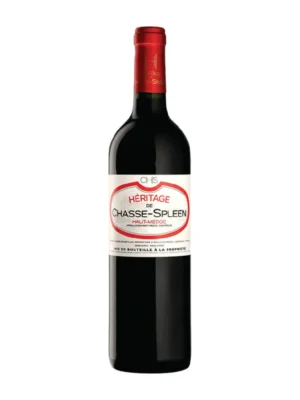
The Héritage de Chasse-Spleen Haut-Médoc is the second wine of the renowned Château Chasse-Spleen.
At first known as Ermitage de Chasse Spleen, this wine had to be given a new name in 2000 because of homonymy reasons. After a birth under the best auspices while inheriting all the care brought to its magnificent senior, this new name seemed very much appropriate.
It is crafted from younger vines and specific parcels within the Haut-Médoc appellation, offering a more accessible version of the estate’s signature style.
For more info, visit Château Chasse-Spleenwebsite.
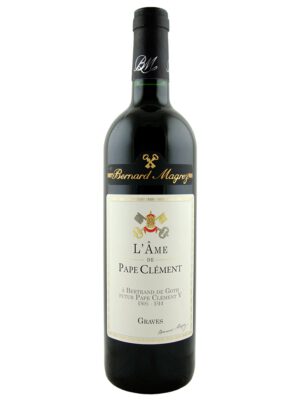
Bernard Magrez’s journey is that of passion, a constant desire for improvement, know-how and exceptional success which has its roots first in Bordeaux, in the Grands Crus Classés, then in other prestigious terroirs in France and around the world.
L’Âme de Pape Clément’s vineyard is nestled in the heart of the Graves region, on the left bank of the Garonne River where the soil and climate are ideal for grapes to ripen and vines to flourish. Dig down into the subsoil and you’ll find gravel and a layer of clay and limestone, which absorbs the sun’s heat during the day and releases it at night to produce remarkably full, ripe grapes. What’s more, the nearby river and the vineyard’s exposure to the sun help create a microclimate which helps protect and nurture the vines.
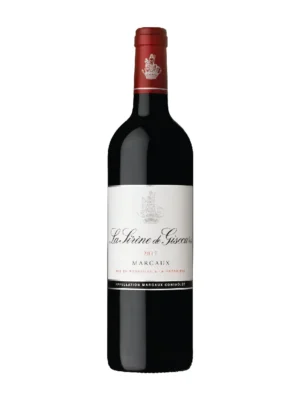
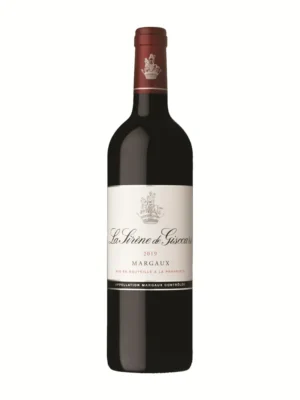
Coming from younger vines, the second wine of Château Giscours comes from the same terroirs and the same grape varieties as its elder.
La Sirène de Giscours, a name full of delicacy and elegance that reflects so well the personality of the second wine.
Developed with the same philosophy that guides the teams in making Château Giscours, La Sirène is a magnificent expression of Margaux’s terroir. A wine of pure pleasure.
Coming from younger vines, the second wine of Château Giscours comes from the same terroirs and the same grape varieties as its elder.
La Sirène de Giscours, a name full of delicacy and elegance that reflects so well the personality of the second wine.
Developed with the same philosophy that guides the teams in making Château Giscours, La Sirène is a magnificent expression of Margaux’s terroir. A wine of pure pleasure.
La Sirène de Giscours 2019 is perfectly in line with the style of the property while showing at the same time depth and richness. A real “Vin de Plaisir” characterized by a deep color, a juicy fruit, a dense and round palate.
Valle del Rapel is located in the central part of Chile. It exhibits a semi-arid Mediterranean climate with warm and dry days and pleasantly cool nights during the growing season, as a result of cold breezes coming from the Andes. Rapel has also a cool influence from the Pacific’s Humboldt Current, which lowers temperatures in the coastal areas of the valley. This leads to warm days with ample sunlight and dry conditions, allowing a slow ripening period and maintain its natural acidity that is a characteristic of this elegant Merlot.
The yields in 2021 ended up being generous, and most importantly with grapes that produced wines of excellent quality.
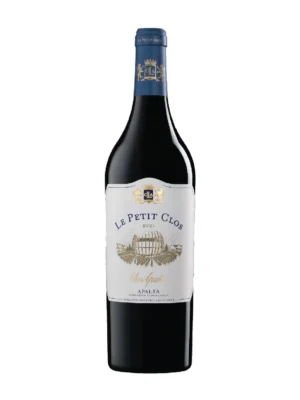
In 2014, Clos Apalta gave birth to its second wine, Le Petit Clos de Clos Apalta, in order to offer a different interpretation of this unique terroir, using the same grapes, but in different proportion, and offering young vines a chance to prove their worth before thay can make it into the Grand Vin.
The 2021 vintage was challenging as it brought a scenario of climatic disruptions and the development of the COVID-19 pandemic. The yields ended up being generous considering the challenges faced, and most importantly with grapes that produced wines of excellent quality.
“Le Petit Clos is a different interpretation of the Clos Apalta Terroir, using the mastery of blending that is the heart of the winemaking philosophy from the Domaines Bournet ”. – Jacques Begarie, Chief Winemaker.
Made with Organic Grapes and Biodynamic vineyard management.
Château Quintus is the 5th child within the Domaine Clarence Dillon family of wines. Its name is a tribute to the Gallo-Romans, creators of Saint-Emilion’s vineyards, who had the custom of naming their fifth child Quintus.
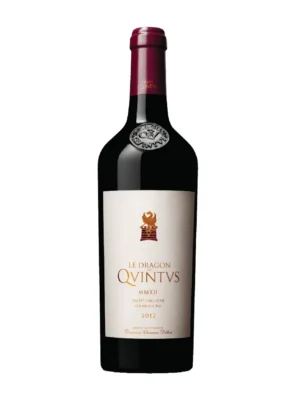
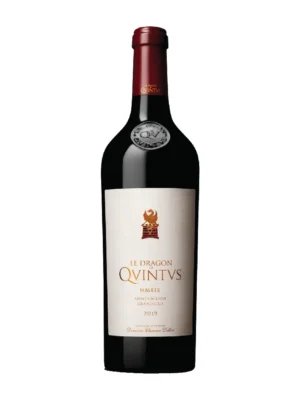
Le Dragon de Quintus is the second wine of Château Quintus. The name originates from the dragon statue that towers above the magical terroir of Saint-Emilion, perched high upon the promontory, where the estate is located.
2012 is a truly fine vintage for early-ripening terroirs such as Saint-Emilion.The first word that comes to mind here is: harmonious. It will be ready to drink fairly young and should provide a great deal of pleasure.
Château Quintus is the 5th child within the Domaine Clarence Dillon family of wines. Its name is a tribute to the Gallo-Romans, creators of Saint-Emilion’s vineyards, who had the custom of naming their fifth child Quintus.
Le Dragon de Quintus is the second wine of Château Quintus. The name originates from the dragon statue that towers above the magical terroir of Saint-Emilion, perched high upon the promontory, where the estate is located.
Thanks to this ideal spell of weather in 2019, all the grape varieties were harvested at peak ripeness and at a leisurely pace. This Dragon is definitely well-balanced and delicious.
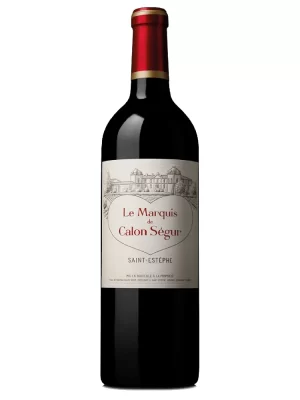
The estate’s Second Wine offers a different interpretation of the Calon terroir. Le Marquis de Calon Ségur is totally distinct from the First Wine, Château Calon Ségur Grand Cru Classé. “It benefits from a true expression of its own”, underlines Vincent Millet. “The plots are separated out from the beginning.”
Le Marquis de Calon Ségur provides immediate enjoyment, warmth and a velvety texture. It is carefully aged generally for 17 months in oak barrels, a third of which are new. Deliciously easy-drinking, silky and expressive, its charm comes to the fore, while at the same time bringing to our minds the elegance of the Grand Vin.
For more info, visit Château Calon Ségurwebsite.
VARIETALS
54% Cabernet Sauvignon, 44% Merlot, 2% Cabernet Franc
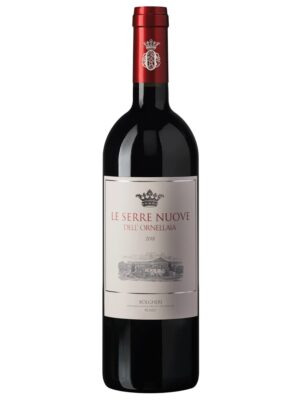
It was in 1981 that the Marquis Lodovico Antinori, cousin of Piero Antinori, founded the Ornellaia Estate, in the heart of the Bolgheri area, a few kilometers from the Mediterranean coast. Thus, with the first harvest of 1985, what would become an icon among the SuperTuscans was born: the “Ornellaia”. With the inauguration of the company, the world-famous enologist, Michel Rolland, begins to deal with the technical part of the cellar. Subsequently, in the 90s the other two labels were born: “Le Volte” and “Le Serre Nuove”.
Crafted from the same varieties, under the same sky, from the same philosophy: Le Serre Nuove dell’Ornellaia is a proud second vin, which has the ability to foretell the personality of the estate’s flagship wine. Together, the two wines provide their own distinctive points of view. The pleasure of sipping Le Serre Nuove dell’Ornellaia evolves over time, adding the charm of maturity to the vigour of youth.
“Aromatic complexity is the hallmark of this vintage, with fruits of the forest aromas, accompanied by wild rose, pink pepper and liquorice notes. Nice tannins with a savoury and crunchy finish.” – Olga Fusari – Winemaker
Vignobles Lassagne gather several family properties that were bought since three generations and are grown according to tradition and innovation on unique terroir located in the Libourne area.
Vignobles Lassagne encompasses these three properties: Château des Arnauds (the original estate), Château des Landes and Château Maltus, the latest addition to the Vignobles Lassagne.
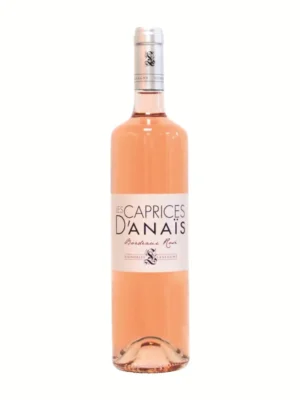
A pressed rosé made from the best Cabernet Franc, harvested at perfect maturity.
Château du Tertre is a property steeped in history. This property has existed since the 12th century and its vineyard of 52 hectares remains unchanged since 1855. Since the 19th century, their wines have become worldwide recognised thanks to the classification of 1855 which makes Château du Tertre a Grand Cru Classé de Margaux.
Crafted with the same precision, passion, and expertise as Château du Tertre, Les Hauts du Tertre reveals another side of the estate, that of a wine best discovered and appreciated in its younger years. Lively, with silky tannins, its fruity and spicy notes blend with the delicacy of Margaux wines.
Vignobles Lassagne gather several family properties that were bought since three generations and are grown according to tradition and innovation on unique terroir located in the Libourne area.
Vignobles Lassagne encompasses these three properties: Château des Arnauds (the original estate), Château des Landes and Château Maltus, the latest addition to the Vignobles Lassagne.
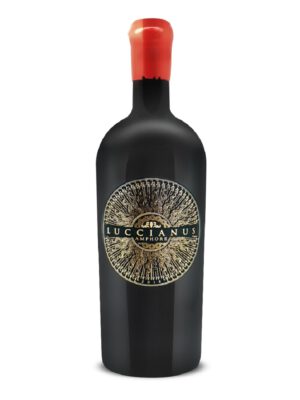
Luccianus is the name of Gallo-Roman origin designating the town of Lussac and its vineyard dating from the 4th century.
This cuvée is a return to ancestral ageing techniques. Uniquely composed of Cabernet Franc from old vines of 100 years with an ageing in amphora which gives a very expressive wine with a superb aromatic radiance and very silky tannins all without a woody note.




 Download Tasting Note