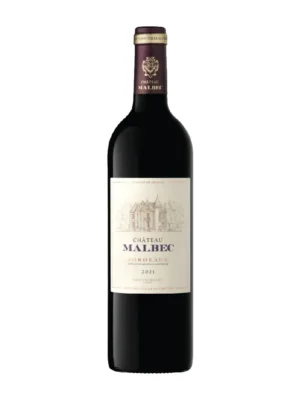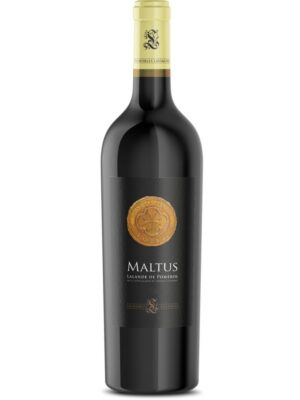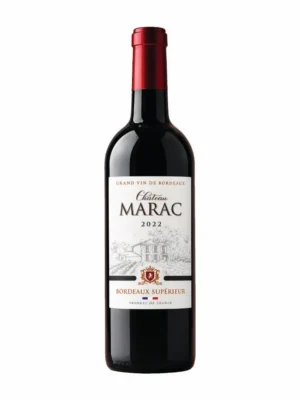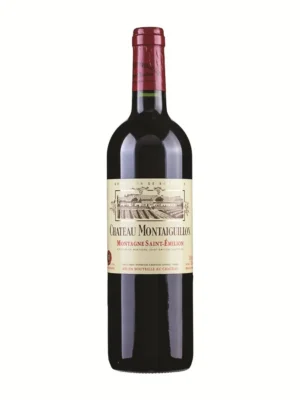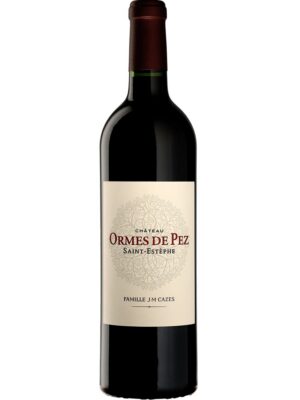

Château Tour de Pez is situated in the prestigious hamlet of Pez in the Saint Estèphe appellation, the internationally revered icon of viticulture. Its history is multi-facetted, deeply entwined with those of the families that have toiled in these vineyards since the 17th century.
Recognized from the outset as a Cru Bourgeois du Médoc, Château Tour de Pez is the result of the strict selection of the finest grapes from the estate to produce a wine that first and foremost asserts its Saint Estèphe identity, expressing its origins and its terroir with intensity. Polished by expert, precise winemaking, and mellowed through contact with oak, it offers amazing finesse of tannins, silkiness, balance, and superb freshness that lingers in the mouth. An accomplished, accessible Cru Bourgeois from Saint Estèphe, that offers unsurpassed value and infinite tasting pleasure.
On a vineyard created in the middle of the 19th century by the Count of Kermartin, Léon Nony founded Château Treytins in the 1950s. After his death in 1959, his son Michel and then his grandson Jean-Marc continued his work by developing his vineyards. During the 1990s, the cellars were enlarged and completely renovated to take into account new techniques and the latest knowledge in winemaking and maturing, while respecting traditional achievements. Château Treytins, vinified on the fruit, benefits fully from the temperature regulation in these air-conditioned cellars.
Located near the medieval town of Saint-Émilion, this 8.5-hectare estate is not following anymore biodynamic agriculture, but still emphasizing sustainable and artisanal practices to create an elegant, mineral-driven, and aromatic wine.
The Château Vieux Pourret Saint-Émilion Grand Cru AOC of this vintage is a Merlot-led Bordeaux red, highlighting succulent berries, spice, and toasted oak with a velvety, structured palate.
Clos de l’Oratoire, located on Saint-Emilion’s northeast slope, has 13 hectares of vines. The terroir of Fronsac molasse, consisting of a layer of sandy soil and a clay subsoil, is ideally suited to Merlot (80% of the vines).
Clos de l’Oratoire is round, smooth, and very seductive. It has a beautiful deep crimson colour and powerful fruity aromas. Merlot provides roundness and opulence, whereas Cabernet Franc contributes power, aromatic complexity, and a long aftertaste. Although Clos de l’Oratoire can be enjoyed seven years after the vintage, it is, above all, a wine with fine ageing potential.
The name of Clos du Marquis, created in 1902, was inspired by the Petit Clos adjacent to the Château de Léoville, residence of the Marquis de Las Cases. The Clos du Marquis is produced from top terroirs of the Saint-Julien Appellation that were not exclusively part of the old Domaine de Léoville cadastre. These terroirs are located slightly to the west and are surrounded by prestigious Classified Growths, particularly Seconds Crus Classés of Saint-Julien and Pauillac : Léoville Poyferré, Léoville Barton, Pichon Longueville Comtesse de Lalande… The Clos du Marquis offers a fine expression of the Saint-Julien character : structure, complexity, harmony, distinction and ageing potential.
Structured, direct, and intense, the 2021 Clos du Marquis has a strong identity that owes much to the elegance and power of the Cabernets, which perform well in this vintage. This wine displays complexity, aristocratic stature, and an airy, inviting elegance that lingers on the finish.
Château Jaron, located between the Dordogne and Lot-et-Garonne regions, has been a family-run vineyard for four generations. Philippe Libératore took over management in 1994, and in 1998 joined forces with Caroline Comin to create Vignobles Comin-Libératore. The estate covers 40 hectares in four communes, with vines averaging 30 years of age.
The Confidentiel cuvée draws it freshness and elegance from Cabernet Franc, carefully harvested from a small plot of vines of Château Jaron.
The Domaine de Beaulieu is one of the estates to follow in Chinon, located in the Touraine region of the Loire Valley in France.
Situated just near the house of François Rabelais (the greatest French author of the 16th century), the estate is run by Michaël Manceau, the 3rd generation of the winegrowers. The Domaine de Beaulieu covers 13,5 ha. Michaël uses natural methods to control yields to enhance the quality of his wines. The winegrower is passionate about his vines, his estate and the dynamism of continuous improvement.
The Domaine de Fiervaux was born from a family farm established in Saumurois with 4ha of vines, and taken over in 1890 by Henri Maitreau. 40 years later, his son Jules succeeded him, constantly improving the vineyard. In 1960, Georges Cousin and his wife Juliette Maitreau, daughter of Jules, took over the reins and developed the estate, hence the origin of the name Cousin-Maitreau, developing the vineyard from 8 ha to 28 ha with the planting of several grape varieties in order to create a wide range.
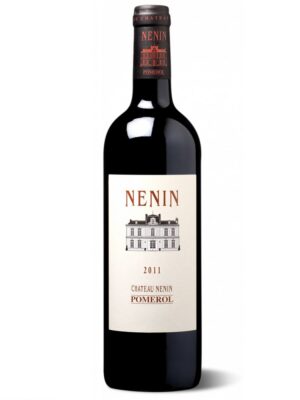
Château Nénin is located in the village of Pomerol, one of the most prestigious areas of Bordeaux. The Domaine was bought by Jean-Hubert Delon in 1997 from his cousins, the Despujols, owners of the estate since 1847. Jean-Hubert had the intention of continuing the centuries-old tradition of the Château, and precisely for this reason, since immediately, extensive renovation and modernization works, including technical ones, were carried out. Under his direction, the land was in fact drained, the vineyards renewed and the cellars modernised, to improve the vinification and aging processes.
Fugue de Nénin was created and first sold in 1997. Fugue comes from sandy-clay soils found in the eastern part of the Château’s vineyards, as well as from the young vines. This second wine is a typical example of the charm of Pomerol. The wines are smooth and silky and can be enjoyed earlier than those of the Grand Vin.
Fugue de Nénin 2013 comes from sandy-clay soils representing the eastern half of the estate’s vineyard and it is made from mainly Merlot, with a floral component by Cabernet Franc.
The Héritage de Chasse-Spleen Haut-Médoc is the second wine of the renowned Château Chasse-Spleen.
At first known as Ermitage de Chasse Spleen, this wine had to be given a new name in 2000 because of homonymy reasons. After a birth under the best auspices while inheriting all the care brought to its magnificent senior, this new name seemed very much appropriate.
It is crafted from younger vines and specific parcels within the Haut-Médoc appellation, offering a more accessible version of the estate’s signature style.
For more info, visit Château Chasse-Spleenwebsite.
Bernard Magrez’s journey is that of passion, a constant desire for improvement, know-how and exceptional success which has its roots first in Bordeaux, in the Grands Crus Classés, then in other prestigious terroirs in France and around the world.
L’Âme de Pape Clément’s vineyard is nestled in the heart of the Graves region, on the left bank of the Garonne River where the soil and climate are ideal for grapes to ripen and vines to flourish. Dig down into the subsoil and you’ll find gravel and a layer of clay and limestone, which absorbs the sun’s heat during the day and releases it at night to produce remarkably full, ripe grapes. What’s more, the nearby river and the vineyard’s exposure to the sun help create a microclimate which helps protect and nurture the vines.
Coming from younger vines, the second wine of Château Giscours comes from the same terroirs and the same grape varieties as its elder.
La Sirène de Giscours, a name full of delicacy and elegance that reflects so well the personality of the second wine.
Developed with the same philosophy that guides the teams in making Château Giscours, La Sirène is a magnificent expression of Margaux’s terroir. A wine of pure pleasure.
Coming from younger vines, the second wine of Château Giscours comes from the same terroirs and the same grape varieties as its elder.
La Sirène de Giscours, a name full of delicacy and elegance that reflects so well the personality of the second wine.
Developed with the same philosophy that guides the teams in making Château Giscours, La Sirène is a magnificent expression of Margaux’s terroir. A wine of pure pleasure.
La Sirène de Giscours 2019 is perfectly in line with the style of the property while showing at the same time depth and richness. A real “Vin de Plaisir” characterized by a deep color, a juicy fruit, a dense and round palate.
Valle del Rapel is located in the central part of Chile. It exhibits a semi-arid Mediterranean climate with warm and dry days and pleasantly cool nights during the growing season, as a result of cold breezes coming from the Andes. Rapel has also a cool influence from the Pacific’s Humboldt Current, which lowers temperatures in the coastal areas of the valley. This leads to warm days with ample sunlight and dry conditions, allowing a slow ripening period and maintain its natural acidity that is a characteristic of this elegant Merlot.
The yields in 2021 ended up being generous, and most importantly with grapes that produced wines of excellent quality.