
In 2014, Clos Apalta gave birth to its second wine, Le Petit Clos de Clos Apalta, in order to offer a different interpretation of this unique terroir, using the same grapes, but in different proportion, and offering young vines a chance to prove their worth before thay can make it into the Grand Vin.
The 2021 vintage was challenging as it brought a scenario of climatic disruptions and the development of the COVID-19 pandemic. The yields ended up being generous considering the challenges faced, and most importantly with grapes that produced wines of excellent quality.
“Le Petit Clos is a different interpretation of the Clos Apalta Terroir, using the mastery of blending that is the heart of the winemaking philosophy from the Domaines Bournet ”. – Jacques Begarie, Chief Winemaker.
Made with Organic Grapes and Biodynamic vineyard management.
Château Quintus is the 5th child within the Domaine Clarence Dillon family of wines. Its name is a tribute to the Gallo-Romans, creators of Saint-Emilion’s vineyards, who had the custom of naming their fifth child Quintus.
Le Dragon de Quintus is the second wine of Château Quintus. The name originates from the dragon statue that towers above the magical terroir of Saint-Emilion, perched high upon the promontory, where the estate is located.
2012 is a truly fine vintage for early-ripening terroirs such as Saint-Emilion.The first word that comes to mind here is: harmonious. It will be ready to drink fairly young and should provide a great deal of pleasure.
Château Quintus is the 5th child within the Domaine Clarence Dillon family of wines. Its name is a tribute to the Gallo-Romans, creators of Saint-Emilion’s vineyards, who had the custom of naming their fifth child Quintus.
Le Dragon de Quintus is the second wine of Château Quintus. The name originates from the dragon statue that towers above the magical terroir of Saint-Emilion, perched high upon the promontory, where the estate is located.
Thanks to this ideal spell of weather in 2019, all the grape varieties were harvested at peak ripeness and at a leisurely pace. This Dragon is definitely well-balanced and delicious.
The estate’s Second Wine offers a different interpretation of the Calon terroir. Le Marquis de Calon Ségur is totally distinct from the First Wine, Château Calon Ségur Grand Cru Classé. “It benefits from a true expression of its own”, underlines Vincent Millet. “The plots are separated out from the beginning.”
Le Marquis de Calon Ségur provides immediate enjoyment, warmth and a velvety texture. It is carefully aged generally for 17 months in oak barrels, a third of which are new. Deliciously easy-drinking, silky and expressive, its charm comes to the fore, while at the same time bringing to our minds the elegance of the Grand Vin.
For more info, visit Château Calon Ségurwebsite.
VARIETALS
50% Cabernet Sauvignon, 49% Merlot, 1% Petit Verdot
It was in 1981 that the Marquis Lodovico Antinori, cousin of Piero Antinori, founded the Ornellaia Estate, in the heart of the Bolgheri area, a few kilometers from the Mediterranean coast. Thus, with the first harvest of 1985, what would become an icon among the SuperTuscans was born: the “Ornellaia”. With the inauguration of the company, the world-famous enologist, Michel Rolland, begins to deal with the technical part of the cellar. Subsequently, in the 90s the other two labels were born: “Le Volte” and “Le Serre Nuove”.
Crafted from the same varieties, under the same sky, from the same philosophy: Le Serre Nuove dell’Ornellaia is a proud second vin, which has the ability to foretell the personality of the estate’s flagship wine. Together, the two wines provide their own distinctive points of view. The pleasure of sipping Le Serre Nuove dell’Ornellaia evolves over time, adding the charm of maturity to the vigour of youth.
“Elegant, excellent ageing potential and immediately pleasing, this wine elicits the surrounding Mediterranean brush on the note. The tasting experience ends with a long finish and unexpected freshness.” – Olga Fusari – Winemaker
Vignobles Lassagne gather several family properties that were bought since three generations and are grown according to tradition and innovation on unique terroir located in the Libourne area.
Vignobles Lassagne encompasses these three properties: Château des Arnauds (the original estate), Château des Landes and Château Maltus, the latest addition to the Vignobles Lassagne.
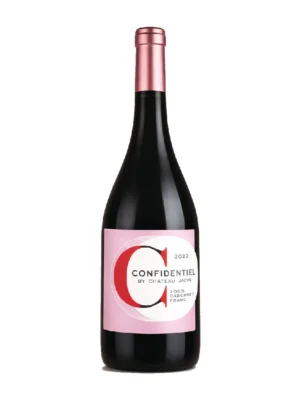
A pressed rosé made from the best Cabernet Franc, harvested at perfect maturity.
Château du Tertre is a property steeped in history. This property has existed since the 12th century and its vineyard of 52 hectares remains unchanged since 1855. Since the 19th century, their wines have become worldwide recognised thanks to the classification of 1855 which makes Château du Tertre a Grand Cru Classé de Margaux.
Crafted with the same precision, passion, and expertise as Château du Tertre, Les Hauts du Tertre reveals another side of the estate, that of a wine best discovered and appreciated in its younger years. Lively, with silky tannins, its fruity and spicy notes blend with the delicacy of Margaux wines.
Vignobles Lassagne gather several family properties that were bought since three generations and are grown according to tradition and innovation on unique terroir located in the Libourne area.
Vignobles Lassagne encompasses these three properties: Château des Arnauds (the original estate), Château des Landes and Château Maltus, the latest addition to the Vignobles Lassagne.
Luccianus is the name of Gallo-Roman origin designating the town of Lussac and its vineyard dating from the 4th century.
This cuvée is a return to ancestral ageing techniques. Uniquely composed of Cabernet Franc from old vines of 100 years with an ageing in amphora which gives a very expressive wine with a superb aromatic radiance and very silky tannins all without a woody note.
The Teycheney family has been cultivating vineyards since 1837, when the first generation settled in the heart of Entre-Deux-Mers, on the family’s historic estate. They are perhaps most widely known for Cheteau Fleur de La Lisse from Saint Emilion.
Since 2015, the 6th generation, Caroline Teycheney, has been in charge of the vineyards, which now cover 62 hectares in Entre-Deux-Mers and 32 hectares in Saint-Émilion Grand Cru. The vineyard from which the Maison 1982 Réserve is produced is located on the edge of the medieval village of Saint-Émilion, at the foot of the clay and limestone hill. It has been cultivated with passion using organic and biodynamic methods since 2016, with the utmost respect for man and nature. The best Merlot plots are meticulously worked and blended to produce the estate’s finest cuvées.
Organic wine certified AB (Agriculture Biologique).
In Arsac in the heart of the Margaux appellation, Château du Tertre overlooks a single holding vineyard of 52 hectares. The property, situated on one of the highest hills in the Médoc is composed of gravel, clay and sand. It was during the XIXth century that the wines acquired international renown, amplified by the 1855 classification which established the property as a 5th Growth.
Margaux by Tertre is a nice introduction to the wines produced by Château du Tertre.
The viticulture and vinification are carried out with the same high level of quality. Margaux by Tertre is mainly produced from the
young vines of Château du Tertre giving the wine a very fruity style, with a nice smoothness and roundness.
Mes 5 Pépites by Bernard Magrez is a unique micro-blend of barrels selected by world-famous Michel Rolland from Bernard Magrez’s five top chateaux: Pape-Clement Grand Cru Classé (Pessac-Leognan), La Tour Carnet Grand Cru Classé (Haut-Médoc), Les Grands Chênes (Médoc), Fombrauge Grand Cru Classé and Magrez Fombrauge Grand Cru Classé (Saint-Émilion).
Imagine iconic Château Pape-Clement in an innovative super blend with Chateau Magrez Fombrauge from St-Émilion. And completed with barrels rolled in from three other top chateaux at Bernard Magrez!
“My ambition for the exceptional…crafted from the blend of five jewels of our wine heritage – Château Pape Clément, La Tour Carnet, Fombrauge, Les Grands Chênes, and Magrez Fombrauge – it reflects the perfect union of five unique terroirs, where each vineyard contributes its own singularity.” – Bernard Magrez
In the beautiful country of Véron, cradled between the Loire and the Vienne, the Olga Raffault estate has been transmitting its know-how in the production of its Chinon wines for five generations. Olga Raffault has devoted her whole life to these landscapes that she loved so much and has always been able to share her love of wine.
Les Barnabés are shaped by the alluvium of the Loire and the gravel of the Vienne in the town of Savigny-en-Véron. This cuvée blooms from its earliest youth between 14 and 16°C and can be enjoyed with white and roast meats.
Opus One is the realized dream of two men: Baron Philippe de Rothschild of Chateau Mouton Rothschild in Bordeaux and Napa Valley vintner Robert Mondavi. Together, our founders set out to create a single wine dedicated to the pursuit of uncompromising quality. This singular mission shapes every vintage, today and for generations to come.
The “Opus One” is the result of a careful selection of the best Cabernet Sauvignon bunches, which are combined with small percentages of other varieties of Bordeaux origin. It matures in new oak barrels for about 17 months. The result is a red wine of incredible depth and elegance. Long and enveloping, it probably represents the best that California wine has been able to express for decades.
It was in 1981 that the Marquis Lodovico Antinori, cousin of Piero Antinori, founded the Ornellaia Estate, in the heart of the Bolgheri area, a few kilometers from the Mediterranean coast. Thus, with the first harvest of 1985, what would become an icon among the SuperTuscans was born: the “Ornellaia”. With the inauguration of the company, the world-famous enologist, Michel Rolland, begins to deal with the technical part of the cellar. Subsequently, in the 90s the other two labels were born: “Le Volte” and “Le Serre Nuove”.
Ornellaia is a blend of nature and musing. Complex ancient soils converse through human wisdom with a delicate microclimate that is echoed and reflected in the Mediterranean Sea. Prolonged ageing accompanies the estate’s fine wine in achieving its utmost expression, revealing finesse and generosity over time.
“Ornellaia 2018 features a lively and intense aromatic expression, a distinctive mark of the vintage.” – Olga Fusari – Winemaker
Tied to the Seigneuries of Lafite and Mouton (future First Classified Growths belonging to two different branches of the Rothschild family), Château Clerc Milon derives its name from its historic owners, the Clerc family, who acquired it when it was sold as a national asset after the French Revolution.
Living testimony to the considerable improvements in quality achieved at the property since the arrival of Baron Philippe and his descendants, Château Clerc Milon now has a second wine. Pastourelle de Clerc Milon has joined the dance and already accomplished its first very confident steps in the company of fine Pauillac wines. Its name comes from a traditional dance, the pastourelle, which evokes a knight’s romantic encounter with a shepherdess: the name echoes the pair of dancers that adorn the label of the Grand Vin. Made of gold, enamel and pearls, this precious miniature from the Museum of Wine in Art at Château Mouton Rothschild belonged to Catherine II, the empress of Russia, and is inspired by characters of the Commedia dell’Arte. Baroness Philippine de Rothschild chose it as the Clerc Milon emblem because of her love of the theatre.
2012 was a year of contrasts. The conditions of the vintage favoured superb expression of the Merlot, here mostly planted on clay-limestone parcels.