
The award-winning Calrossie Vineyard wines from the Awatere Valley in Marlborough, New Zealand are celebrated for their exceptional quality and attention to detail. Calrossie Vineyard wines are the product of meticulous attention to detail and offer elegant expressions of vineyard and vintage.
This 2022 Grand Reserve Pinot Noir is one of the very best expressions to date, with great palate weight and generosity from its rich clay soils.
In the heart of Bolognano, a small town in Abruzzo region, Zaccagnini company has been established in 1978. Starting from a family-run business, the Winery has grown rapidly and steadily with the goal of “absolute quality, from cluster to glass”, reaching the current condition of an international reality with more than 300 hectares of beautiful vineyards, well-kept and monitored at every production stage. Excellence, passion and devotion to job have made Tralcetto’s wines the pride of Abruzzi’s wine production appreciated all over the world.
With the Tralcetto Rosè Zaccagnini faces the great world of rosé with a unique product that reflects the freshness of this growing trend but at the same time the quality that distinguishes the wines of Tralcetto. Obtained from red grapes from a single vineyard harvested by hand and bottled with a Stelvin closure (screw cap) in order to preserve, even once opened, the delicate aromas that distinguish it, this rosé offers a good food-friendly Rosé with herbal nuance underneath ripe fruit.
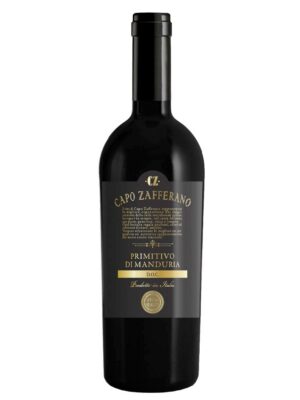
Amadio Pirovano opened the tavern “Da Pirovano” in the mid-800s, selling wine bought mainly from small farmers in southern Italy, especially in Puglia. Today, the fourth generation, with commitment and dedication, continues the growth and development of the family business.
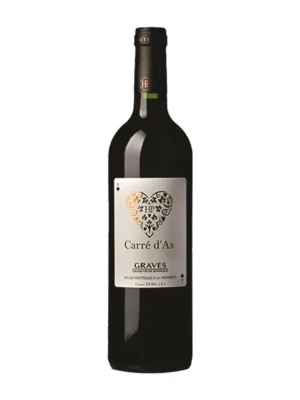
Originally from Schönberg, in the Rhineland, fleeing the consequences of the defeat of Napoleon I, the Yung family origins settled for more than a century in Algeria. Already listed in the first edition of Féret des Vins d’Oranie in 1886, the family developed its vineyard until independence, until forced to abandon the wine estates it had owned since 1859.
In 1862 Charles Young joined his older brother, already settled in Gironde. He then decides to acquire for his 2 children and his 2 nephews, the Château Haut Mondain, a 42-hectare AOC Bordeaux wine estate, followed then by Château Barail, Les Hauts de Palette and Moulin de Tassin.
Since 2020, the Charles Yung & Fils vineyards have been committed to a societal and environmental approach by obtaining High Environmental Value (HVE), level 3 certification.
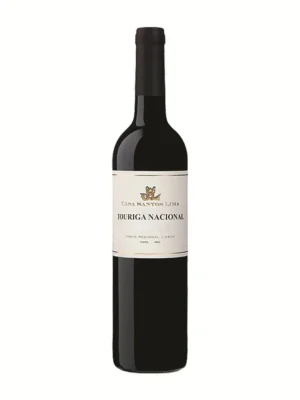
Casa Santos Lima was created to ensure the continuous development of Santos Lima’s wine producing activity created several generations ago. This activity was first started by Joaquim Santos Lima, who, by the turn of 19th century, was already a great producer and exporter of Portuguese wines. Still a family owned company, today is present in the regions of Lisboa, Algarve, Alentejo, Vinho Verde and Douro.
Coming from vineyards grown on smooth sun-kissed slopes, of clay and limestone soils with evident traces of marine fossils, this wine was produced exclusively from Touriga Nacional grapes and shows the excellent characteristics of the variety offering an excellent concentration in colour and aromatic intensity.
Proud ambassadors of the “Made in Sud-Ouest” way of life, Cave du Marmandais combines warmth, festivities and gastronomy to reveal the personality of the people and wines from this terroir. A few kilometres away from the city of Marmande, the vineyards of the Côtes du Marmandais appellation cover both riversides of the Garonne.
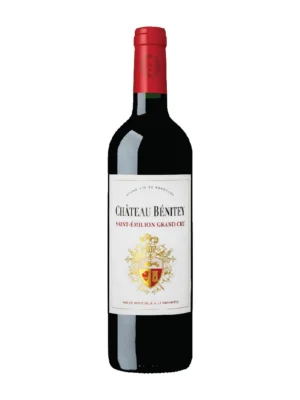
Château Bénitey is located at the foot of the coast, east of Saint-Emilion, in the town of Saint-Laurent des Combes. It takes its name from a cross at the junction of the road above the vineyard, a cross reminiscent of that of a holy water font.
The area is 5 ha with vines whose average age is 40 years and the wine is usually composed mainly of 70% Merlot, aged for 10 months in French oak barrels (20 to 40% new).
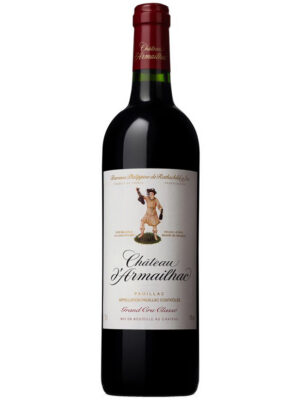
Château d’Armailhac is not only a beautiful setting but also a vibrant working and meeting place for the three Pauillac estates and their beating heart.
A place that reflects the identity of Château d’Armailhac, a combination of timelessness, local roots and elegant sobriety. The owners wanted to create buildings that would look as though they had always been there. As a result, Château d’Armailhac blends seamlessly into the Pauillac winegrowing landscape.
Typically for a Pauillac wine, Cabernets predominate in the blend. However, the relatively high proportion of Cabernet Franc is a hallmark of Château d’Armailhac. The wine is defined by a kind of elegant classicism, discernible whatever the vintage.
Vignobles Lassagne gather several family properties that were bought since three generations and are grown according to tradition and innovation on unique terroir located in the Libourne area.
Vignobles Lassagne encompasses these three properties: Château des Arnauds (the original estate), Château des Landes and Château Maltus, the latest addition to the Vignobles Lassagne.
The soils and basements of the Château des Arnauds located in Abzac, are composed of gravel that can be red with a caliber between fine pebble and coarse sand. Sometimes the gravel is mixed with the clay, sometimes they follow one another in layers. The pebbles flush with the surface allow the sun to reflect on the grapes, thus allowing excellent ripeness. This vineyard developed by father Daniel Lassagne, is located on a beautiful, south-facing plateau of red gravel around the town of Abzac, and being a 100% Merlot varietal, it prodeuces a wine of beautiful balance of roundness and structure.
Cherry-picked by Mathilde Chapoutier Selection, the Château des Ferrages domain is in Pourcieux, in the prime plots of the Sainte-Victoire appellation.
It is here that Côtes de Provence wine finds its unique origins.
Vin biologique – Organic wine.
For more info, visit Château des Ferrages by M. Chapoutierwebsite.
Cherry-picked by Mathilde Chapoutier Selection, the Château des Ferrages domain is in Pourcieux, in the prime plots of the Sainte-Victoire appellation.
It is here that Côtes de Provence wine finds its unique origins.
Vin biologique – Organic wine.
For more info, visit Château des Ferrages by M. Chapoutierwebsite.
VARIETALS
Cinsault, Grenache, Syrah, Rolle and Clairette
It was in 1923, at the Château du Barry , that the history of the Mouty vineyards began.
Donat Mouty , enamored of the culture of Saint-Émilion wines, then set his sights on the vines of Château du Barry.
Here, on this great terroir of character, the vines produce a unique fruit with delicacy.
From this fruit are born silky, fleshy, complex and elegant wines.
Acquired in 1905 by the Gauvin family, this estate is now run by the 4th generation.
This cuvée Laroque offers a good balance with notes of red fruit and tannins already supple on the palate.
VARIETALS
65% Merlot, 25% Cabernet Sauvignon, 10% Cabernet Franc
The wines of the Château Fleur Ursuline have their roots in the terroir of Saint-Émilion. This internationally renowned bastion of taste is a village with rich historical heritage, surrounded by a hillside and natural ecosystem which Matthieu and Karine Verhaeghe fervently protect. By choosing to cultivate naturally since 2001, they are looking to the future, with respect for the land and the plains surrounding them at heart. They are pioneers of biological fermentation, working in harmony with lunar cycles to create their wines for a unique and natural tasting experience.
The old vines of this former convent, planted with high density, make you discover the finesse and charm of this Saint-Émilion Grand Cru Organic.
For more info, visit Château Fleur Ursuline website.
Organic wine certified AB (Agriculture Biologique).
Château La Croix Du Casse was for many years owned and administered by Jean-Michel Arcaute, who also owned Chateau Jonqueyres and world famous Château Clinet.
He was one of Bordeaux`s true innovators and propelled Croix du Casse into the front line of Pomerol properties.
Located at the southern tip of the Pomerol plateau , the Château La Croix du Casse vineyard extends over a terroir characteristic of the appellation, made up of ancient gravel and sand with an underlayer containing a significant proportion of iron dross.