
“Fons Brogiera: a spring surrounded by heather”. This was the first mention of the name Fombrauge which, for 6 centuries now, has epitomised the elegance of the Grand Cru Classé wines of Saint Emilion. From the Canolle family in the 15th century to Bernard Magrez today, six families have succeeded each other in owning and running Château Fombrauge, providing the estate, which harvested its first grapes in 1599, with a rare stability and a pioneering spirit beyond compare.
To ensure the full expression of the estate’s rich terroir, Bernard Magrez, the owner since 1999, today combines ancestral savoir-faire with precision viticulture. The result is a sublime wine, the epitome of a Saint-Emilion Grand Cru Classé.
The SCEA des Vignobles Marcel Petit was created in 1986 by Mr. Marcel Petit with the acquisition of Château Pillebois from the Castillon Côtes-de-Bordeaux appellation.
In 1988, the vineyard grew with Châteaux Franc Lartigue and Grande Rouchonne, located in the Saint-Emilion appellation. It was that same year that the Vignobles Marcel Petit joined the Vignerons Indépendants de France.
In 1997, Mr. Marcel Petit retired, thus entrusting the vineyards to his daughter Elisabeth and his son-in-law Jean-Pierre Toxé.
The vineyard then reached 22 hectares of vines, divided between Saint-Emilion and Castillon.
Situated in the commune of Martillac, this 20-hectares property once belonged to Baron de Montesquieu. Today, the estate is owned by Mr. Eric Perrin which also owns the famous Château Carbonnieux. Because of its special localization, its terroir and the choices of winemaking in the vineyard and the cellar, the Château Haut-Vigneau plays between the greatest ones.
This Haut-Vigneau blanc is quite characteristic of the terroir and the appellation of the AOC Pessac-Léognan.
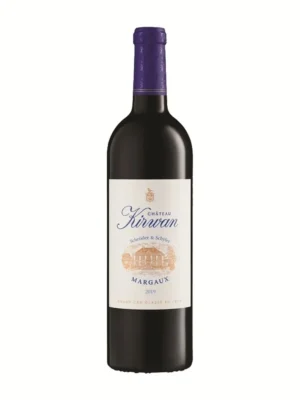
Château Kirwan is an estate located in Cantenac, not far from the city of Bordeaux and the river Garonne, in a terroir where man and nature have been living together harmoniously for hundreds of years.
The Château, built in 1751, was one of the few Medoc properties that Thomas Jefferson, the future third President of the United States, visited on his Bordeaux wine tasting trip in France and mentioned in his diaries written in 1780. Mark Kirwan passed away in 1815 and over the centuries it passed from hand to hand through several owners, until, during the early years of the twentieth century, it was acquired by a family of “negociant”, the Schyler and Schroder, which moved to Bordeaux in 1738 and still in business today.
With 40 hectares divided into 46 parcels that wind within the territory of the AOC Margaux, it is clear and obvious how the keystone of this Château, over the years, has always been the terroir and its strong identity. Its wines have a characteristic soft, gentle attack, followed by a very Margaux lacework of flavours. Cabernet Sauvignon and Petit Verdot provide Kirwan’s main wine with a multi-layered structure that is very big, tempered by the roundness of the Merlot and the delicate elegance of the Cabernet Franc.
The 2019 joins the list of sumptuous vintages ending in the number 9. Throughtout the growing season, the vinse enjoyed smooth, calm conditions. A perfect balance between the amount of foliage and the quantity of grapes was observed in this vintage.
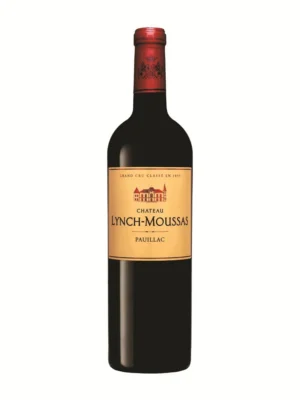
The Château was founded in the 18th century by a member of the Lynch Family. We can trace the origin of the “Moussas” name back to the 16th century.
In 1919 the property was purchased by the Castéja family, at that time also owner of Duhart-Milon and later was inherited by Emile Castéja. Philippe Castéja, Emile Castéja’s son, has been in charge of the property and its vineyards since.
Château Lynch-Moussas is a typical Pauillac exhibiting a dark colour, a fruitful bouquet, a lot of softness with ripe tannins.
For more info, visit Château Lynch-Moussaswebsite.
A well regarded 28ha property on the borders of St Georges-St Emilion owned by the Amart family since 1949, which it is looking out over her neighbours like Cheval Blanc, Vieux Chateau Certan and Chateau Petrus who are just over the Barbanne stream. Tasted against far greater names this is a exceptional value, very elegant, with a lovely weight of fruit. It will not disappoint.
There are certain places where history says far more than words can express. With its moats, its last architectural remains of a bygone century, and its mullion windows, the estate is a real medieval castle. Located just 11km from Bordeaux, Château Olivier has seen generations come and go, new ambitions emerge and innovative projects grow and develop, and has plenty of other legends to share with you.
Château Olivier is one of the oldest wine chateaux in the Bordeaux region. The Olivier seigneury dates back to the 12th century, and the origins of this authentic and enchanting château, located just ouside the gates of Bordeaux city, can be traced back to this period. This classified growth is reputed for wines of outstanding quality, in which elegance, balance and finesse, the hallmark characteristics of the greatest Bordeaux wines, come to the fore in every vintage.
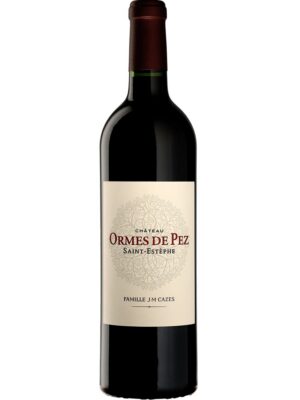
Château Ormes de Pez belongs to the Médoc landscape since the 18th century. Located West of Saint-Estèphe and bordering the hamlet of Pez, the estate owes its name to a magnificent grove of elm trees, which no longer exists today. Château Ormes de Pez is the second property – after Château Lynch-Bages – acquired by the Cazes family in 1939.
With distinctive harmonious spicy character, Château Ormes de Pez is true to its terroir. Wine lovers appreciate its opulence, elegance and well-rounded structure. Its powerful, rich and excellent tannic backbone allows graceful ageing.
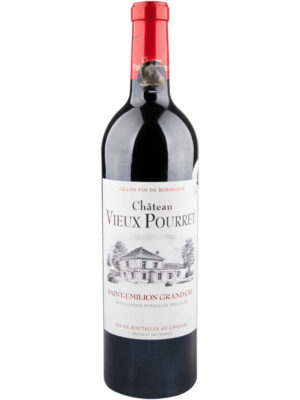
Running along the edge of the Saint-Emilion appellation, this vineyard is owned by the Fauchey family, who have been making wine in the Bordeaux area since the 17th century. The estate, until the second world war, made mostly white wine for the army. Today though, the vineyard is mostly planted with merlot, the grape best suited to the climate and soil of the domain.
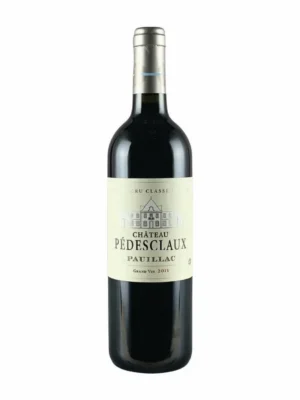
Like all the greatest wines of the appellation, Château Pédesclaux has the complexity that reflects the terroir it springs from. On this mosaic of soils, the clays convey power while the gravels express pure elegance. Pédesclaux embodies the depth that is the quintessence of Pauillac, balanced by a unique sensuality With each vintage, the painstaking work on these excellent plots pays off, while the revolutionary equipment in the winery enables the wine to develop its own unique personality.
Across the years, a narrative arc has become visible: a scent special to this terroir that is a blend of blackcurrant, violet and cigar box. Sometimes denser and more tropical, at other times more ethereal, always maintaining the balance between powerful aromas and the silky delicacy of the tannins, Château Pédesclaux also boasts a formidable cellaring potential – another key feature of the great Pauillac terroirs.
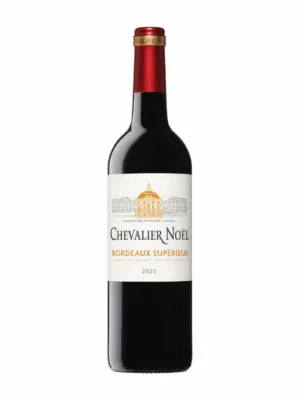
Originally from Schönberg, in the Rhineland, fleeing the consequences of the defeat of Napoleon I, the Yung family origins settled for more than a century in Algeria. Already listed in the first edition of Féret des Vins d’Oranie in 1886, the family developed its vineyard until independence, until forced to abandon the wine estates it had owned since 1859.
In 1862 Charles Young joined his older brother, already settled in Gironde. He then decides to acquire for his 2 children and his 2 nephews, the Château Haut Mondain, a 42-hectare AOC Bordeaux wine estate, followed then by Château Barail, Les Hauts de Palette and Moulin de Tassin.
Since 2020, the Charles Yung & Fils vineyards have been committed to a societal and environmental approach by obtaining High Environmental Value (HVE), level 3 certification.
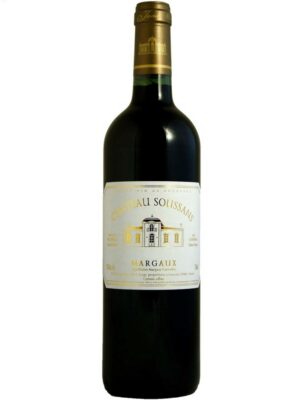
Vignobles Jean Sorge are home to the cru bourgeois Château Deyrem-Valentin and its little sister, Château Soussans. The estates nestle between two grands crus classés and date back to 1730. Christelle Sorge is now in charge and she continues on a path of tradition married with innovation to provide wines of ever increasing quality to lovers of Margaux everywhere.
In the small village of Liginiac in Corrèze, the Moueix are recognized and respected for having lived by and passed on two core values, essential to success: Discretion and Hard Work. When Antoine Moueix (1796 – 1874), the first of the namesake, settled with his family in Lieu-dit Manzac on the Millevaches plateau, he had no idea that his descendants would establish one of the biggest wine dynasties in Bordeaux and California.
Today, Antoine Moueix Propriétés walks in the footprints of their founder: discretion and hard work, passion for great terroir, good agricultural sense and social responsibility, for transmission of expertise and the pursuit of excellence in all areas.
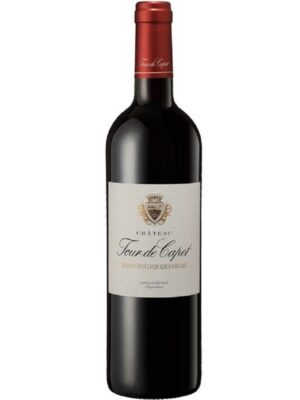
Vinified within Château Capet-Guillier, Tour de Capet enjoys its own unique terroir, lending the wine identity and character.
The sandy-silt soil produces wines of great finesse, which draw character from the well-balanced structure and round-bodied nature of Merlot.
For more info, visit Antoine Moueix Propriétés website.
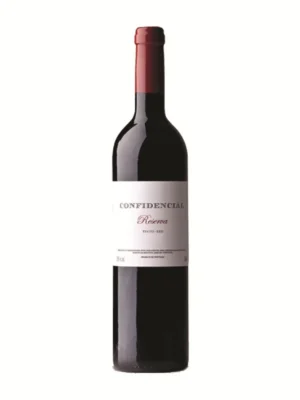
Casa Santos Lima was created to ensure the continuous development of Santos Lima’s wine producing activity created several generations ago. This activity was first started by Joaquim Santos Lima, who, by the turn of 19th century, was already a great producer and exporter of Portuguese wines. Still a family owned company, today is present in the regions of Lisboa, Algarve, Alentejo, Vinho Verde and Douro.
This quality wine was produced from a selection of the best varieties of this region, using traditional fermentation techniques, long maceration and oak ageing period. Very aromatic with notes of ripe wild berry fruits, in the palate it is a fruity and full bodied wine with some oak notes and an agreeably pronounced acidity.
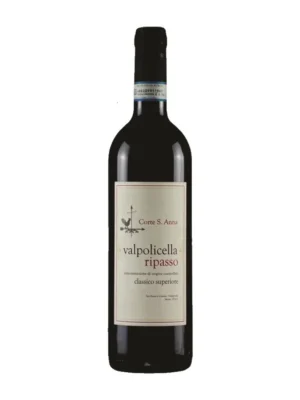
Corte S. Anna is the name of the courtyard located in front of the restored tufa country house. It is symbolized by the weathervane in the courtyard, which features a rooster.
The line Corte Sant’ Anna, which is vinified and bottled by Rubinelli Vajol, identifies this younger Ripasso, which has a shorter ageing period.