
Finca La Emperatriz is a winery with an extensive vineyard estate in Rioja Alta.
Viñedos Hermanos Hernáiz is the new project of brothers Eduardo and Víctor, who in 1996 acquired Bodega La Emperatriz, named as such because the first owner of these plots was Eugenia de Montijo, wife of Napoleon III and Empress of France. With this new emphasis and with new projects at hand, the winery changed its name but its high-end wines retain the Finca La Emperatriz signature, the name of the ‘viñedo singular’ they come from, which is given to small, old plots with limited but high quality production and which, in summary, must comply with a series of strict standards to prove their quality. The grapes used to make El Jardín de la Emperatriz Tinto come from plots where the soils are mostly composed of white boulders over a sandy-loam structure and where the vines have an average age of 25 years old.
Since January 2020, the range of Classic Blends and Single Plot wines have disappeared, giving way to four new labels: a high-end red and white called “Finca la Emperatriz Gran Vino”, a blend of traditional Rioja varieties from a “viñedo singular”, a pure expression of terroir, like the great chateaux of Bordeaux; and their respective younger brothers also from the same estate, called El Jardín de la Emperatriz.
For more info, visit Finca La Emperatriz / Hermanos Hernáiz website.
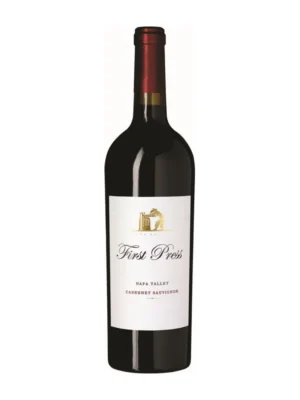
Elegance. Structure. Balance. These are the elements of the extraordinary. You find them in the soaring work of architecture, the perfect line of poetry, the ballerina’s graceful leap, and in the exquisitely crafted Napa Valley wines of First Press Wine Cellars.
First Press Wine Cellars focuses on the two varietals which best exemplify California’s premier winegrowing region, a richly textured Cabernet Sauvignon and a brightly refreshing Chardonnay.
Château Nénin is located in the village of Pomerol, one of the most prestigious areas of Bordeaux. The Domaine was bought by Jean-Hubert Delon in 1997 from his cousins, the Despujols, owners of the estate since 1847. Jean-Hubert had the intention of continuing the centuries-old tradition of the Château, and precisely for this reason, since immediately, extensive renovation and modernization works, including technical ones, were carried out. Under his direction, the land was in fact drained, the vineyards renewed and the cellars modernised, to improve the vinification and aging processes.
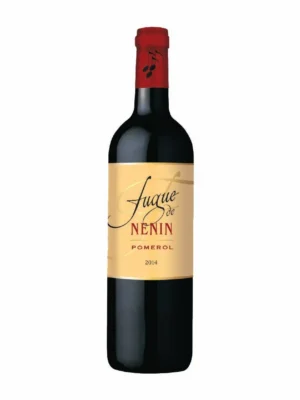
Fugue de Nénin was created and first sold in 1997. Fugue comes from sandy-clay soils found in the eastern part of the Château’s vineyards, as well as from the young vines. This second wine is a typical example of the charm of Pomerol. The wines are smooth and silky and can be enjoyed earlier than those of the Grand Vin.
Fugue de Nénin 2013 comes from sandy-clay soils representing the eastern half of the estate’s vineyard and it is made from mainly Merlot, with a floral component by Cabernet Franc.
The name Cielo e Terra (literally Sky and Land, or Heaven and Earth) recreates a perfect marriage, where Heaven is represented by the family of the same name and the Land is identified with the expert hands of the winegrower partners working in the vineyards that yield these wines.
The grapes for this magnificent Toscana IGT red undergoes the traditional winemaking practice of slow fermentation of the fresh drawn-off wine which is combined with light drying of grapes, to give a softer and more modern taste.
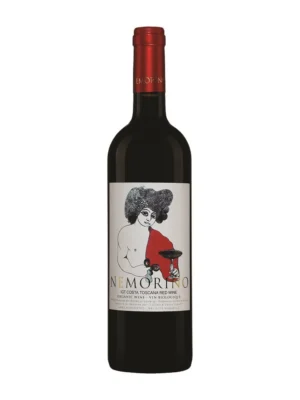
L’Elisir D’Amore is an Italian 19th century opera buffa by Gaetano Donizetti. It tells the story of the charlatan pharmacist Dulcamara whose “love filter”, in truth a bottle of Bordeaux, helps Nemorino conquer the heart of the beautiful Adina despite Belcore’s interference. A complex tale of ploys and passion, with the sweet tones of love and the bitter taste of jealousy – it offers a representation of wine as a powerful love filter that is fitting with the charming wisely-balanced intensity of I Giusti & Zanza wines.
The Red Nemorino’s composition varies slightly from vintage to vintage. It is primarily composed of Syrah (about 60%), with additions of Merlot and Sangiovese, as well as small shares of Alicante, according to the vintage.
The agricultural conduction is organic and biodynamic in the vineyards.
Son and grandson of Jean Pabiot, Alain and Jérôme manage the Domaine des Fines Caillottes within the Pouilly-Fumé appellation. The terroirs, mainly clay limestone, are therefore very varied: white limestone pebbles known as “caillottes”, marl with small fossilized oysters (kimmeridgian) and flint. This diversity of terroirs gives the estate’s wines their aromatic complexity.
“Kiméride” comes from Kimmeridgian, the period of the geological formation of this terroir. This vintage is a selection of plots from this terroir whose limestone stones are dotted with fossils (ammonites, small oysters, etc.). This cuvée is produced only with the best vintages, and exclude grapes from young vines.
Richness, concentration, elegance and intense aromas of ripe fruit characterize this Pouilly-Fumé which expresses the quintessence of Sauvignon.
Certified TERRA VITIS (for the respect of the environment, Men and wines produced) and HIGH ENVIRONMENTAL VALUE (for the respect of biodiversity and the reduction of the inputs).
Owned by the Bernard family since 1983, the magnificent Domaine de Chevalier is at the top of the greatest Crus Classés of Bordeaux.
The estate is located in the heart of the Pessac-Léognan appellation which is located in a green setting south of Bordeaux.
Domaine de Chevalier watches over a rare vineyard with 60 hectares of red vines. The vineyard is based on a gravel terroir with clay-gravelly subsoils. Since 1986, the young vines have been intended to ripen the berries which are used in the blending of the estate’s second wine, L’Esprit de Chevalier.
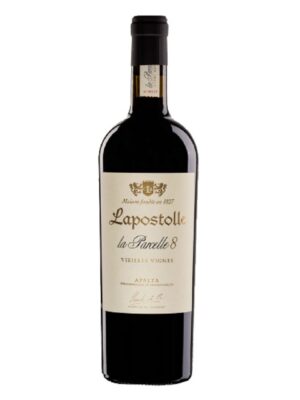
After years of research and selection, Lapostolle is now launching a Single Vineyard wine from Apalta: Parcelle 8.
It is a 100% Cabernet Sauvignon with extremely low yields., which ensures a lot of concentration in the wine.
First commercially released wine from old-vine cabernet sauvignon, grown on its own rootstock with the vast majority from 1910.
It’s made in a fraction of the quantity of Clos Apalta, basically a secret reserve-bottling and originally made just for the owners to drink, James Suckling was the first to taste it first and immediately gave the Parcelle 8 a great score: 98/100 points.
Complex and intense with a rare mineral quality for the hot 2020 vintage.
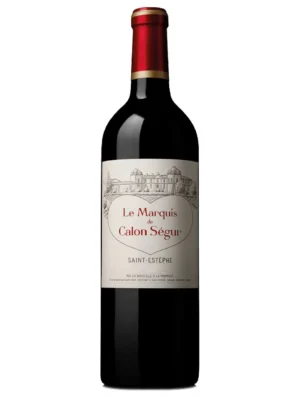
The estate’s Second Wine offers a different interpretation of the Calon terroir. Le Marquis de Calon Ségur is totally distinct from the First Wine, Château Calon Ségur Grand Cru Classé. “It benefits from a true expression of its own”, underlines Vincent Millet. “The plots are separated out from the beginning.”
Le Marquis de Calon Ségur provides immediate enjoyment, warmth and a velvety texture. It is carefully aged generally for 17 months in oak barrels, a third of which are new. Deliciously easy-drinking, silky and expressive, its charm comes to the fore, while at the same time bringing to our minds the elegance of the Grand Vin.
For more info, visit Château Calon Ségurwebsite.
VARIETALS
54% Cabernet Sauvignon, 44% Merlot, 2% Cabernet Franc
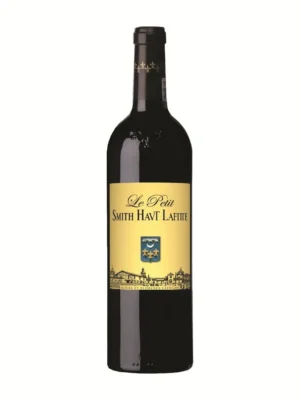
Located in the heart of the Pessac-Léognan appellation and dating back to 1365, Château Smith Haut Lafitte is one of the oldest châteaux in Bordeaux. This magnificent property entered a new era in its history following its acquisition by Daniel and Florence Cathiard in 1990. Driven with passion and ambition by the Cathiards, Château Smith Haut Lafitte has established itself as one of the finest properties in the Graves region, with wines world-renowned for their elegance and style, both red and white.
The Petit Smith Haut Lafitte is is the second wine of Château Smith Haut Lafitte but produced and cared for with the same attention reserved for the château’s first wine. The château uses its own vines, thanks to a mother vine preserved in the nursery on Lalande Island.
For more info, visit Château Smith Haut Lafittewebsite.
The brand Le Preare was created by Cantina Valpolicella Negrar to pay tribute to a history, where previous generations very often paid a very high price, allowing todays generation of vine growers to benefit from the hard work of their forefathers.
Located in the heart of the Valpolicella Classico, this area was also known for its prestigious stones, such as the red marble of Verona. It was widely used by the Venetians when building their villas. However, the use of other local stones, less prestigious then marble, was wide spread. The antique mines where the stone was taken, were called “preare” in local dialect. The local stones were used to separate the vineyards and also to build the terraces, allowing the vines to grow also on steep slopes.
This Amarone truly expresses the company philosophy, shown through the wine’s balance between elegance and structure. Made from grapes grown in the Valpolicella Classica zone, which undergo “appassimento” (gentle drying) before ageing in large oak barrels for a minimum of 24 months and further maturation of 6-8 months in bottle.
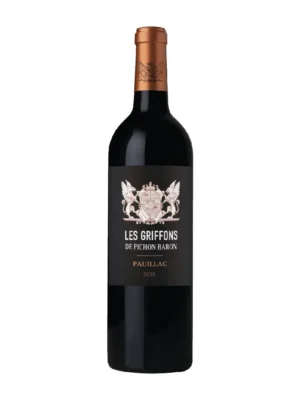
Les Griffons de Pichon Baron is one of the second wines of the property. Created since the 2012 vintage, it has a pure and direct character.
The grapes which make up this wine’s blend come primarily from gravelly plots of land near the Gironde estuary, a good environment for Cabernet-Sauvignon.
Les Griffons offers a vigorous and fresh tasting experience, full-bodied and clean, overflowing with energy.
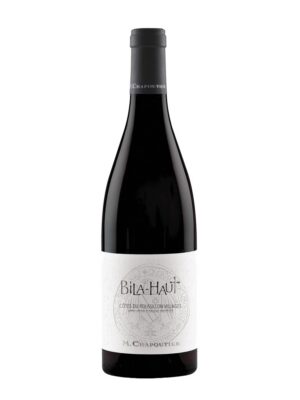
It was in Latour de France that M.Chapoutier chose to set up his domain. The vines of Bila-Haut and Occultum Lapidem were the first expressions of this terroir. The story continued near a little village called Lesquerde. Steep, craggy limestone, arid soil, battered by the tramontane wind…
The vineyard of Occultum Lapidem is located on gneiss and schistous soils from the Devonian Period and limestone from Kimmeridgian Period.
For more info, visit M. Chapoutier – Domaine de Bila-Hautwebsite.
The story began with Michel Chapoutier, a unique man with a thirst for knowledge, definitely one of a kind. He seeks to discover and reflect the full potential of his terroirs and let the soils express their true character.
This now forms the basis of the M. CHAPOUTIER ethos to reveal the very best of what the soils have to offer.
The story began with Michel Chapoutier, a unique man with a thirst for knowledge, definitely one of a kind. He seeks to discover and reflect the full potential of his terroirs and let the soils express their true character.
This now forms the basis of the M. CHAPOUTIER ethos to reveal the very best of what the soils have to offer.
The Prestige line is M.Chapoutier’s heritage, representing classic Grands Crus signed Maison M. CHAPOUTIER and representative of their appellations in the Rhône Valley.
Made from 100% Syrah, the vines of Les Bécasses are grown on the South and South-East slopes, which allows the grape variety to express itself with great power and elegance, and deliver a wine of great finesse and good length.