
In 1997, Baroness Philippine de Rothschild, Chairman of the Advisory Board of Baron Philippe de Rothschild S.A., and Eduardo Guilisasti Tagle, Chairman of Viña Concha y Toro S.A., sealed a partnership agreement with a view to create an exceptional Franco-Chilean wine called Almaviva. Produced under the joint technical supervision of both partners, the first vintage achieved immediate international success upon its launch in 1998.
The name Almaviva, though it has an Hispanic sonority, belongs to classical French literature: Count Almaviva is the hero of The Marriage of Figaro, the famous play by Beaumarchais (1732-1799), later turned into an opera by the genius of Mozart. The label, meanwhile, pays homage to Chile’s ancestral history, with three reproductions of a stylised design, which symbolises their vision of the earth and the cosmos. The label bears the name Almaviva in Beaumarchais’ own handwriting. Two great traditions thus join hands to offer the whole world a promise of pleasure and excellence.
The name Cielo e Terra (literally Sky and Land, or Heaven and Earth) recreates a perfect marriage, where Heaven is represented by the family of the same name and the Land is identified with the expert hands of the winegrower partners working in the vineyards that yield these wines.
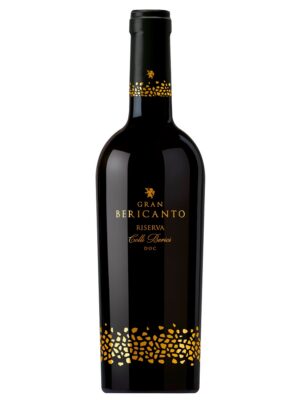
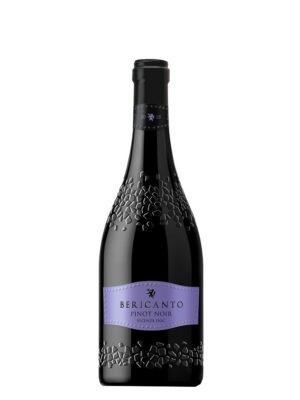
Bericanto is an exclusive exclusive brand of Cielo e Terra and an exclusive wine project, created to celebrate 20 years of the effective collaboration with the winemakers of the Vicenza hills.
A creation of unique wines, carefully selecting the best productions of the right partners, placing them in special bottles to enhance their uniqueness, deeply rooted in the stone of Vicenza hills.
The name Cielo e Terra (literally Sky and Land, or Heaven and Earth) recreates a perfect marriage, where Heaven is represented by the family of the same name and the Land is identified with the expert hands of the winegrower partners working in the vineyards that yield these wines.
Bericanto is an exclusive exclusive brand of Cielo e Terra and an exclusive wine project, created to celebrate 20 years of the effective collaboration with the winemakers of the Vicenza hills.
A creation of unique wines, carefully selecting the best productions of the right partners, placing them in special bottles to enhance their uniqueness, deeply rooted in the stone of Vicenza hills.
A unique and challenging “Noir”, made by careful selection of grapes of the most suitable areas of Vicenza hills. Surprising for intensity and elegance.
In the heart of Langhe, Italy, where technology and rural tradition coexist, lies the Bosio Family Estates Winery. The winery, founded in 1967, is an official Unesco Human Heritage and prides themselves in keeping authentic winemaking traditions and excellences. Bosio’s wines are vinified in small parcels to produce vintages with great varietal character and are some of the best value from the Piedmont region.
The vineyards of Bosio ‘Boschi Dei Signori’ Barolo are located in the Verduno sector on clay-limestone soils. A rare find, a truly delicious, approachable and affordable Barolo.
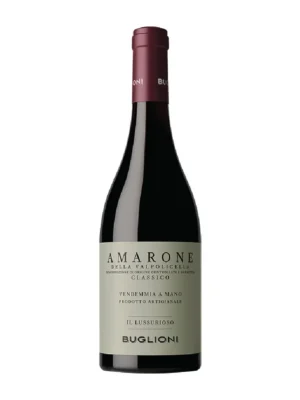
Buglioni produces distinctive wines and, alongside the traditional Valpolicella styles, offers more unconventional and pure expressions that reveal the authentic character of the territory and its native varieties.
“Il Lussurioso” gets its name from the long lasting, luxurious, finish it has on the palate. This Amarone is made from 100% estate fruit, which comes from Buglioni’s Vignieto San Pietro in Valpolicella Classico. The vineyard, Sant’Ambrogio is located at an altitude of about 495ft and consists of dark, clayey soils with a high content of gravel. Grapes are manually harvested towards mid-September and are dried until January using the appassimento process.
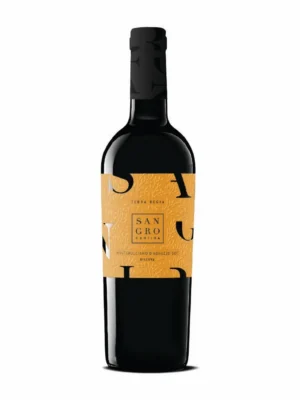
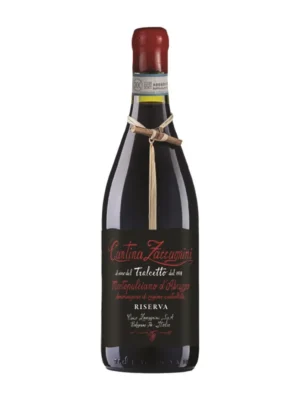
In the heart of Bolognano, a small town in Abruzzo region, Zaccagnini company has been established in 1978. Starting from a family-run business, the Winery has grown rapidly and steadily with the goal of “absolute quality, from cluster to glass”, reaching the current condition of an international reality with more than 300 hectares of beautiful vineyards, well-kept and monitored at every production stage. Excellence, passion and devotion to job have made Tralcetto’s wines the pride of Abruzzi’s wine production appreciated all over the world.
Zaccagnini Montepulciano d’Abruzzo ‘Tralcetto’ Riserva is made exclusively from Montepulciano grapes grown on medium-textured clay soils and crafted to showcase the finest qualities of this Abruzzo indigenous grape. It embodies a distinctive character, where robust structure meets the grape’s signature aromatic elegance.
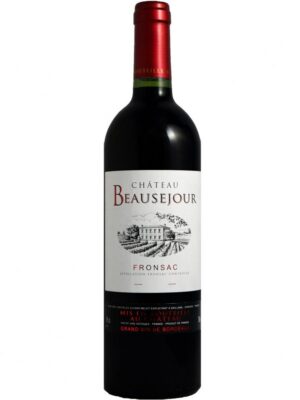
The Melet family has owned Château Bel-Air in Pomerol since 1914 and Château Beausejour in Fronsac for five generations. Following the family tradition, the focus remains on quality. Since 2011, the consultant oenologist has been Bordeaux’s rising star, Stéphane Derenoncourt.
VARIETALS
85% Merlot, 10% Cabernet Sauvignon, 5% Cabernet Franc
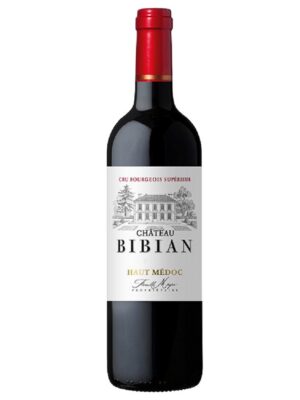
Château Bibian is a historic (and one of the oldest) property in Listrac-Médoc, located between the more famous communes of Margaux and Saint-Julien.
The château, purchased by the Meyre family in 1999 and a Cru Bourgeois Supérieur classified, is today run by the 6th generation, where Nathalie and Julien Meyre, in consultation with the famous wine consultant (Michel Rolland), carry on the family traditions and produce this classic Bordeaux wine.
Located in the southern part of the Bordeaux Medoc peninsula, Château Cantemerle, designated a great growth in the famous 1855 classification, thanks to its unique terroir, produces complex well-balanced and refined wines.
The wine’s structure displays reserve and complexity, with a welltempered richness and great length. It represents a perfect model of elegance, balance, and the fine flavors typical of Cantemerle’s greatest wines.
This 2013 is so easy to enjoy that your glass is ready to be refilled before you know it…
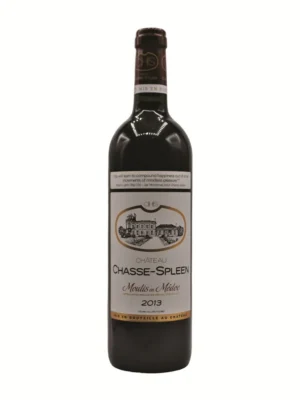
Château Chasse-Spleen is the leading Moulis estate along with Château Poujeaux. Although it is classified only as a Cru Bourgeois, it regularly outperforms many of the Médoc’s more renowned classed growths. There are numerous stories trying to explain the name of Chateau Chasse Spleen. The first version is that the name was inspired from a visit by Lord Byron in 1821, which was so moved, that he quoted, “Quel remede pour chasser le spleen”, which when loosely translated means, “What remedy to remove the spleen?”. The other equally poetic explanation is attributed to the poem Spleen, whose author Charles Baudelaire also visited Château Chasse-Spleen.
A very elegant, fresh and classical wine with a lot of energy and drive on the finish with great aging potential.
For more info, visit Château Chasse-Spleenwebsite.
VARIETALS
60% Cabernet Sauvignon, 33% Merlot, 7% Petit Verdot
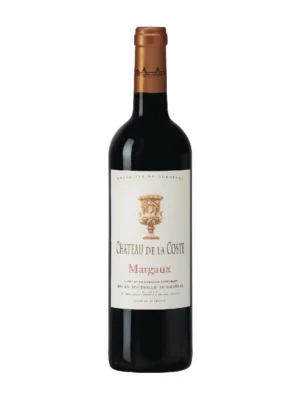
Château de La Coste is the second wine of Château Paveil de Luze, one of the oldest properties in the Médoc. The vineyard dates from the 17th century and is run by the Barons de Luze Family since 1862. Today, Marguerite and Catherine de Luze represent the sixth generation and continue to elaborate fine and delicate wines. Château de la Coste’s vineyards are in the northern part of the Margaux appellation.
Château de la Coste is an excellent, early-drinking representation of the Margaux appellation from a highly-regarded Bordeaux vintage. As the second wine of Château Paveil de Luze, it offers the classic elegance and “feminine” character of Margaux at a more accessible price point.
For more info, visit Château Paveil de Luzewebsite.
VARIETALS
50% Cabernet Sauvignon, 45% Merlot, 5% Cabernet Franc
“Fons Brogiera: a spring surrounded by heather”. This was the first mention of the name Fombrauge which, for 6 centuries now, has epitomised the elegance of the Grand Cru Classé wines of Saint Emilion. From the Canolle family in the 15th century to Bernard Magrez today, six families have succeeded each other in owning and running Château Fombrauge, providing the estate, which harvested its first grapes in 1599, with a rare stability and a pioneering spirit beyond compare.
To ensure the full expression of the estate’s rich terroir, Bernard Magrez, the owner since 1999, today combines ancestral savoir-faire with precision viticulture. The result is a sublime wine, the epitome of a Saint-Emilion Grand Cru Classé.
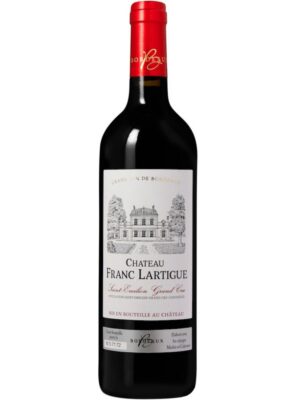
The SCEA des Vignobles Marcel Petit was created in 1986 by Mr. Marcel Petit with the acquisition of Château Pillebois from the Castillon Côtes-de-Bordeaux appellation.
In 1988, the vineyard grew with Châteaux Franc Lartigue and Grande Rouchonne, located in the Saint-Emilion appellation. It was that same year that the Vignobles Marcel Petit joined the Vignerons Indépendants de France.
In 1997, Mr. Marcel Petit retired, thus entrusting the vineyards to his daughter Elisabeth and his son-in-law Jean-Pierre Toxé.
The vineyard then reached 22 hectares of vines, divided between Saint-Emilion and Castillon.
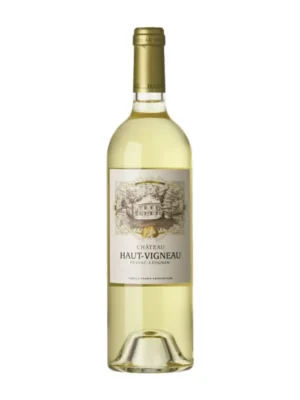
Situated in the commune of Martillac, this 20-hectares property once belonged to Baron de Montesquieu. Today, the estate is owned by Mr. Eric Perrin which also owns the famous Château Carbonnieux. Because of its special localization, its terroir and the choices of winemaking in the vineyard and the cellar, the Château Haut-Vigneau plays between the greatest ones.
This Haut-Vigneau blanc is quite characteristic of the terroir and the appellation of the AOC Pessac-Léognan.
Château Kirwan is an estate located in Cantenac, not far from the city of Bordeaux and the river Garonne, in a terroir where man and nature have been living together harmoniously for hundreds of years.
The Château, built in 1751, was one of the few Medoc properties that Thomas Jefferson, the future third President of the United States, visited on his Bordeaux wine tasting trip in France and mentioned in his diaries written in 1780. Mark Kirwan passed away in 1815 and over the centuries it passed from hand to hand through several owners, until, during the early years of the twentieth century, it was acquired by a family of “negociant”, the Schyler and Schroder, which moved to Bordeaux in 1738 and still in business today.
With 40 hectares divided into 46 parcels that wind within the territory of the AOC Margaux, it is clear and obvious how the keystone of this Château, over the years, has always been the terroir and its strong identity. Its wines have a characteristic soft, gentle attack, followed by a very Margaux lacework of flavours. Cabernet Sauvignon and Petit Verdot provide Kirwan’s main wine with a multi-layered structure that is very big, tempered by the roundness of the Merlot and the delicate elegance of the Cabernet Franc.
The 2019 joins the list of sumptuous vintages ending in the number 9. Throughtout the growing season, the vinse enjoyed smooth, calm conditions. A perfect balance between the amount of foliage and the quantity of grapes was observed in this vintage.