
For many years, the isolated mountain valleys of Northern Argentina were home to the Incas. Today the valleys are home to the highest vineyards in
the world, lying at an altitude of 2000 metres above sea level. Here the crystal clear skies, pure mountain air, and a long cool growing season provide perfect conditions for the production of quality grapes.
This Malbec is vinified in a modern style with cooler temperatures, in order to keep the delicate fruity character of the Malbec grape.
Son and grandson of Jean Pabiot, Alain and Jérôme manage the Domaine des Fines Caillottes within the Pouilly-Fumé appellation. The terroirs, mainly clay limestone, are therefore very varied: white limestone pebbles known as “caillottes”, marl with small fossilized oysters (kimmeridgian) and flint. This diversity of terroirs gives the estate’s wines their aromatic complexity.
The “Domaine des Fines Caillottes” Pouilly-Fumé is the blend of wines from the great diversity of terroirs and vines of various ages from the estate.
Certified TERRA VITIS (for the respect of the environment, Men and wines produced) and HIGH ENVIRONMENTAL VALUE (for the respect of biodiversity and the reduction of the inputs).
Kalfu means “Blue” in Mapudungun, the language of the aboriginal Mapuche people of the region. It represents the color that provides a myriad of sensations: blue, like the Pacific Ocean’s intense blue; and blue, like the free sky, acting as an accomplice of and witness to the mysterious origins of life.
Molu means West or “where the sun sets”. History tells us that the mapuche saw the stars in the sky over the Pacific Ocean and as the earth was rotating, they would hide in the sea and become starfish. At that time no one knew that the earth was round and turning; back then they believed the stars were falling into the deep darkness of the ocean.
Kalfu means “Blue” in Mapudungun, the language of the aboriginal Mapuche people of the region. It represents the color that provides a myriad of sensations: blue, like the Pacific Ocean’s intense blue; and blue, like the free sky, acting as an accomplice of and witness to the mysterious origins of life.
Molu means West or “where the sun sets”. History tells us that the mapuche saw the stars in the sky over the Pacific Ocean and as the earth was rotating, they would hide in the sea and become starfish. At that time no one knew that the earth was round and turning; back then they believed the stars were falling into the deep darkness of the ocean.
Located in the town and region of Robertson, Klippenkop is one of the most famous wineries in South Africa. The estate got established in 1941 as a venture and endeavour when several families came together with the same aim and objective in the district of Cape Winelands. The winery derives its name from two separate terms- “klippen” and “kop.” The former is a topographical or geographical term that refers to a rock’s outcrop. On the other hand, the latter is a word that means head or hillock in the African language.
An appealing full-bodied wine with good structure with lovely balancing acidity.
The vineyards from which Kono sources its grapes are spread predominantly throughout the sub-regions of Marlborough.
Each have their own unique micro climate and soil type, each with its own distinct flavour profile.
The difference is the key to blending a truly authentic expression of the region’s terroir.
The gift of knowledge and rich, unspoiled lands have created award winning wines over flowing with personality and purity.
Classic Marlborough harvest conditions with clear days and cool nights prevailed in 2022, with the grapes developing ripe, concentrated fruit flavours without losing the crisp balancing acidity and freshness our wines are renowned for.
Located on a schist Terroir, typical of Languedoc, and with a very sunny Mediterranean microclimate, La Cave de Roquebrun produces wines in AOC Saint-Chinian-Roquebrun, AOC Saint-Chinian, AOC Languedoc and IGP Pays d’Oc, all original and high quality wines.
The farming co-operative La Guardiense, which is one of the biggest in Italy, was founded in 1960 by 33 farsighted and courageous farmers. Today it counts around 1,000 farmer members and it has been very successful in adapting to the new era and to the many market changes that have occurred over this time, thus becoming a symbol of the technological progress for the entire province of the Sannio region combining as it does experience and modernity.
L’Aglianico Janare is a red wine of the Sannio soft, generous and fruity, excellent value for money. After aging for 6 months in French oak barrels it gives off notes of ripe cherries, red fruit, vanilla and gives a full, soft, warm and enveloping sip.
The farming co-operative La Guardiense, which is one of the biggest in Italy, was founded in 1960 by 33 farsighted and courageous farmers. Today it counts around 1,000 farmer members and it has been very successful in adapting to the new era and to the many market changes that have occurred over this time, thus becoming a symbol of the technological progress for the entire province of the Sannio region combining as it does experience and modernity.
The Falanghina, in particular, comes from a careful selection in the vineyard and from aging in the cellar in steel tanks only, ideal containers to keep the natural fragrance characteristics unaltered. A white of great fragrance and freshness.
The Huteau Boulanger winery was founded by Catherine and Francois in the heart of Muscadet Sèvre et Maine. The winery has 45 hectares of vineyards. “If you respect nature, soil, climate, he will give you an exceptional Muscadet that combines sophistication and freshness.”
The company’s philosophy is based on a huge love and passion for winemaking and minimal impact on the ecosystem.
The grapes of this Sauvignon are harvested at optimum ripeness. First juice from traditional pressing, settling by cold stabilization, during fermentation, with the addition of 10% of filtered must to bring structure and power to the wine.
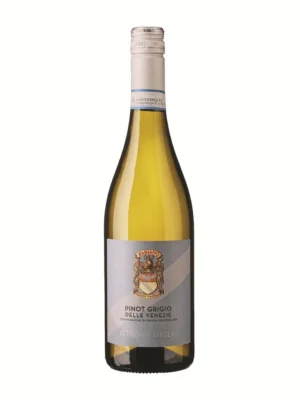
La Torre di Veglia (The Watchtower), ancient towers rise above the rolling hills and vineyards throughout northern Italy. On the border of the Veneto in Friuli, this picturesque landscape provides a cool mountain climate, perfect for grape production. These perfectly farmed and sustainable grapes express freshness and fruit character with great balance.
Sourced from mineral rich soils with rocky clay and limestone, vine rows are planted from north (the mountains) to south (the sea) for best exposure and ventilation from incoming winds. With La Torre, you will experience an authentic style of Pinot Grigio that is both balanced and enjoyable with white flowers, orchard fruits, yellow peach, and citrus. A great value, but never at the expense of quality.
Certified ISO sustainable with integrated farming practices, without use of pesticides or herbicides.
Renewable sources are utilized to cover the total energy output.
The estate recycles over 90% of its waste.
Lamador is a dedicated brand under InVina, a 100% family-owned venture which focused on investing in and developing vineyards in the Maule Valley. The Huber family, with more than 15 years experience in Chilean viticulture, continues to believe that the key to Chile’s success is based on the quality and diversity of their grapes, which come from 4 different micro-climates in the Maule Valley. This wine has intense colour, powerful and fruity notes with balanced and smooth tannins.
Lamador is a dedicated brand under InVina, a 100% family-owned venture which focused on investing in and developing vineyards in the Maule Valley. The Huber family, with more than 15 years experience in Chilean viticulture, continues to believe that the key to Chile’s success is based on the quality and diversity of their grapes, which come from 4 different micro-climates in the Maule Valley. This wine has dense colour, rich and fruity notes with a smooth, elegant finish.
This Grand Selection Sauvignon Blanc comes from a very special area in Cachapoal, directly beneath the foothills of the Andes, and enhances the best fruit that Rapel Valley has to offer. The vines grow with the cold influence of the mountains and express all the minerality of the vineyards unique stony soil: Las Kuras means “stones” in the native language.
The 2024 vintage is considered a cold and late season in Colchagua. The wines show great depth, with elegance and great fruit expression, and remarkable acidity and aging potential.
Vignobles Lassagne gather several family properties that were bought since three generations and are grown according to tradition and innovation on unique terroir located in the Libourne area.
Vignobles Lassagne encompasses these three properties: Château des Arnauds (the original estate), Château des Landes and Château Maltus, the latest addition to the Vignobles Lassagne.
Château des Landes is a family vineyard created in 1952, on the Lussac Saint Emilion appellation zone.
At the beginning, Paul Lassagne started with only 2 hectares and worked by night at a local roof tile factory, and by day on his little property with vines, land and pasture.