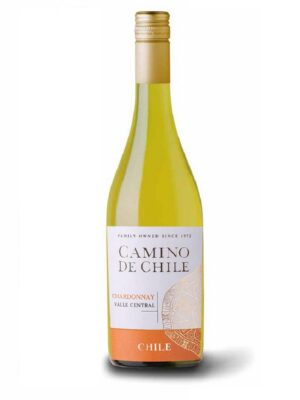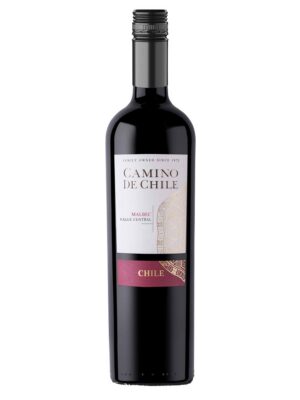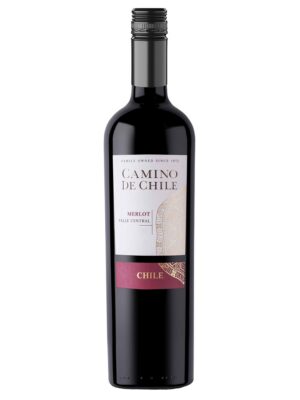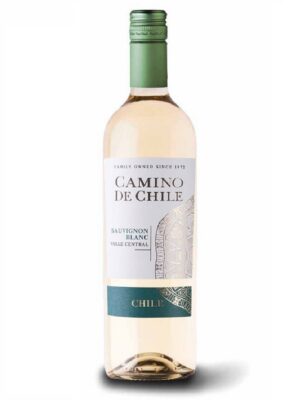

The grapes come from vineyards located in Villa Alegre, 285 km south of Santiago, in Maule Valley. This place has a Mediterranean-like climate, with mild winters and dry summers, with marked range of temperatures between day and night.
This allows the grapes to get ripe tannins, as well as excellent aromas and color concentration. Soils are a combination of sand and volcanic ash and the flat terrain gets and superb sunlight exposition. Yields are carefully controlled to produce concentrated wines, excellent quality and elegance.
Camino del Chile indicates the direction of Bodegas De Aguirre, today known as VDA, Viña de Aguirre, from their origins and their ancestors towards excellence.
Classified as AA Company under the BRC Global Standards Quality Program.
The Cantina di Negrar brand is the soul of Cantina Valpolicella Negrar and pays homage to the philosophy of cooperative production while also recalling the territory’s historical vestiges: the effigy of St. Mark’s Lion standing tall on a column in the centre of Negrar is testimony of the Venetian Republic’s domination in the sixteenth century. The Cantina di Negrar wines are rooted in the wine-making tradition of Valpolicella and the Veronese wine-growing areas, with a modern reinterpretation to guarantee the best price/quality ratio.
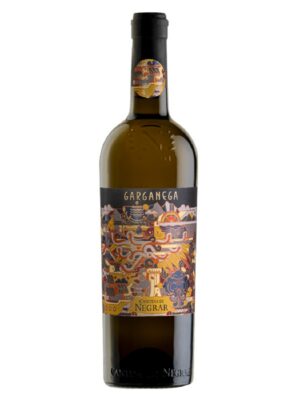
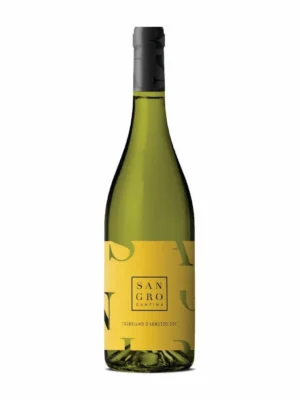
Garganega is the queen of white Veronese grape varieties, typical of Soave, on foothills 80 metres above sea level with soils of volcanic origin.
The catchy and interesting label depicts Ulysses’ 10-year journey home from Troye to Ithaca. Every facet of his journey captivates the sense of discovery, self-discovery, and world discovery Ulysses experiences in those enchanted 10 years.
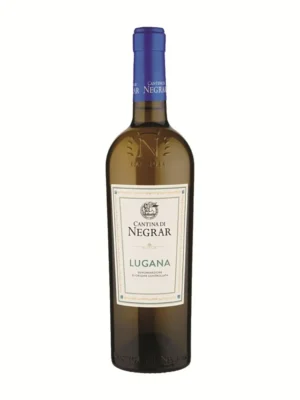
The Cantina di Negrar brand is the soul of Cantina Valpolicella Negrar and pays homage to the philosophy of cooperative production while also recalling the territory’s historical vestiges: the effigy of St. Mark’s Lion standing tall on a column in the centre of Negrar is testimony of the Venetian Republic’s domination in the sixteenth century. The Cantina di Negrar wines are rooted in the wine-making tradition of Valpolicella and the Veronese wine-growing areas, with a modern reinterpretation to guarantee the best price/quality ratio.
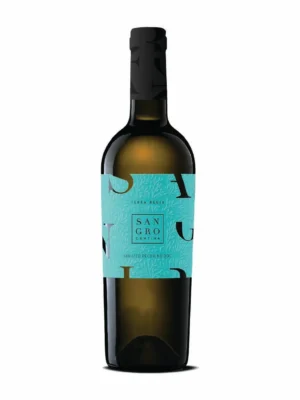
This wine takes its name from its production area, Lugana, which is located on the southern shore of Lake Garda and divided between the provinces of Brescia and Verona.
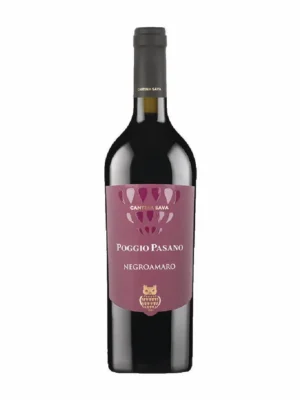
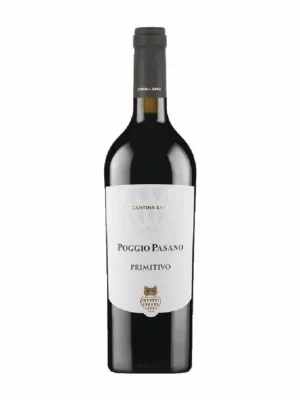
Capo Zafferano is a famous promontory, with a magnificent view of the gulf with turquoise water and a centuries-old white lighthouse, so characteristic to represent the best expression of the wines of Southern Italy: the wines of Puglia.
Juan Cúneo Solari founded Casas del Bosque in 1993, at a time when the Chilean wine industry was pursuing quantity over quality. His commitment to quality is evident in the Gran Reserva Cabernet, a wine which is a great exponent of this characteristic variety of Chile that finds one of its most typical expressions in the Maipo Valley.
Carménère originates from the Bordeaux region of France. However, Chile is currently the main producer of this grape variety worldwide. The grapes come from alluvial loam soils with good drainage towards the Cachapoal river in Almahue, in the commune of Peumo, which has traditionally been recognized for the quality of its Carménère. The variety was harvested during the first fortnight of April, seeking a balance between the herbaceous compounds typical of the variety and its fruity notes.
Juan Cúneo Solari founded Casas del Bosque in 1993, at a time when the Chilean wine industry was pursuing quantity over quality.
Coming from 10-15 year old vines planted in red granite hillside soils, located within the coldest and western areas of the Casablanca Valley, 18 km from the Pacific Ocean and at 250 m altitude in the single vineyard of Las Dichas.
Due to a warmer 2024 growing season, the winemaking team dialed back oak usage to better highlight the fruit’s natural quality, resulting in a ripe yet fresh expression of the variety.
Juan Cúneo Solari founded Casas del Bosque in 1993, at a time when the Chilean wine industry was pursuing quantity over quality.
The fruits for La Cantera Sauvignon Blanc come part from the red sandy loam soil of “Lo Vásquez” planted on a hillside and part from Olivos Camino’s vineyard located 18 km from the Pacific Ocean at 250 meters of altitude. The vineyard is located in the coldest and western part of the Casablanca Valley.
This La Cantera 2024 is an outstandingly aromatic wine, which delivers the true cool climate expression of our vineyard, located
in Las Dichas, the coldest end of the Casablanca Valley. The sensation of “saltiness” on the back palate speaks of Las Dichas’site.
Family owned for three generations, the The A. de Luze & Fils estate covers 20 hectares of vineyards located a few kilometers from Saint-Emilion. In a single piece, it surrounds house and cellar with an exceptional exposure on a clay-limestone hillside, facing south, with a superficial rock that gives the wines of the castle a typicity much appreciated by connoisseurs.
The Château Bel Air presents itself to the wine lover as pleasantly dry, red Bordeaux wine.
The Durup family, winegrowers from father to son, have been cultivating vines in Chablis for fifteen generations. The succession of Jean Durup, who reconstituted the vineyard of Château de Maligny, is ensured by Jean-Paul and Valérie Durup, assisted by Romain Ménissier, operations director. The different wines marketed under the prestigious labels “Château de Maligny”, with the best exposures, and “Églantière” all come from the unique variety of grape varieties used in Chablis: Chardonnay.
“La Marche du Roi” is an historical site located between the Premier Cru “Montée de Tonnerre” and the Premier Cru “Mont de Milieu”.
In times past, this hill was the border between the Kingdom of France and the Dukedom of Burgundy, from which the name “La Marche du Roi” has been given. The origin of the appellation “Chablis La Marche du Roi” is a historical fact in relation to the Chablisian area, which used to be divided into the royal Domain and the grand duchy of Burgundy. This very steep slope is located in the commune of Chablis and has the advantage of a Southeast exposure, therefore a very beautiful luminosity from morning till the end of afternoon. That gives the wine a very high concentration in fruit.
For more info, visit Jean Durup – Château de Maligny website.
The history of the Chainier family begins in the 18th century when Pierre Chainier’s ancestors cultivated vines in the Bordeaux region. This tradition has been passed down from father to son and the Chainier Company now brings together many professional players, wine companies and major importers.
The Château de Pocé, known as “la Châtellenie”, dates from the 15th century and is located in Pocé-sur-Cisse, on the perimeter of the UNESCO world heritage site, a stone’s throw from the Château d’Amboise.
This 100% Sauvignon is grown on the hillsides located on the north bank of the Loire in the commune of Pocé s/Cisse, on clay-siliceous-calcareous soils.
Demanding and passionate, Alain Bessette gave his father’s property the means to produce quality wines. Accessible and worn on the fruit, they tell the revolution undertaken in the vineyard and the cellar.
The white grape varieties of Château La Verriere Sauvignon Blanc are harvested very early in the morning at temperatures allowing the grapes to be vatted to follow a skin maceration of 12 to 18 hours. This maceration will allow an optimum aromatic expression and a balance in the mouth which will guarantee this wine finesse and power over time.
Since 2012, Château La Verriere has embarked on an environmental approach by integrating the certification scope of the SME (Environmental Management System) and HVE (Exploitation of High Environmental Value).
Château Purcari, located in the southwest of the country within the IGP Ștefan Vodă, benefits from rolling hills, limestone bedrock, and fertile black soil — an ideal terroir for grape cultivation. True values do not change with time. Purcari remains Purcari. Since 1827.
Wine has been made in Moldova for thousands of years, but it is only in the last couple of centuries that this small country has drawn international attention for its excellent wines. In 1827 Tsar Nicholas I issued a special decree recognising Château Purcari as the first official winery in Bessarabia which is today known as Moldova. This iconic estate is located close to the Black Sea in the south-eastern corner of Moldova. French settlers in the region quickly noticed the similarities between the local terroir and their native Bordeaux since the area sits at the same latitude as the famous French wine region and also boasts the same rubidium-rich soil types.
Discover the exquisite Purcari Rară Neagră-Saperavi, a harmonious blend of two iconic grape varieties.
Château Purcari, located in the southwest of the country within the IGP Ștefan Vodă, benefits from rolling hills, limestone bedrock, and fertile black soil — an ideal terroir for grape cultivation. True values do not change with time. Purcari remains Purcari. Since 1827.
The Nocturne range from Chateau Purcari brings together a series of excellent value wines made with grapes harvested manually at night to preserve their freshness and the richness of their aromas.
A beautiful ruby colour in the glass, dry and delicate in the mouth, this is a stunning wine made exclusively from a rare Moldovan grape: Rară Neagră.
Château Purcari, located in the southwest of the country within the IGP Ștefan Vodă, benefits from rolling hills, limestone bedrock, and fertile black soil — an ideal terroir for grape cultivation. True values do not change with time. Purcari remains Purcari. Since 1827.
The Nocturne range from Chateau Purcari brings together a series of excellent value wines made with grapes harvested manually at night to preserve their freshness and the richness of their aromas.
The Viorica grapes are sourced from a 15-20-year-old vineyard located in the Stefan Voda district of Moldova, at 110-185 meters above sea level on sandy-clay chernozem soil. After manual harvesting, fermentation takes place at a controlled temperature in stainless steel, and the wine ages first in stainless steel and then in the bottle for 6 months. These practices ensure the production of a fresh, expressive, and lively wine.
Always attentive to market developments and consumer tastes, since 1860 Chiarli dedicates every energy to enhance its wines and make them successful in the quality / price ratio. Today in the Chiarli Cellars a complete range of quality wines is produced that can satisfy the most diverse tastes, in every part of the world.
A slightly aromatic and fruity Blanc de Blancs in Brut style.