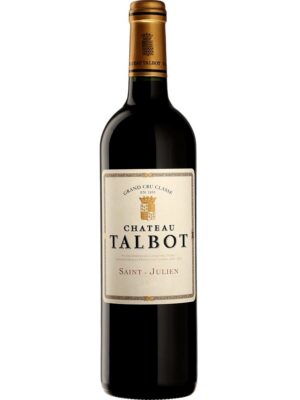

Legend relates that the name of this imposing estate originates with Connétable Talbot, a famous English warrior, defeated at the battle of Castillon in 1453. Talbot is one of the Medoc’s oldest estates, its glory never tainted. Through the years, it has been fortunate enough to remain in good hands. The owners are Nancy Bignon-Cordier and her family. They are the fourth generation of Cordiers to manage this Saint-Julien fourth Classified Growth.
For many, Talbot embodies the ideal Saint-Julien, a generous bouquet, extremely stable and dependable during aging, a champion of longevity; even young Talbot is pleasant and rounded, always characterized by silky, mild and very civilized tannins. Talbot possesses an expansive character. It’s never withdrawn into itself and has the courtesy of being in a good mood every day.
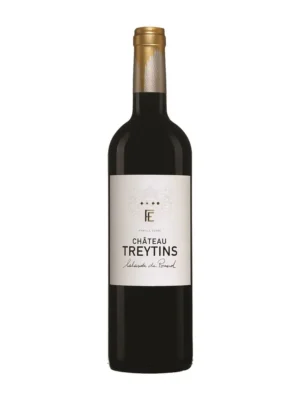
On a vineyard created in the middle of the 19th century by the Count of Kermartin, Léon Nony founded Château Treytins in the 1950s. After his death in 1959, his son Michel and then his grandson Jean-Marc continued his work by developing his vineyards. During the 1990s, the cellars were enlarged and completely renovated to take into account new techniques and the latest knowledge in winemaking and maturing, while respecting traditional achievements. Château Treytins, vinified on the fruit, benefits fully from the temperature regulation in these air-conditioned cellars.
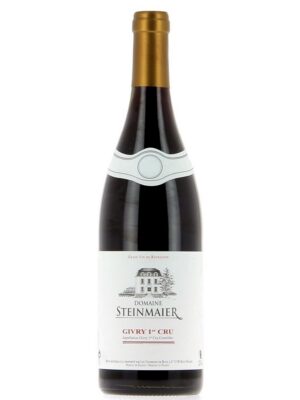
The Cave of Vignerons de Buxy offers a selection of wines produced in limited quantities. Selected by the best winemaker these wines, produced and matured individually, come from the vineyards, estates and châteaux of the property, like Domaine Steinmaier in Givry.
Located on the Côte Chalonnaise, south of Burgundy, the Givry region produces primarily red wines. The parcels face from east to southeast, and range from 240 to 280 meters high. The grapes are planted on calcareous soil. The subsoil is composed mainly of limestone.
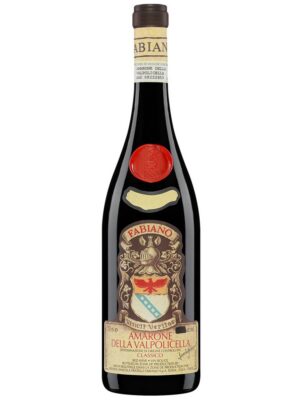
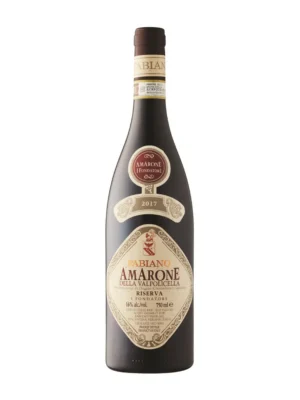
Originally Venetian wine traders in 1912, the Fabiano family moved to Verona in 1956 to produce wine on a larger scale, sourcing fruit from Estate and contract vineyards in Soave, Bardolino, and Valpolicella.
Amarone is a wine of ancient lineage. This “storic” label is produced in limited quantities with grapes from the classic area of Valpolicella, carefully selected, dried and vinified according to the ancient tradition.
Originally Venetian wine traders in 1912, the Fabiano family moved to Verona in 1956 to produce wine on a larger scale, sourcing fruit from Estate and contract vineyards in Soave, Bardolino, and Valpolicella.
Produced by a careful selection of local grapes from the high hills vineyard located in the classic area of the Valpolicella DOC region, in particular around the ancient village of Negrar, this Amarone is a wine of antique lineage. It is a limited production dedicated by Nicola Fabiano to his grandfather Francesco and to his father Sergio. They have been for their children and in particular for him (Nicola) an inspiration and a good example with their passion and tenacity in producing great quality wines.
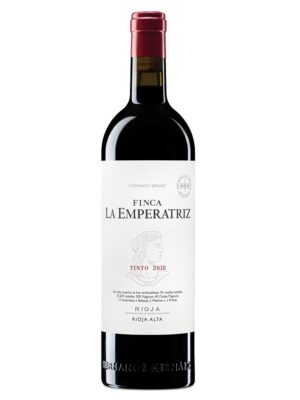
Finca La Emperatriz is a winery with an extensive vineyard estate in Rioja Alta.
Viñedos Hermanos Hernáiz is the new project of brothers Eduardo and Víctor, who in 1996 acquired Bodega La Emperatriz, named as such because the first owner of these plots was Eugenia de Montijo, wife of Napoleon III and Empress of France. With this new emphasis and with new projects at hand, the winery changed its name but its high-end wines retain the Finca La Emperatriz signature, the name of the ‘viñedo singular’ they come from.
Until the end of 2019, the range of wines under the “Finca La Emperatriz” label included nine wines made with grapes from different vineyards of the same name, and when the grapes from a harvest ran out, the wine was no longer available. These wines have been replaced by this new selection with the Finca La Emperatriz Viñedo Singular Tinto taking the place of the Finca La Emperatriz Crianza and Reserva wines.
From 2019, the D.O.Ca. Rioja established a new geographical indication classification system that seeks to value the terroir as a recognition of the quality it brings to the wine. This means there are three new classifications: Viñedo Singular, Vinos de Municipio and Vinos de Zona.
Finca La Emperatriz Viñedo Singular Tinto is made with clusters from old vines aged between 50 and 65 years old from the Finca La Emperatriz vineyard, which has white boulder soils over a sandy-loam structure. These characteristics are perfect for vine cultivation and add an elegant touch to the wines.
For more info, visit Finca La Emperatriz / Hermanos Hernáiz website.
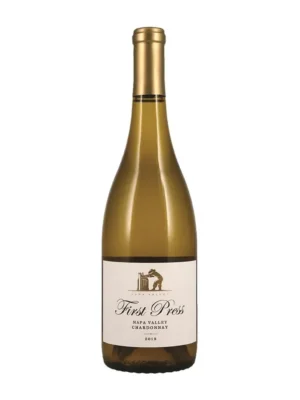
Elegance. Structure. Balance. These are the elements of the extraordinary. You find them in the soaring work of architecture, the perfect line of poetry, the ballerina’s graceful leap, and in the exquisitely crafted Napa Valley wines of First Press Wine Cellars.
First Press Wine Cellars focuses on the two varietals which best exemplify California’s premier winegrowing region, a richly textured Cabernet Sauvignon and a brightly refreshing Chardonnay.
Bernard Magrez’s journey is that of passion, a constant desire for improvement, know-how and exceptional success which has its roots first in Bordeaux, in the Grands Crus Classés, then in other prestigious terroirs in France and around the world.
L’Âme de Pape Clément’s vineyard is nestled in the heart of the Graves region, on the left bank of the Garonne River where the soil and climate are ideal for grapes to ripen and vines to flourish. Dig down into the subsoil and you’ll find gravel and a layer of clay and limestone, which absorbs the sun’s heat during the day and releases it at night to produce remarkably full, ripe grapes. What’s more, the nearby river and the vineyard’s exposure to the sun help create a microclimate which helps protect and nurture the vines.
Bernard Magrez’s journey is that of passion, a constant desire for improvement, know-how and exceptional success which has its roots first in Bordeaux, in the Grands Crus Classés, then in other prestigious terroirs in France and around the world. Bernard Magrez’s journey is that of passion, a constant desire for improvement, know-how and exceptional success which has its roots first in Bordeaux, in the Grands Crus Classés, then in other prestigious terroirs in France and around the world.
Located in Saint-Christoly-Médoc, a town once renowned for its trading port that became a gateway to the world, “L’inattendu” des Grands Chênes is a wine that is both structured and smooth, making the most of its Garonne gravel terroir.
Located in the heart of the Haut-Médoc appellation, on the edge of the Saint-Julien appellation, the Château de Camensac covers 75 hectares. Purchased in 2005 by the Merlaut family, he benefits from the experience and know-how of the Château Chasse Spleen team, it regains its glory of 1855, when it was ranked 5th Grand Cru in the Bordeaux classification and its wines renew with the traditional quality of the castle.
La Closerie de Camensac is the second wine of Château de Camensac and it is a cuvée from the young vines which it enjoys the same careful care during the vinification as the great wine.
A wine with a captivating personality, La Closerie de Camensac offers the opportunity to taste a vintage from a Médoc classified vintage at a very affordable price.
The history of La Tour Carnet merges with the history of France. Bearing the name of the squire who infallibly helped his Lord to resist French royalty at the end of the Hundred Years War, Château La Tour Carnet played a major role in the revolution of the Médoc vineyards and the quality of its wine, rewarded by the entry in the classification of Grands Crus Classés of 1855. The diversity of its terroir and the constant search for perfection make this Haut-Médoc an exceptional wine.
Since purchasing the estate in 2000, Bernard Magrez has returned the estate’s Château, cellars and 311 hectares to their glory days, marrying cutting-edge technology with traditional savoir-faire.
Coming from younger vines, the second wine of Château Giscours comes from the same terroirs and the same grape varieties as its elder.
La Sirène de Giscours, a name full of delicacy and elegance that reflects so well the personality of the second wine.
Developed with the same philosophy that guides the teams in making Château Giscours, La Sirène is a magnificent expression of Margaux’s terroir. A wine of pure pleasure.
La Sirène de Giscours 2019 is perfectly in line with the style of the property while showing at the same time depth and richness. A real “Vin de Plaisir” characterized by a deep color, a juicy fruit, a dense and round palate.
Clos Apalta is born in 1997 as the iconic wine of the Domaines Bournet-Lapostolle in Chile under the idea to magnify the exceptional terroir of Apalta with French expertise. Shaping the vineyard foot by foot, building a state-of-the-art gravity fed winery, the family succeeded in making Clos Apalta one of the most iconic wines in South America.
The 2019 vintage of Clos Apalta is characterized by a “ripe and warm” growing season that resulted in an intensely concentrated and powerful wine. It is notable for having one of the highest proportions of Carménère (70%) in the estate’s history.
“This was a very luminous, bright and wonderful harvest, that brought us beautiful vivid fruit and deep flavors”. – Andrea Leon, Chief Winemaker.
Made with Organic Grapes and Biodynamic vineyard management.
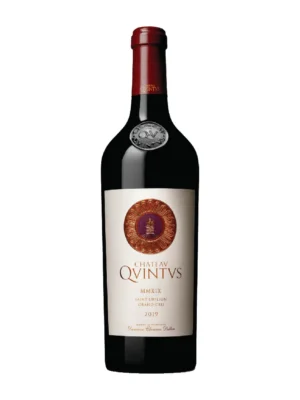
Château Quintus is the 5th child within the Domaine Clarence Dillon family of wines. Its name is a tribute to the Gallo-Romans, creators of Saint-Emilion’s vineyards, who had the custom of naming their fifth child Quintus.
Le Dragon de Quintus is the second wine of Château Quintus. The name originates from the dragon statue that towers above the magical terroir of Saint-Emilion, perched high upon the promontory, where the estate is located.
Thanks to this ideal spell of weather in 2019, all the grape varieties were harvested at peak ripeness and at a leisurely pace. This Dragon is definitely well-balanced and delicious.
Château Bibian is a historic (and one of the oldest) property in Listrac-Médoc, located between the more famous communes of Margaux and Saint-Julien.
The château, purchased by the Meyre family in 1999 and a Cru Bourgeois Supérieur classified, is today run by the 6th generation, where Nathalie and Julien Meyre, in consultation with the famous wine consultant (Michel Rolland), carry on the family traditions and produce classic Bordeaux wines.
This wine is a rigorous selection of young plots of vines from Château Bibian and it comes from the best terroirs of Listrac.
Le Fleurs de Bibian can be enjoyed in its youth, to savor all its roundness and fruitiness.