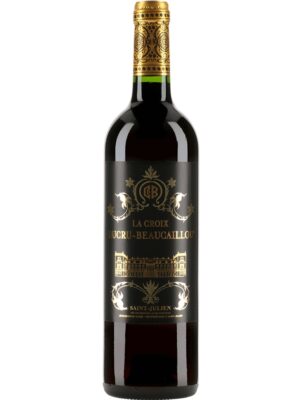
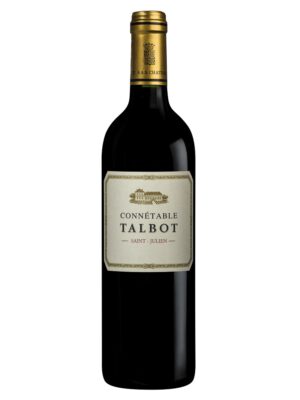
Legend relates that the name of this imposing estate originates with Connétable Talbot, a famous English warrior, defeated at the battle of Castillon in 1453. Talbot is one of the Medoc’s oldest estates, its glory never tainted. Through the years, it has been fortunate enough to remain in good hands. The owners are Nancy Bignon-Cordier and her family. They are the fourth generation of Cordiers to manage this Saint-Julien fourth Classified Growth.
For many, Talbot embodies the ideal Saint-Julien, a generous bouquet, extremely stable and dependable during aging, a champion of longevity; even young Talbot is pleasant and rounded, always characterized by silky, mild and very civilized tannins. Talbot possesses an expansive character. It’s never withdrawn into itself and has the courtesy of being in a good mood every day.
Originally from Schönberg, in the Rhineland, fleeing the consequences of the defeat of Napoleon I, the Yung family origins settled for more than a century in Algeria. Already listed in the first edition of Féret des Vins d’Oranie in 1886, the family developed its vineyard until independence, until forced to abandon the wine estates it had owned since 1859.
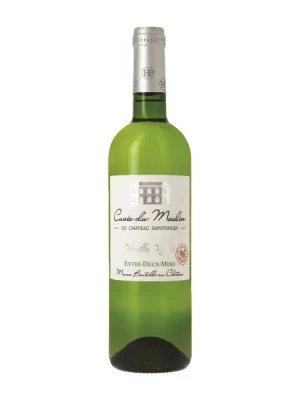
In 1862 Charles Young joined his older brother, already settled in Gironde. He then decides to acquire for his 2 children and his 2 nephews, the Château Haut Mondain, a 42-hectare AOC Bordeaux wine estate, followed then by Château Barail, Les Hauts de Palette and Moulin de Tassin.
Since 2020, the Charles Yung & Fils vineyards have been committed to a societal and environmental approach by obtaining High Environmental Value (HVE), level 3 certification.
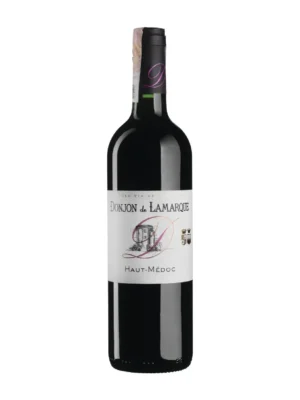
Château de Lamarque is located in Lamarque, in the Haut-Médoc region of Bordeaux. The vines in Lamarque have existed since the 15th century, but the wines were only produced for consumption for the inhabitants of the château.
Donjon de Lamarque is the Château’s Second Wine, made with the younger grapes of the property with a higher percentage of Merlot (up to 60%) and less Cabernet (40%). The Merlot could actually have been part of the Château de Lamarque blending but that would change the traditional Cabernet dominated blend of the first wine. The wine is aged in French oak barrels (all coming from the French region of Allier) for about 12 to 14 months before being bottled. The picking of the barrels is extremely meticulous, being guided by the idea of respecting the harmony between the oak tannins and the wine tannins. Every year the pairing is different. Traditionally 2 vintage-old barrels are used for Donjon de Lamarque.
For more info, visit Château de Lamarque website.
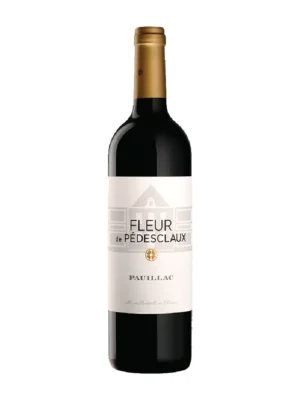
Like all the greatest wines of the appellation, Château Pédesclaux has the complexity that reflects the terroir it springs from. On this mosaic of soils, the clays convey power while the gravels express pure elegance. Pédesclaux embodies the depth that is the quintessence of Pauillac, balanced by a unique sensuality with each vintage, the painstaking work on these excellent plots pays off, while the revolutionary equipment in the winery enables the wine to develop its own unique personality.
Ethereal, fresh, appealing to both the nose and the palate, Pédesclaux’s second wine is a flower that unfurls as you approach. Unusually for Pauillac, the Fleur de Pedesclaux is predominantly made from Merlot along with a dash of Cabernet Sauvignon, Cabernet Franc and Petit Verdot depending on the vintage.
Exhibiting a more high-spirited elegance yet nonetheless showing remarkable length, Fleur de Pédesclaux 2016 is a delight. In this more floral expression, the marvellous complexity of our terroir is once again evident, but in a mouth-watering style that is instantly festive.
Château Nénin is located in the village of Pomerol, one of the most prestigious areas of Bordeaux. The Domaine was bought by Jean-Hubert Delon in 1997 from his cousins, the Despujols, owners of the estate since 1847. Jean-Hubert had the intention of continuing the centuries-old tradition of the Château, and precisely for this reason, since immediately, extensive renovation and modernization works, including technical ones, were carried out. Under his direction, the land was in fact drained, the vineyards renewed and the cellars modernised, to improve the vinification and aging processes.
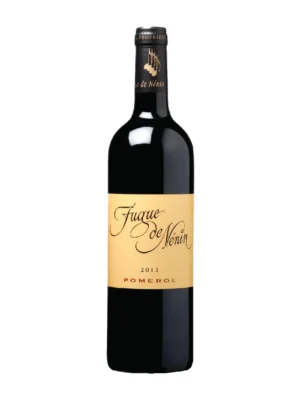
Fugue de Nénin was created and first sold in 1997. Fugue comes from sandy-clay soils found in the eastern part of the Château’s vineyards, as well as from the young vines. This second wine is a typical example of the charm of Pomerol. The wines are smooth and silky and can be enjoyed earlier than those of the Grand Vin.
Fugue de Nénin 2013 comes from sandy-clay soils representing the eastern half of the estate’s vineyard and it is made from mainly Merlot, with a floral component by Cabernet Franc.
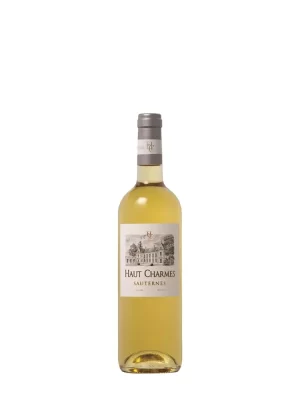
“Haut” (High) because this nectar has a high quality; “Charmes” (Charms) because it is difficult not to fall under the charm of this wines golden this Sauternes. The micro-climate of the Ciron valley has a major role in its elaboration, to confer a very special character to the wine. Indeed, thanks to the climate, the “botrytis cinerea” appears on the grapes and concentrates the sugar while the acidity decreases. The attention brought to the winemaking and the ageing is the reason of the existence of this exceptional wine.
Bernard Magrez’s journey is that of passion, a constant desire for improvement, know-how and exceptional success which has its roots first in Bordeaux, in the Grands Crus Classés, then in other prestigious terroirs in France and around the world.
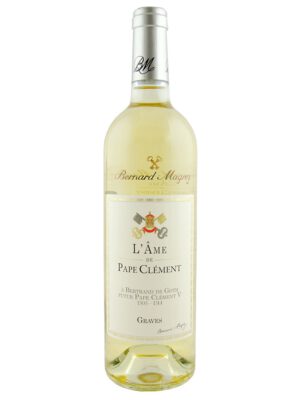
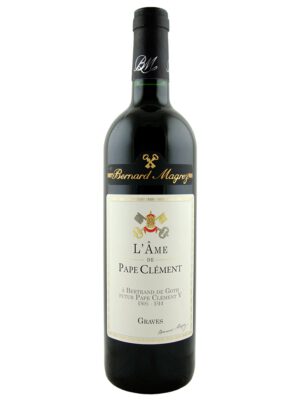
L’Âme de Pape Clément’s vineyard is nestled in the heart of the Graves region, on the left bank of the Garonne River where the soil and climate are ideal for grapes to ripen and vines to flourish. Dig down into the subsoil and you’ll find gravel and a layer of clay and limestone, which absorbs the sun’s heat during the day and releases it at night to produce remarkably full, ripe grapes. What’s more, the nearby river and the vineyard’s exposure to the sun help create a microclimate which helps protect and nurture the vines.
Bernard Magrez’s journey is that of passion, a constant desire for improvement, know-how and exceptional success which has its roots first in Bordeaux, in the Grands Crus Classés, then in other prestigious terroirs in France and around the world.
L’Âme de Pape Clément’s vineyard is nestled in the heart of the Graves region, on the left bank of the Garonne River where the soil and climate are ideal for grapes to ripen and vines to flourish. Dig down into the subsoil and you’ll find gravel and a layer of clay and limestone, which absorbs the sun’s heat during the day and releases it at night to produce remarkably full, ripe grapes. What’s more, the nearby river and the vineyard’s exposure to the sun help create a microclimate which helps protect and nurture the vines.
Owned by the Bernard family since 1983, the magnificent Domaine de Chevalier is at the top of the greatest Crus Classés of Bordeaux.
The estate is located in the heart of the Pessac-Léognan appellation which is located in a green setting south of Bordeaux.
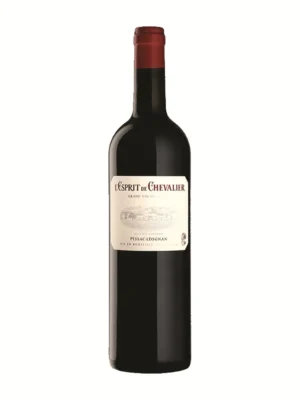
Domaine de Chevalier watches over a rare vineyard with 60 hectares of red vines. The vineyard is based on a gravel terroir with clay-gravelly subsoils. Since 1986, the young vines have been intended to ripen the berries which are used in the blending of the estate’s second wine, L’Esprit de Chevalier.
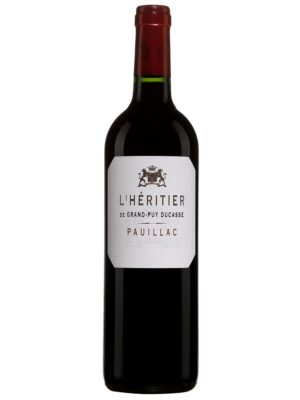
Three large plots in the best parts of Pauillac form the vineyard of this classified growth, an unusual configuration and a direct inheritance from the estate’s founder, Pierre Ducasse, an eminent lawyer. In the 18th century he gave a single name to a fine vineyard holding, which was put together through inheritance and purchases. When he died in 1797, his son, Pierre, inherited a 60-hectare exploitation, named Ducasse-Grand-Puy-Artigues-Arnaud, of which two third were planted with vines. The estate was classified in 1855, under the name of Artigues Arnaud.
L’Héritier de Grand Puy Ducasse is the second wine of Château Grand-Puy Ducasse. A distinguished red wine that embodies the classic elegance of the Pauillac AOC with rich flavors and refined tannins.
For more info, visit Château Grand-Puy Ducassewebsite.
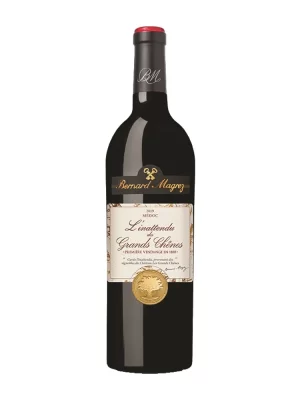
Bernard Magrez’s journey is that of passion, a constant desire for improvement, know-how and exceptional success which has its roots first in Bordeaux, in the Grands Crus Classés, then in other prestigious terroirs in France and around the world. Bernard Magrez’s journey is that of passion, a constant desire for improvement, know-how and exceptional success which has its roots first in Bordeaux, in the Grands Crus Classés, then in other prestigious terroirs in France and around the world.
Located in Saint-Christoly-Médoc, a town once renowned for its trading port that became a gateway to the world, “L’inattendu” des Grands Chênes is a wine that is both structured and smooth, making the most of its Garonne gravel terroir.
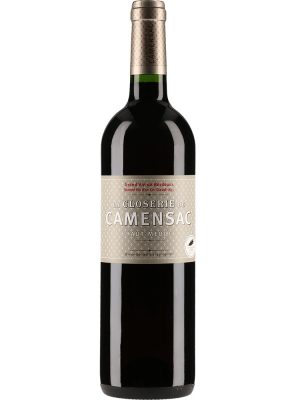
Located in the heart of the Haut-Médoc appellation, on the edge of the Saint-Julien appellation, the Château de Camensac covers 75 hectares. Purchased in 2005 by the Merlaut family, he benefits from the experience and know-how of the Château Chasse Spleen team, it regains its glory of 1855, when it was ranked 5th Grand Cru in the Bordeaux classification and its wines renew with the traditional quality of the castle.
La Closerie de Camensac is the second wine of Château de Camensac and it is a cuvée from the young vines which it enjoys the same careful care during the vinification as the great wine.
A wine with a captivating personality, La Closerie de Camensac offers the opportunity to taste a vintage from a Médoc classified vintage at a very affordable price.
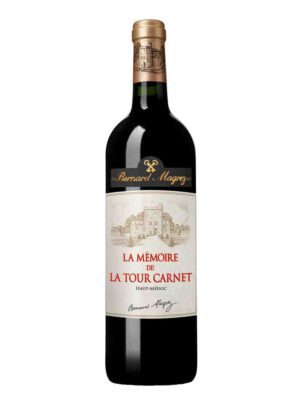
The history of La Tour Carnet merges with the history of France. Bearing the name of the squire who infallibly helped his Lord to resist French royalty at the end of the Hundred Years War, Château La Tour Carnet played a major role in the revolution of the Médoc vineyards and the quality of its wine, rewarded by the entry in the classification of Grands Crus Classés of 1855. The diversity of its terroir and the constant search for perfection make this Haut-Médoc an exceptional wine.
Since purchasing the estate in 2000, Bernard Magrez has returned the estate’s Château, cellars and 311 hectares to their glory days, marrying cutting-edge technology with traditional savoir-faire.
Vignobles Lassagne gather several family properties that were bought since three generations and are grown according to tradition and innovation on unique terroir located in the Libourne area.
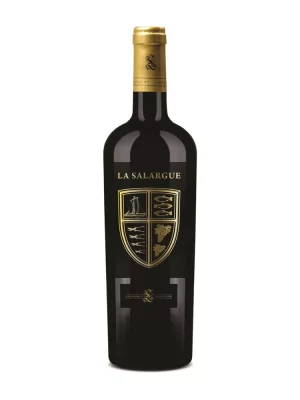
Château La Salargue is located on the left bank of the Dordogne in the municipality of Moulon. At that time, its famous wines were shipped in barrels by barge. Here the vines benefit from a privileged terroir, the soil is clayey and loamy on gravel, the fruit of millions of years of work by the watercourse. In the Dordogne, it is humid in the mornings and wonderfully sunny in summer. This contributes to the optimal ripeness of the vines and grapes here.


 Download Tasting Note