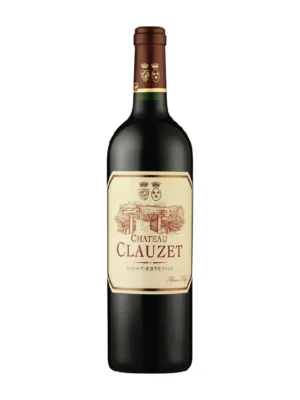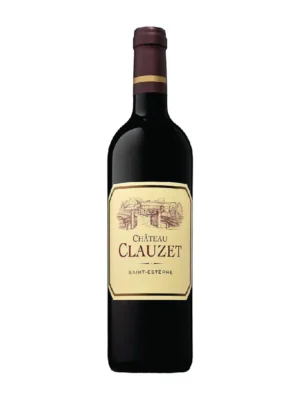

Château Clauzet is a classic red Bordeaux blend from the Saint-Estèphe appellation in the Médoc.
While 2013 was a challenging vintage for red Bordeaux across the board, critics generally describe Clauzet 2013 as a successful, mid-weight wine with the firm structure typical of its region.
The 2017 vintage is particularly notable as it was the final one produced under the 20-year ownership of Baron Velge before the estate was sold to Jacky Lorenzetti and the integration of Château Clauzet within the structure of Château La Haye.
VARIETALS
55% Cabernet Sauvignon, 40% Merlot, 5% Cabernet Franc and Petit Verdot
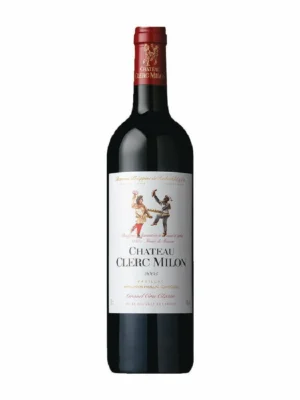
Tied to the Seigneuries of Lafite and Mouton (future First Classified Growths belonging to two different branches of the Rothschild family), Château Clerc Milon derives its name from its historic owners, the Clerc family, who acquired it when it was sold as a national asset after the French Revolution.
Today, the third generation, represented by Camille and Philippe Sereys de Rothschild and Julien de Beaumarchais de Rothschild, perpetuates Baron Philippe de Rothschild’s values and expertise and continues to develop Château Clerc Milon with the same dynamism and desire for modernity. Thanks to over 50 years of continuous work and a dedicated team with cutting-edge technical facilities, Château Clerc Milon is more than ever a benchmark of Médoc excellence.
This 2016 is comparable in its density and complexity to the finest vintages of the 21st century to date.
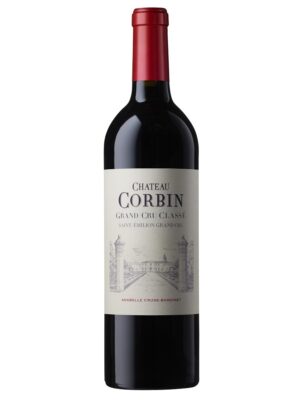
Château Corbin is one of the oldest estates in St. Emilion. In fact, it dates back to the 15th century. More recently, bringing Chateau Corbin into the modern era, in 1924, Château Corbin was purchased by the Great Grandparents of the current owners, the Cruse family. The beautiful chateau was constructed in the 1800s. During the late 1990s, Anabelle Cruse and her sisters purchased the shares of Château Corbin from the other family shareholders and took over complete ownership of the estate.
In each and every vintage, the wines of Château Corbin are the fruit of true luxury craftsmanship. Carefully tended vines, a meticulous selection of the grape bunches and slow barrel ageing are prerequisites in the Corbin method to ensure longevity in its wines. Each vintage is a journey of its own, in which the senses travel to and fro between elegance and complexity.
This 2019 vintage of Château Corbin heralds a revival of the Corbin style, with great elegance, a perfect balance between well-ripened red fruits, fine tannins and great length in the mouth. A bottle that will age in your cellar for those who know how to wait.
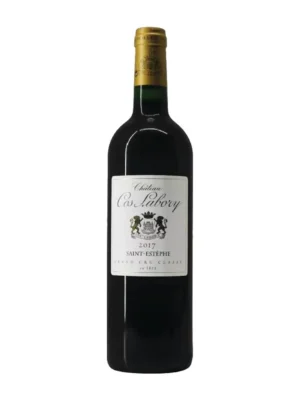
Past Château Lafite, then up the small hill of stones, the locals call “Caux”, to Cos d’Estournel and its discrete neighbour Château Cos Labory.
The name of the estate comes from its geographical location on the Cos hill and the name of François Labory, who was the first owner until 1845. Mr. d’Estournel then acquired it before selling it again to an English banker, Charles Martyns in 1852. The property was finally taken over by George Weber in the 1930’s, who bequeathed it to his daughter and son-in-law, François Audoy in 1959. In 1971, the couple acquired the neighbouring estate, Château Andron Blanquet, until their elder son Bernard took over, now the emblematic symbol of the estate, having always lived in Saint-Estèphe.
Over time, the changes came gradually through substantial investment into technology, particularly an ultra-modern vat house and a new cellar. Having decided to vinify the wines at low temperatures to preserve and extract the fruit, their aim is to offer wines that age well but are also enjoyable when still young. Château Cos Labory combines characteristic Saint-Estèphe vigour and elegance and its rich tannin content gives this wine good ageing potential.
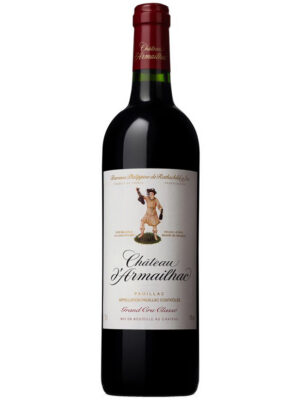
Château d’Armailhac is not only a beautiful setting but also a vibrant working and meeting place for the three Pauillac estates and their beating heart.
A place that reflects the identity of Château d’Armailhac, a combination of timelessness, local roots and elegant sobriety. The owners wanted to create buildings that would look as though they had always been there. As a result, Château d’Armailhac blends seamlessly into the Pauillac winegrowing landscape.
Typically for a Pauillac wine, Cabernets predominate in the blend. However, the relatively high proportion of Cabernet Franc is a hallmark of Château d’Armailhac. The wine is defined by a kind of elegant classicism, discernible whatever the vintage.
The history of Château d’Issan consists primarily of a long list of property transmissions and legacies. By inheritance and marriage, the estate has been handed down from owner to owner, and all of them have contributed in their own way to its renown and helped to forge its unique character. Over a period of nearly three centuries, the estate was passed down along a line involving a number of families with names such as Noailhan, Meyrac, Ségur, Salignac, de la Vergne, Escodeca de Boisse, etc. From 1575 onwards, the property was owned by five generations of the Essenault family, who ended up renaming it, contracting their name to “Issan” and thus Château d’Issan was born…
This exceptional 2022 vintage can be characterised by intense fruit nuances, balance, depth of aromatics, and definition of tannins, presented in a particularly bright and vibrant colour, with magnificent concentration and refined power. The Cabernets and the Malbec are once again remarkable – giving this new opus a unique signature.
The vineyards around Chateau de Clotte may date back to the 13th century, while the chateau was built in 1782 by Mr. Roy de Clotte, after whom the estate is named. The current owner is Bruno Laporte, who purchased the chateau in 2002 and also owns a number of other properties in the area.
The blend of 4 varieties in the 2016 vintage gives the wine complexity. Merlot brings aromas of red fruit and silky tannins. Cabernet Franc gives the wine a distinctive color and aroma of black fruit, while Cabernet Sauvignon balances with character and structure. Finally Malbec adds a hint of spice, which is enhanced by aging in oak barrels.
Château de La Coste is the second wine of Château Paveil de Luze, one of the oldest properties in the Médoc. The vineyard dates from the 17th century and is run by the Barons de Luze Family since 1862. Today, Marguerite and Catherine de Luze represent the sixth generation and continue to elaborate fine and delicate wines. Château de la Coste’s vineyards are in the northern part of the Margaux appellation.
Château de la Coste is an excellent, early-drinking representation of the Margaux appellation from a highly-regarded Bordeaux vintage. As the second wine of Château Paveil de Luze, it offers the classic elegance and “feminine” character of Margaux at a more accessible price point.
For more info, visit Château Paveil de Luzewebsite.
VARIETALS
50% Cabernet Sauvignon, 45% Merlot, 5% Cabernet Franc
Vignobles Lassagne gather several family properties that were bought since three generations and are grown according to tradition and innovation on unique terroir located in the Libourne area.
Vignobles Lassagne encompasses these three properties: Château des Arnauds (the original estate), Château des Landes and Château Maltus, the latest addition to the Vignobles Lassagne.
The soils and basements of the Château des Arnauds located in Abzac, are composed of gravel that can be red with a caliber between fine pebble and coarse sand. Sometimes the gravel is mixed with the clay, sometimes they follow one another in layers. The pebbles flush with the surface allow the sun to reflect on the grapes, thus allowing excellent ripeness. This vineyard developed by father Daniel Lassagne, is located on a beautiful, south-facing plateau of red gravel around the town of Abzac, and being a 100% Merlot varietal, it prodeuces a wine of beautiful balance of roundness and structure.
Between Pomerol to the West and Saint-Emilion to the South, the Montagne Saint-Emilion vineyard nestles in the middle of the most prestigious terroirs of Libourne. Among the small character properties found in Montagne, the Château Divine Bêtise invites you to indulge and enjoy the table. To discover now!
It was in 1923, at the Château du Barry , that the history of the Mouty vineyards began.
Donat Mouty , enamored of the culture of Saint-Émilion wines, then set his sights on the vines of Château du Barry.
Here, on this great terroir of character, the vines produce a unique fruit with delicacy.
From this fruit are born silky, fleshy, complex and elegant wines.
Acquired in 1905 by the Gauvin family, this estate is now run by the 4th generation.
This cuvée Laroque offers a good balance with notes of red fruit and tannins already supple on the palate.
VARIETALS
65% Merlot, 25% Cabernet Sauvignon, 10% Cabernet Franc
In Arsac in the heart of the Margaux appellation, Château du Tertre overlooks a single holding vineyard of 52 hectares. The property, situated on one of the highest hills in the Médoc is composed of gravel, clay and sand. It was during the XIXth century that the wines acquired international renown, amplified by the 1855 classification which established the property as a 5th Growth.
The 2012 Château du Tertre is a mature, elegantly styled 5th Grand Cru Classé red wine from the Margaux appellation. The 2012 vintage represents a more classic, medium-bodied, and approachable style of Left Bank Bordeaux that is currently performing at its absolute peak.
In Arsac in the heart of the Margaux appellation, Château du Tertre overlooks a single holding vineyard of 52 hectares. The property, situated on one of the highest hills in the Médoc is composed of gravel, clay and sand. It was during the XIXth century that the wines acquired international renown, amplified by the 1855 classification which established the property as a 5th Growth.
The 2019 Château du Tertre is an exceptionally highly rated, elegant 5th Grand Cru Classé red wine from the prestigious Margaux appellation on the Left Bank of Bordeaux. Critically acclaimed as one of the finest modern releases from the estate, this vintage is celebrated for delivering a seamless blend of power, concentration, and signature Margaux polish.
Château Faugèresis known for wines that demonstrate a stylistic evolution focused on finesse. This trend was put in place at the property by Silvio Denz, a Swiss-German businessman passionate about wine and owner of several vineyards in the Bordeaux region.
A Grand Cru Classé Saint-Émilion, Château Faugères extends over a vineyard of 37 ha located on one of the most beautiful terroirs of the Right Bank, the famous limestone plateau of Saint-Emilion. In order to better respect the environment and to enhance the richness of the soil, the vineyard is cultivated according to a sustainable natural viticulture.
2017 was a vintage of many challenges and an early harvest. Fortunately, Château Faugères was one of the properties spared by frost. The quality of the fruit was preserved throughout the vegetative cycle. An exceptional wine, the Château Faugères 2017 is the second vintage of the estate’s Grand Vin adorned with a Lalique “Calice” engraving.