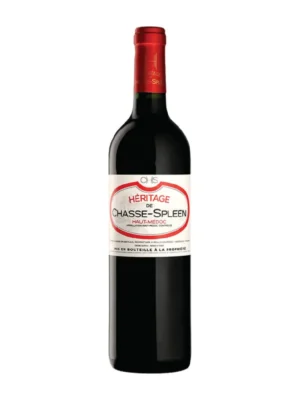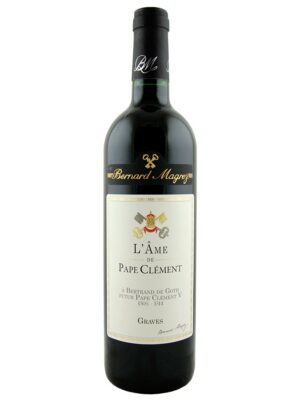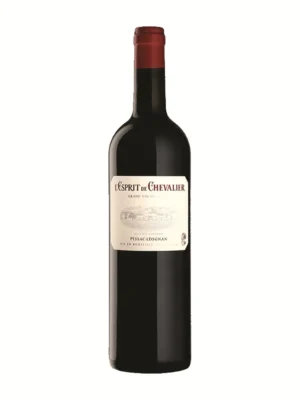

Located in the heart of the Haut-Médoc appellation, on the edge of the Saint-Julien appellation, the Château de Camensac covers 75 hectares. Purchased in 2005 by the Merlaut family, he benefits from the experience and know-how of the Château Chasse Spleen team, it regains its glory of 1855, when it was ranked 5th Grand Cru in the Bordeaux classification and its wines renew with the traditional quality of the castle.
La Closerie de Camensac is the second wine of Château de Camensac and it is a cuvée from the young vines which it enjoys the same careful care during the vinification as the great wine.
A wine with a captivating personality, La Closerie de Camensac offers the opportunity to taste a vintage from a Médoc classified vintage at a very affordable price.
The history of La Tour Carnet merges with the history of France. Bearing the name of the squire who infallibly helped his Lord to resist French royalty at the end of the Hundred Years War, Château La Tour Carnet played a major role in the revolution of the Médoc vineyards and the quality of its wine, rewarded by the entry in the classification of Grands Crus Classés of 1855. The diversity of its terroir and the constant search for perfection make this Haut-Médoc an exceptional wine.
Since purchasing the estate in 2000, Bernard Magrez has returned the estate’s Château, cellars and 311 hectares to their glory days, marrying cutting-edge technology with traditional savoir-faire.
Vignobles Lassagne gather several family properties that were bought since three generations and are grown according to tradition and innovation on unique terroir located in the Libourne area.
Château La Salargue is located on the left bank of the Dordogne in the municipality of Moulon. At that time, its famous wines were shipped in barrels by barge. Here the vines benefit from a privileged terroir, the soil is clayey and loamy on gravel, the fruit of millions of years of work by the watercourse. In the Dordogne, it is humid in the mornings and wonderfully sunny in summer. This contributes to the optimal ripeness of the vines and grapes here.
Coming from younger vines, the second wine of Château Giscours comes from the same terroirs and the same grape varieties as its elder.
La Sirène de Giscours, a name full of delicacy and elegance that reflects so well the personality of the second wine.
Developed with the same philosophy that guides the teams in making Château Giscours, La Sirène is a magnificent expression of Margaux’s terroir. A wine of pure pleasure.
Coming from younger vines, the second wine of Château Giscours comes from the same terroirs and the same grape varieties as its elder.
La Sirène de Giscours, a name full of delicacy and elegance that reflects so well the personality of the second wine.
Developed with the same philosophy that guides the teams in making Château Giscours, La Sirène is a magnificent expression of Margaux’s terroir. A wine of pure pleasure.
La Sirène de Giscours 2019 is perfectly in line with the style of the property while showing at the same time depth and richness. A real “Vin de Plaisir” characterized by a deep color, a juicy fruit, a dense and round palate.
Thanks to the long involvement of generations of the Kressmann family, and the recognition shown in 1953 by the classification of Graves, the wines of Château LaTour-Martillac feature among the best of Pessac-Léognan. The expansion of the range was drawn up by Tristan and Loïc Kressmann. The second wines appeared at the end of the 1980’s under the label Lagrave-Martillac, followed by the Château Langlet, a magnificent property in the Graves appellation, acquired in 1999.
Lacroix-Martillac comes from selected plots at Château LaTour-Martillac, highlighting the Merlot in the red wines blending.
With each new vintage, the Kressmann family strive to achieve in these wines the best from this true Graves terroir by prioritising a quality yield, in keeping with traditional viticulture practices.
For more info, visit Château LaTour-Martillacwebsite.
Thanks to the long involvement of generations of the Kressmann family, and the recognition shown in 1953 by the classification of Graves, the wines of Château LaTour-Martillac feature among the best of Pessac-Léognan. The expansion of the range was drawn up by Tristan and Loïc Kressmann. The second wines appeared at the end of the 1980’s under the label Lagrave-Martillac, followed by the Château Langlet, a magnificent property in the Graves appellation, acquired in 1999.
Lacroix-Martillac comes from selected plots at Château LaTour-Martillac, highlighting the Merlot in the red wines blending.
With each new vintage, the Kressmann family strive to achieve in these wines the best from this true Graves terroir by prioritising a quality yield, in keeping with traditional viticulture practices.
For more info, visit Château LaTour-Martillacwebsite.
Lamador is a dedicated brand under InVina, a 100% family-owned venture which focused on investing in and developing vineyards in the Maule Valley. The Huber family, with more than 15 years experience in Chilean viticulture, continues to believe that the key to Chile’s success is based on the quality and diversity of their grapes, which come from 4 different micro-climates in the Maule Valley. This wine has intense colour, powerful and fruity notes with balanced and smooth tannins.
Lapostolle Apalta is the new label produced in the Valle de Apalta to emphasize this amazing terroir.
With a refined winemaking approach and mastery of blending, a complex and expressive wine has been created.
Sourced from Lapostolle vineyards in Apalta, this wine shows a beautiful fruity and spicy expression, followed by an elegant and smooth structure.
It could be considered as the third wine of Clos Apalta.
Clos Apalta is born in 1997 as the iconic wine of the Domaines Bournet-Lapostolle in Chile under the idea to magnify the exceptional terroir of Apalta with French expertise. Shaping the vineyard foot by foot, building a state-of-the-art gravity fed winery, the family succeeded in making Clos Apalta one of the most iconic wines in South America.
The 2019 vintage of Clos Apalta is characterized by a “ripe and warm” growing season that resulted in an intensely concentrated and powerful wine. It is notable for having one of the highest proportions of Carménère (70%) in the estate’s history.
“This was a very luminous, bright and wonderful harvest, that brought us beautiful vivid fruit and deep flavors”. – Andrea Leon, Chief Winemaker.
Made with Organic Grapes and Biodynamic vineyard management.
As a general winemaking philosophy, Cuvée Alexandre Cabernet Sauvignon’s direction is toward elegance, balance and ageing potential. To express the terroir of Apalta is the mission of Casa Lapostolle, using very natural process with minimal intervention.
“The Cabernet Sauvignon from Colchagua has a true identity: intense red fruit and a structure to age many years. Here in Apalta, the fact that the vines are eighty years old and planted in high density gives the wine an extra layer of complexity”. Jacques Begarie, Chief Winemaker.
Made with Organic Grapes and Biodynamic vineyard management.
As a general winemaking philosophy, Cuvée Alexandre Carménère’s direction is toward elegance, balance and ageing potential. To express the terroir of Apalta is the mission of Casa Lapostolle, using very natural process with minimal intervention.
“It’s been great to have the opportunity to see the grapes of Carménère from La Isla block growing: seeing them each year showing more balance and depth in the wine is a gift from Nature”. – Jacques Begarie, Chief Winemaker.
Made with Organic Grapes and Biodynamic vineyard management.
D’Alamel wines embody the outstanding growing conditions found in Chile, where they are born between the South Pacific ocean and the foothills of the Andes Mountains.
These wines are named in honour of Cyril D’Alamel de Bournet, who co-founded Lapostolle Wine with his wife Alexandra Marnier Lapostolle.
D’Alamel wines are the result of careful soil management, pruning, leaf pulling, and green harvests to ensure the right conditions for healthy vines that deliver their finest fruit year after year.
This D’Alamel Cabernet Sauvignon is perfectly balanced, with youthful and bright characteristics, perfect for any occasion.
D’Alamel wines use ecological bottles that are 14% lighter and made with recycled glass, and the raw ingredients used for the labels, boxes, and corks come from certified sustainable forests.
The Marnier Lapostolle family, founders and owners of the world-renowned liqueur Grand Marnier, has vineyards in three regions of Chile, the oldest plantings being 1920 in the southern Apalta Vineyard brought from France at the end of the 19th Century.
Their mission is to capture the freshness of young and expressive fruit, bright and alive.
These characteristics define the Lapostolle Grand Selection wines.
This Grand Selection Cabernet Sauvignon has flavors of red fruits, strawberries and blackberries, with a concentrated and round palate.
After years of research and selection, Lapostolle is now launching a Single Vineyard wine from Apalta: Parcelle 8.
It is a 100% Cabernet Sauvignon with extremely low yields., which ensures a lot of concentration in the wine.
First commercially released wine from old-vine cabernet sauvignon, grown on its own rootstock with the vast majority from 1910.
It’s made in a fraction of the quantity of Clos Apalta, basically a secret reserve-bottling and originally made just for the owners to drink, James Suckling was the first to taste it first and immediately gave the Parcelle 8 a great score: 98/100 points.
Complex and intense with a rare mineral quality for the hot 2020 vintage.