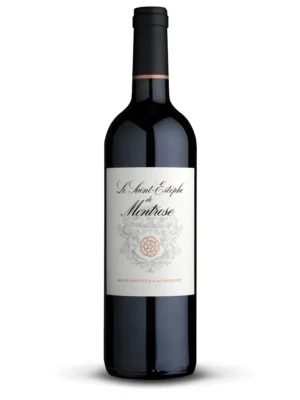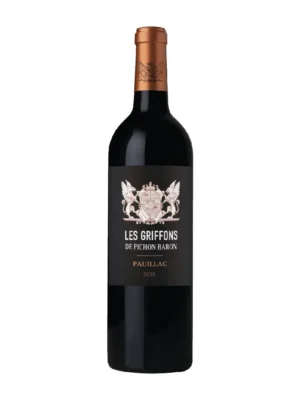

Elaborated since the 2019 vintage, this Pauillac is a fruity, supple and well-balanced wine.
The grapes making up the blend of this cuvée come from young vines in the Tour Pibran and Château Pichon Baron vineyard, with clay-limestone and gravelly soil. These grapes are harvested, vinified and aged by the Château Pichon Baron team. They produce this Pauillac with the same standards of quality as their other wines in order to highlight this appellation.
Château Figeac is one of the leading St. Emilion estates and its wine, with its high Cabernet content, has often been described as the most Médoc-like in Saint-Émilion. It is located in the north-west of the appellation with its vineyards adjoining those of Cheval Blanc. Its 40 hectares of vineyards (unusually for the right bank there is only 30% Merlot in the vineyard with 35% Cabernet Franc and – rare on the right bank – 35% Cabernet Sauvignon) lie on a deep, Médoc-like gravel topsoil (‘Graves’) over a flinty, iron-rich subsoil.
Since 2010 Figeac has been managed by Comte Eric d’Aramon and his wife Laure and there has been some serious improvements here recently under winemaker Frédéric Faye. Michel Rolland has been brought in to consult – but not to change the unique Figeac style. As a consequence, the wines produced now seem a little riper and more polished than before but are still fine, pure and classic.
Produced to the same high standards as the Grand Vin, Petit-Figeac is Château Figeac’s second wine. Under the leadership of Thierry Manoncourt, Château Figeac has been producing a Second Wine since 1945. Since the 2012 vintage, it has taken the name of a historic plot of land, “Petit-Figeac” located in the heart of the estate.
2021 is the first vintage vinified in the estate’s new cellar.
Second Grand Cru Classé from Pauillac, the magnificent Château Pichon-Longueville Comtesse de Lalande shines on the left bank of Bordeaux. In 2007, Château Pichon-Longueville Comtesse de Lalande began a new chapter in its history by joining the Rouzaud family, owners of the prestigious Louis Roederer Champagne House.
A reference among the wines of Pauillac, Château Pichon-Longueville Comtesse de Lalande oversees a vineyard of 114 hectares, of which 92 hectares are in production. The soils, composed of gravelly ridges on sandy-clay subsoils, benefit the vines, which are on average 28 years old. In the process of converting to organic farming, the vineyard is certified organic and 65% biodynamic.
Réserve de Pichon Comtesse is considered the Second Wine of the estate.
For more info, visit Château Pichon-Longueville Comtesse de Lalande website.
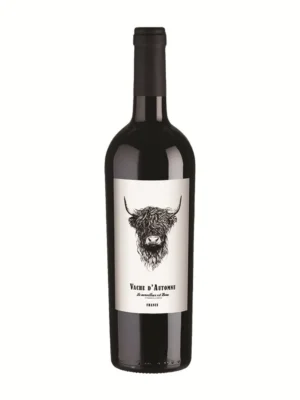
It all began in the mid-1970s when André Dubosc – a third-generation wine grower – set out to build up the reputation of the wines from their region of South-West France. He and other passionate young winegrowers fashioned local dry white wines (now a PGI: Côtes de Gascogne), revived the Saint Mont appellation and gave a new breath of life to the Pacherenc du Vic-Bilh, made from late-harvested grapes. In 1979, these women and men, who put their heart, soul and know-how into producing the best the terroir could offer, decided to strengthen their foothold by uniting their wine cellars and estates. And so they set up the Plaimont union of cooperatives (“Pl” for Plaisance, “Ai” for Aignan and “Mont” for Saint Mont).
It was in the vineyard of Saint Mont, that the devil disguised as a winemaker, succumbed to temptation and stole bunches of Tannat, Pinenc and Cabernet Sauvignon. This cuvee is produced from a blend of the appellation’s three terroirs: clay-limestone, variegated clay and fawn-coloured sand. The parcels have been selected on the basis of their geographically cool situations (north or west-facing) which encourage the development of the aromatic expression of the red grapes with which rosé is made. Will you succumb to temptation?
Since 1885, the Vicente Gandía seal gives all its products common characteristics: high quality, reasonable prices, and stability between one harvest and another. Wines that transmit elegance, complexity, softness and balance.
Today, you can find Vicente Gandía in 90 countries on 5 continents, as the largest winery in the Valencian Community. In addition, in 2014 it won the award for the best Spanish winery in the prestigious international competition AWC Vienna. That same year, the World Association of Writers and Journalists of Wines and Spirits included it in their ranking of the top 50 wineries in the world. In 2018, the European Congress of Enogastronomic Brotherhoods (CEUCO) awarded the “Aurum Europa Excellente” Prize to Vicente Gandía as “Best European Winery”, reconfirmed also in 2022.
Pluvium Premium Selection Red is a Spanish red, dry wine from the Valencia region. It is a blend of two grapes: Bobal and Tempranillo. Expressive bouquet, balanced with good acidity and a spicy background.
Three large plots in the best parts of Pauillac form the vineyard of this classified growth, an unusual configuration and a direct inheritance from the estate’s founder, Pierre Ducasse, an eminent lawyer. In the 18th century he gave a single name to a fine vineyard holding, which was put together through inheritance and purchases. When he died in 1797, his son, Pierre, inherited a 60-hectare exploitation, named Ducasse-Grand-Puy-Artigues-Arnaud, of which two third were planted with vines. The estate was classified in 1855, under the name of Artigues Arnaud.
The second wine, Prélude à Grand-Puy Ducasse, was created in 1955, on the occasion of the 100th anniversary of the estate’s classification.
For more info, visit Château Grand-Puy Ducassewebsite.
Made with selected grapes from the estate, Promesa Sommelier Edition is a young and elegant line of wines distinguished by its rich fruit, intense colour and delicate aromas.
This red wine is made of Cabernet Sauvignon base blend, with grapes grown on the estate.
The Reschke family first settled in the Limestone Coast district in 1906, establishing themselves as prime Hereford graziers. In 1989 Burke Reschke, fourth generation in the family decided to develop the farmland into vineyards, which in turn produced exceptional fruit, as well as a number of Australia’s icon wines.
Reschke is committed to producing superior wines from meticulously managed vineyards in the heart of Coonawarra. Optimal vineyard soils comprised of thin layers of rich red loams over ancient limestone provide the bare requirement for growth without indulging the grapevine’s natural tendency for vigour. Hungry soils combined with rigorous hand pruning restrict yields to ensure richly flavoured fruit. Reschke ‘Vitulus’, Latin, meaning ‘bull calf’, is skilfully crafted to drink well at release and reward those with patience from a short stay in the cellar.
Rocca delle Macìe was established in 1973, when Italo Zingarelli, a film-maker, producer and director, decided to realize his lifelong dream by acquiring the “Le Macìe” estate, in order to create a winery in the heart of the Chianti Classico zone and to produce wines that, thanks to their balance between the tannic structure, fruit and pleasantness, can be appreciated by young people and wines that are able to give over the years a great evolution.
Good and affordable, this Chianti maintains its quality year after year. Fruity and floral with a touch of spice, it also displays a pleasant suppleness that makes it a versatile wine that will pair wonderfully with a wide variety of dishes.
Rocca delle Macìe was established in 1973, when Italo Zingarelli, a film-maker, producer and director, decided to realize his lifelong dream by acquiring the “Le Macìe” estate, in order to create a winery in the heart of the Chianti Classico zone and to produce wines that, thanks to their balance between the tannic structure, fruit and pleasantness, can be appreciated by young people and wines that are able to give over the years a great evolution.
The “Zingarelli Family” is the Classic Chianti of Rocca delle Macie which well represents the characteristics of this great wine area according to the interpretation of a winery in which tradition and experience blend with modern techniques.
This Chianti Classico Riserva is an harmonious blend of three vines mixed in different percentages, where Sangiovese has a majority, with good tannins and a rich and persistent finish.
This particular label and vintage celebrate the 50th Anniversary of Rocca delle Macìe, founded in 1973 by Italo Zingarelli.
Rocca delle Macìe was established in 1973, when Italo Zingarelli, a film-maker, producer and director, decided to realize his lifelong dream by acquiring the “Le Macìe” estate, in order to create a winery in the heart of the Chianti Classico zone and to produce wines that, thanks to their balance between the tannic structure, fruit and pleasantness, can be appreciated by young people and wines that are able to give over the years a great evolution.
Roccato is Rocca delle Macìe’s historic Supertuscan. Produced in its first vintage in 1988, it was conceived as an equal blend of Sangiovese and Cabernet Sauvignon, as a wine to represent the winery’s know-how and the development of Tuscan hint with an international breath. It is a wine that over the past years has shown how strong the influence of the terroir can be in the adaptable Cabernet Sauvignon, which in its most successful expressions seems to be “chianteggi”, that is to say able to give back aromatically characters unmistakably Chiantigian, linked to the territory and not necessarily the vine. The baggage of this experience led to the decision of creating, starting from the 2015 vintage, a Roccato IGT Toscana that was a pure Cabernet Sauvignon, obtained from the single vineyard “Poggio alle Pecchie”, planted in 1996. The renovation project launched by the owner Sergio Zingarelli twenty years ago, focused on the strong territorial roots of the wines produced in Chianti Classico by Rocca delle Macìe, has now materialized in the achievement of the set goals. A mouth-filling, velvety wine that is rich in aromas of blackberry, plum and licorice, Roccato has a good mineral component and a tannic structure that is capable of supporting long-term aging.
Root:1 Cabernet Sauvignon is an expression of Chile’s unique terroir and the winemaking expertise of Viña Ventisquero. The name “Root 1” pays homage to the ungrafted, original rootstock of their vines, which helps produce distinctive and authentic wines.
With a long growing season, the warm days and cool nights of this estate vineyard in Colchagua Valley provide an ideal environment for the late-ripening Cabernet Sauvignon grape to reach its maximum potential.
A brilliant example of fruit meets finesse, our stunningly balanced Cabernet Sauvignon rolls across your palate in a velvety swirl, inundating every corner of your mouth with a masterful blend of dark berries, black pepper, and mocha.
Santa Julia natural wines are those wines with minimal human intervention throughout the whole process, from vineyard to winemaking. No sulphites are added and natural types of yeast are used in winemaking. The wine is bottled with no filtration.
All these wines, coming from organic certified vineyards, embrace the philosophy of Santa Julia and respect our supporting pillars regarding environmental care, innovation in the production of high-quality wines, and the concern for the community where we live.
Panchito was the birthday gift for the owner’s niece Isabel. The children in the family love having animals and Pancho arrived to steal everyone’s heart. This kid goat quickly became part of the farm along with the sheep, Olivia The Little Cow, and The Donkey. Panchito is like a child and follows his caretaker Julio everywhere.
Schild Estate Wines are created with an authenticity and passion that comes from generations of a family who have made their home in the Southern Barossa.
Their Cabernet Sauvignon comes from a combination of three estate vineyards ‘Angus Brae’, ‘Narrow Road’ and ‘Three Springs’.
At 380m above sea level these are traditionally much lower yielding than those planted on the Barossa floor meaning the fruit produced is often of a higher quality.
Schild Estate Wines are created with an authenticity and passion that comes from generations of a family who have made their home in the Southern Barossa.
The Narrow Road Vineyard sits high on the hills behind the township of Rowland Flat. The vines grown adjacent to the original Schild homestead that was purchased and settled by Ben and Alma Schild in 1952 on what was historically known as ‘Narrow Road’.