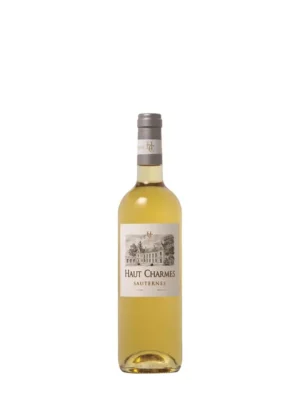

Vignobles Lassagne gather several family properties that were bought since three generations and are grown according to tradition and innovation on unique terroir located in the Libourne area.
Vignobles Lassagne encompasses these three properties: Château des Arnauds (the original estate), Château des Landes and Château Maltus, the latest addition to the Vignobles Lassagne.
Château des Landes is a family vineyard created in 1952, on the Lussac Saint Emilion appellation zone.
At the beginning, Paul Lassagne started with only 2 hectares and worked by night at a local roof tile factory, and by day on his little property with vines, land and pasture.
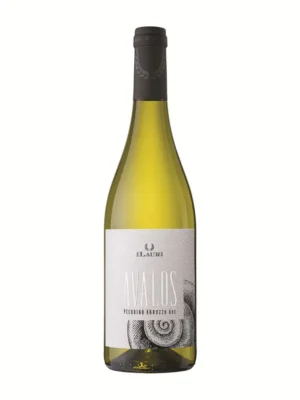
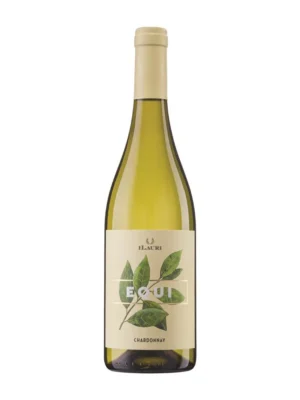
Cantina Le Monde is located in Friuli, within the famous Grave del Friuli area that extends from the foothills of the Alps to the Adriatic Sea. The origins of the estate that once owned the farmland can be traced back to the early 1700’s. The name ‘Le Monde’ is taken from the Germanic-Latin word “Mundio”, an ancient Germanic law that ‘protected’ the farmlands of the region. Cantina Le Monde ‘protects’ and safeguards its vineyards, farming in a healthy way, that respects nature and the sustainable future of ancient soils.
“We don’t do what we do for the plaudits of our profession. If critics endorse our product, that’s great news, but truly, we do what we do at Le Monde for all wine drinkers – for everyone – for the people” – Alex Maccan, owner of Cantina Le Monde.
Cantina Le Monde is located in Friuli, within the famous Grave del Friuli area that extends from the foothills of the Alps to the Adriatic Sea. The origins of the estate that once owned the farmland can be traced back to the early 1700’s. The name ‘Le Monde’ is taken from the Germanic-Latin word “Mundio”, an ancient Germanic law that ‘protected’ the farmlands of the region. Cantina Le Monde ‘protects’ and safeguards its vineyards, farming in a healthy way, that respects nature and the sustainable future of ancient soils.
The Pinot Grigio of Le Monde is produced on the clay and limestone soils of Friuli, which give a pleasant freshness and minerality to the wines of this area.
“We don’t do what we do for the plaudits of our profession. If critics endorse our product, that’s great news, but truly, we do what we do at Le Monde for all wine drinkers – for everyone – for the people” – Alex Maccan, owner of Cantina Le Monde.
The Huteau Boulanger winery was founded by Catherine and Francois in the heart of Muscadet Sèvre et Maine. The winery has 45 hectares of vineyards. “If you respect nature, soil, climate, he will give you an exceptional Muscadet that combines sophistication and freshness.”
The company’s philosophy is based on a huge love and passion for winemaking and minimal impact on the ecosystem.
Winemaker himself at the estate Domaine du Moulin Camus in Muscadet area, Francois Boulanger offers a wide range of Loire Valley wines from family estates meeting high quality criteria. The soils from where Les Petits Princes comes are made of flinty clay and alluvial gravel.
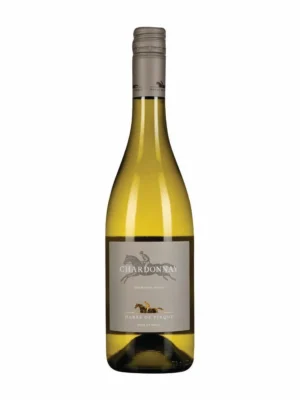
Grown in the Pays d’Oc enclave, Cuvée Dissenay hails from vineyards tucked between mountains and the Mediterranean, which gives grapes the perfect balance of warm sun and cooling breezes.
This round and buttery Chardonnay will greet your nose with honeysuckle hints.
Traditional and genuine, this white wine offers a rich and lingering finish.
Vignobles Lassagne gather several family properties that were bought since three generations and are grown according to tradition and innovation on unique terroir located in the Libourne area.
Vignobles Lassagne encompasses these three properties: Château des Arnauds (the original estate), Château des Landes and Château Maltus, the latest addition to the Vignobles Lassagne.
Discover the irresistible charm of Lola Sweet, an elegant and refined white wine from the heart of Bordeaux. Produced by the renowned Vignobles Lassagne winery, from the prestigious Bordeaux Blanc Doux appellation, this wine symbolizes the rich tradition of sweet white Bordeaux wines.
Made from 100% Sauvignon Blanc, a grape variety known for its aromatic power and fresh acidity, that in this moelleux version, comes into full bloom, with a velvety structure and a seductively sweet flavor profile.
The Robin family has owned their vineyard in Chablis since 1836. In 1888 they moved to Chichée, a small village 3 km southeast of Chablis. Today, the family owns about thirty hectares of vineyards in the best locations in Chichée and Chablis.
Louis Robins Chablis places great emphasis on highlighting the fine aromas and the original mineral tones of the Chardonnay grape from the region. The grapes are harvested mechanically and vinified in temperature-controlled steel tanks.
The story began with Michel Chapoutier, a unique man with a thirst for knowledge, definitely one of a kind. He seeks to discover and reflect the full potential of his terroirs and let the soils express their true character.
This now forms the basis of the M. CHAPOUTIER ethos to reveal the very best of what the soils have to offer.
It was in Latour de France that M.Chapoutier chose to set up his domain. The vines of Bila-Haut and Occultum Lapidem were the first expressions of this terroir. The story continued near a little village called Lesquerde. Steep, craggy limestone, arid soil, battered by the tramontane wind…
In this Côtes-du-Roussillon white blend part of the grapes comes from limestone, clay soils and gneiss in the Agly Valley; the other part from granite soils at higher altitude (500m, later ripening sites).
For more info, visit M. Chapoutier – Domaine de Bila-Hautwebsite.
VARIETALS
Grenache Blanc, Grenache Gris and Macabeu.
The story began with Michel Chapoutier, a unique man with a thirst for knowledge, definitely one of a kind. He seeks to discover and reflect the full potential of his terroirs and let the soils express their true character.
This now forms the basis of the M. CHAPOUTIER ethos to reveal the very best of what the soils have to offer.
The Saint-Joseph appellation extends around fifty kilometres on the right bank of the River Rhone, from Chavanay in the north to Guilherand-Granges, near Valence, in the south. The mainly-east facing vineyards are planted on the steep slopes of gneiss and local granite schist, occasionally coated with lenses of loess. This variety of substrates enables to combine complexity, volume and tautness in both Deschants whites and reds.
The story began with Michel Chapoutier, a unique man with a thirst for knowledge, definitely one of a kind. He seeks to discover and reflect the full potential of his terroirs and let the soils express their true character.
This now forms the basis of the M. CHAPOUTIER ethos to reveal the very best of what the soils have to offer.
The Prestige line is M.Chapoutier’s heritage, representing classic Grands Crus signed Maison M. CHAPOUTIER and representative of their appellations in the Rhône Valley.
The story began with Michel Chapoutier, a unique man with a thirst for knowledge, definitely one of a kind. He seeks to discover and reflect the full potential of his terroirs and let the soils express their true character.
This now forms the basis of the M. CHAPOUTIER ethos to reveal the very best of what the soils have to offer.
The Prestige line is M.Chapoutier’s heritage, representing classic Grands Crus signed Maison M. CHAPOUTIER and representative of their appellations in the Rhône Valley.
This white Châteauneuf-du-Pape Blanc is a blend of several Châteauneuf-du-Pape terroirs, composed of rolled pebbles from the ancient bed of the Rhône, safres and villafranchian terraces on clay matrices.
The story began with Michel Chapoutier, a unique man with a thirst for knowledge, definitely one of a kind. He seeks to discover and reflect the full potential of his terroirs and let the soils express their true character.
This now forms the basis of the M. CHAPOUTIER ethos to reveal the very best of what the soils have to offer.
The name Maia comes from an ancient tradition. Maia is in fact one of the seven sisters stars that together form the constellation of the Pleiades. Since ancient times guided sailors and farmers of Lake Garda in navigation and harvesting.
With wines which reflect elegance, with an enduring attention to quality, style and terroir, reflecting the alluvial soils of the DOC Delle Venezie, creating high quality organically certified wines from two or Italy’s most famous regions.
Domaine Dutron has been crafting wine in the picturesque town of Fuissé since 1835, where the family estate spans 16 hectares of Chardonnay vineyards. Passed down through generations, Maxime Dutron now oversees the vineyards, continuing the family’s legacy while embracing sustainable farming.
At the heart of the Pouilly-Fuissé plots, the vines for Mâcon-Fuissé wine make the most of their terroir and clay-limestone soils. This is an ideal soil composition which allows these 25-year-old Chardonnay vines to produce a unique, elegant and distinctively Mâconnais wine.