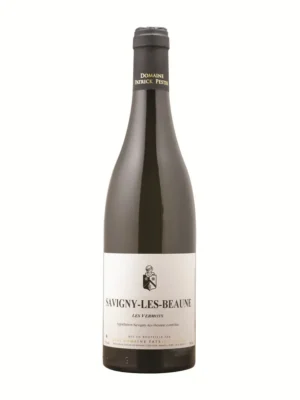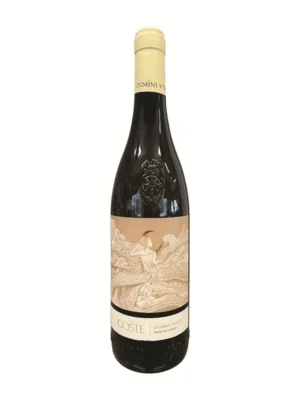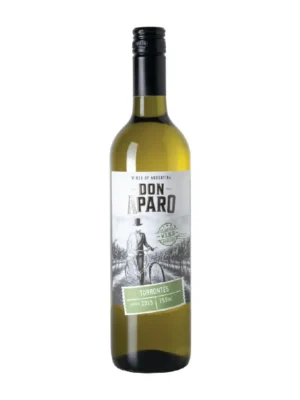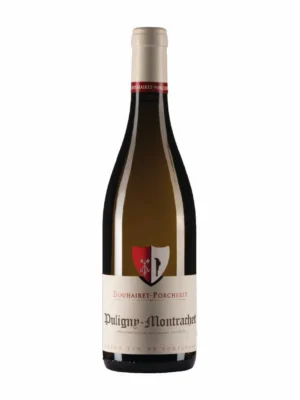

The enterprising Esteban Martín family has always had a very close relationship with the countryside and farming. The family business began in 1964 with the creation of the Granja Virgen del Rosario farm. In addition to the farm, the winery and a transport company also form part of Grupo Esteban Martín, the group fully owned by the Esteban Martín family.
In 1985, Miguel Antonio Esteban decided to buy 150 hectares of vineyards in the best lands of the DOP Cariñena, located at the foot of the Iberian Mountains, in the heart of the Ebro Valley. Year after year he was acquiring new parcels and already in 2003 he decided to build his own winery.
Produced with organic practices and suitable for vegans, this wine reflects Bodegas Esteban Martín’s dedication to quality and respect for nature.
Originally Venetian wine traders in 1912, the Fabiano family moved to Verona in 1956 to produce wine on a larger scale, sourcing fruit from Estate and contract vineyards in Soave, Bardolino, and Valpolicella.
The name “Settimo Miglio” carries a deep meaning. The Fabiano is exactly seven miles from the Verona Arena. The distance measured
according to the tradition of the ancient Romans inspired the name of the wine, representing its close connection with the wine heart of the region. This Pinot Grigio is characterized by delicate minerality, balanced by lively acidity that lends freshness to the wine.
Fattoria Il Muro has been owned by the Pancaro family for about 200 years and has always been dedicated to viticulture, thanks to the favorable environmental conditions. The presence of soils rich in galestro and the climate, characterized by strong temperature variations due to the proximity to the Alpe di Poti, create a micro-environment that enhances the organoleptic qualities and healthiness of the grapes. This allows for the adoption of environmentally friendly cultivation practices. The vineyards and olive groves extend mainly on hilly terrain that gently slopes towards the valley plain of the Castro stream.
The name Lama comes from the name of a close “podere”, in which the family of a farmer used to live during the old times of “mezzadria”. “Mezzadria” was an old way to conduct the farm which envisaged the division of land into small lots (podere) inhabited and cultivated by peasants who paid the estate owners with half the product of their land.
Elegance. Structure. Balance. These are the elements of the extraordinary. You find them in the soaring work of architecture, the perfect line of poetry, the ballerina’s graceful leap, and in the exquisitely crafted Napa Valley wines of First Press Wine Cellars.
First Press Wine Cellars focuses on the two varietals which best exemplify California’s premier winegrowing region, a richly textured Cabernet Sauvignon and a brightly refreshing Chardonnay.
With a long lasting tradition which spans many generations, the Garcés Silva family has developed a deep bond with the land, imprinting a unique quality-seal to each of its different agricultural activities.
With its noble and traditional style, Amayna wines are synonymous with elegance, complexity and concentrated flavors.
Whether consumed today or after years in the cellar, Amayna wines reflect the maximum expression of their terroir and the identity of the Garcés Silva family in the Leyda Valley.
With a long lasting tradition which spans many generations, the Garcés Silva family has developed a deep bond with the land, imprinting a unique quality-seal to each of its different agricultural activities.
With its noble and traditional style, Amayna wines are synonymous with elegance, complexity and concentrated flavors.
Whether consumed today or after years in the cellar, Amayna wines reflect the maximum expression of their terroir and the identity of the Garcés Silva family in the Leyda Valley.
The poor soils and gentle ocean breezes create tremendous aromatic potential and the great intensity reflected in this wine’s floral aromas and fresh, exotic fruit. A full, balanced Sauvignon Blanc with personality and exquisite elegance.
Gnarly Head wines began with a vision and a vine. In 2004, on a mission to make a serious Zinfandel, winemakers journeyed to Lodi in central California in search of the famed old vine Zinfandel vineyards. Grown in the head-trained, spur-pruned method for over a century, these vigorous gnarled vines produced more ripened red fruit than they had ever seen. They took it as a challenge to create the biggest, boldest Zinfandel they had ever made. The result was authentic, structured wines with a hint of something unexpected. Something Gnarly.
Gnarly Head Chardonnay raises the bar for this classic varietal. This juicy Chardonnay is crafted using grapes from specially selected vineyards in Lodi and Monterey. Chardonnay fruit from the Lodi region contributes ripe, rich fruit flavors with a full mouthfeel, while grapes from Monterey add crisp acidity, balanced with vibrant citrus and abundant tropical flavors.
Graf (Count) Johann IV von Katzenelenbogen was one of the founders of the success of the Riesling grape variety. In 1435, at his behest, vines of a then new, white variety called Riesling were planted.
The grapes for its production are grown on shale and alluvial soils located on the banks of the Rhine, under the influence of a mild, almost Mediterranean climate. The wine-making traditions of the region were laid in the monastic farms in the early Middle Ages.
The wine is named in honor of Count Rheingau – Johann IV Katzelenebogen, who in 1435 ordered to plant 22 vines of a new grape variety in one of his vineyards. The name of the new variety was Riesling. So Johann IV inscribed his name in the history of the greatest white grapes, and his possessions in the Rheingau are still called the “Riesling’s cradle”.
Graf (Count) Johann IV von Katzenelenbogen was one of the founders of the success of the Riesling grape variety. In 1435, at his behest, vines of a then new, white variety called Riesling were planted.
The grapes for its production are grown on shale and alluvial soils located on the banks of the Rhine, under the influence of a mild, almost Mediterranean climate. The wine-making traditions of the region were laid in the monastic farms in the early Middle Ages.
The wine is named in honor of Count Rheingau-Johann IV Katzelenebogen, who in 1435 ordered to plant 22 vines of a new grape variety in one of his vineyards. The name of the new variety was Riesling. So Johann IV inscribed his name in the history of the greatest white grapes, and his possessions in the Rheingau are still called the “Riesling’s cradle”.
“Haut” (High) because this nectar has a high quality; “Charmes” (Charms) because it is difficult not to fall under the charm of this wines golden this Sauternes. The micro-climate of the Ciron valley has a major role in its elaboration, to confer a very special character to the wine. Indeed, thanks to the climate, the “botrytis cinerea” appears on the grapes and concentrates the sugar while the acidity decreases. The attention brought to the winemaking and the ageing is the reason of the existence of this exceptional wine.
The name “iLauri” stems from the ancient roots of our birth place, Loreto Aprutino, once covered in Laurus nobilis, or laurel trees.
The Spanish influence in Italy and European Baroque culture during the 16th century cannot be denied. The Abruzzo region, as most of Southern Italy had intense ties from a political, cultural, religious, economic and social point of view. The Avalos family moved to Italy and developed centers of cultural excellence that rivaled the Medici family. Pecorino, a white grape once thought lost to the world is a must-try for those that believe Trebbiano is the only white wine in the Abruzzi. A sumptuous full-bodied white that flows with compelling flavors of white pulp, apricots and lychees.
Eco-compatible farming methods. 100% produced with clean and renewable wind-generated energy of sustainability.
The name “iLauri” stems from the ancient roots of our birth place, Loreto Aprutino, once covered in Laurus nobilis, or laurel trees.
Chardonnay was introduced into the Abruzzi at the end of the nineteenth century and was immediately successful in terms of quality. Today, it is recognized as one of its most popular grape varieties.
Equi is a defense for freedom, a plea for justice and equality after several trademark disputes with industry giants over the name of this wine.
Eco-compatible farming methods. 100% produced with clean and renewable wind-generated energy of sustainability.
The name “iLauri” stems from the ancient roots of our birth place, Loreto Aprutino, once covered in Laurus nobilis, or laurel trees.
The origins of this ancient variety are unknown, yet its presence is documented in Central Italy. The name “Passerina” stems from the Italian word for sparrow “Passero”, in reference to the bird’s appetite for the ripe grapes of this variety. Today, it is one of Abruzzo’s most promising varietals. Neola, or “the Young One” is I Lauri’s latest addition.
Eco-compatible farming methods. 100% produced with clean and renewable wind-generated energy of sustainability.
The name “iLauri” stems from the ancient roots of our birth place, Loreto Aprutino, once covered in Laurus nobilis, or laurel trees.
The celebrated Pinot Grigio varietal has been known since the Middle Ages in the Burgundy region and derives from a bud mutation of Pinot Noir. In partnership with they winemaker, the I Lauri’s team supervise an exquisite parcel in the Northeastern region of Veneto, while the name stems from one of our area’s most important rivers, born at almost 2.000 meters at the foot of the Gran Sasso.
Eco-compatible farming methods. 100% produced with clean and renewable wind-generated energy of sustainability.
The name “iLauri” stems from the ancient roots of our birth place, Loreto Aprutino, once covered in Laurus nobilis, or laurel trees.
15 years of laborious trial and error with Italy’s most successful single varietal has created this extraordinary single-vineyard Pinot Grigio. A fantastic expression of Pinot Grigio – an enological superstar!
Eco-compatible farming methods. 100% produced with clean and renewable wind-generated energy of sustainability.