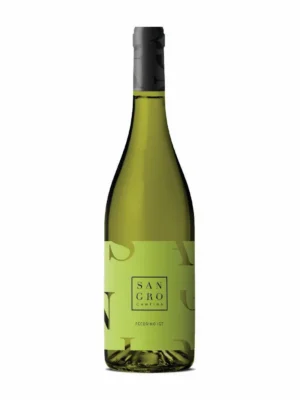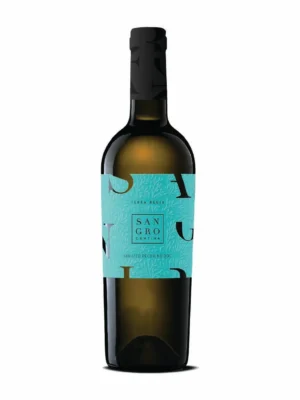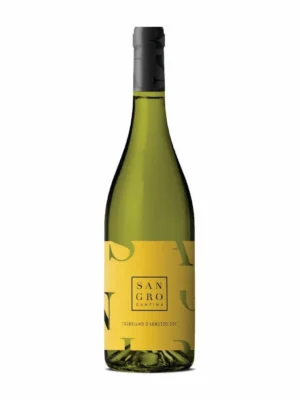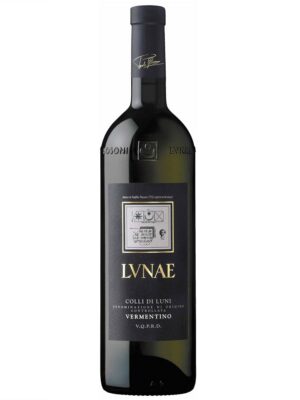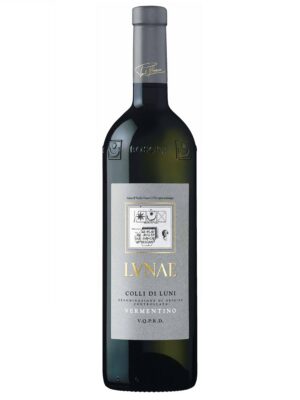

The Vermentino of the Lunae winery is one of the best creatures of Paolo Bosoni, founder and soul of this appreciated reality enclosed between the blue mirror of the Ligurian Sea and the green panorama of Lunigiana. Lunae’s philosophy is as simple as it is decisive: to exploit all the knowledge of its territory to transform a deep and rooted link over time into a wine that knows how to weave tradition and recent developments in the wine industry.
The Vermentino Gray Label is a fresh and fruity white, aged in steel, which with its immediate pleasantness well represents the character of Vermentino Ligure, adapted perfectly to the Colli di Luni area, thanks to its preference for the Mediterranean climate, warm, ventilated and for the exposures close to the coast. The Gray Label of Cantina Lunae Bosoni is the most typical direct and immediate interpretation of Vermentino, lean and sapid, with a mouth center with a juicy fruit and a finish of beautiful freshness.
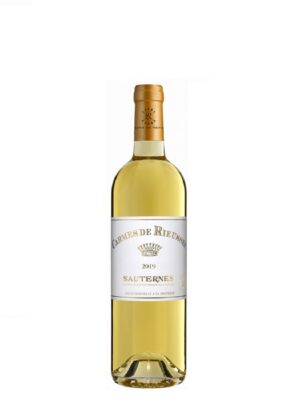
Château Rieussec’s second wine is selected according to the same standards as the first wine. Its character consistently reveals a beautiful aromatic range dominated by citrus flavours. Carmes de Rieussec’s name is a reference to the Carmelite monks in Langon, who owned the Rieussec estate, located on the border of the municipalities of Fargues and Sauternes, in the 18th century. Passed from hand to hand among different families, in 1984 it was bought by the Barons Rothschild, one of the most noble families important linked to the world of wine, already owner of the famous Château Lafite.
Today at Château Rieussec are grown the three symbolic vines of Sauternes, sémillion, sauvignon and muscadelle, carefully following traditional techniques, both in the vineyard and in the winery: the result of this commitment leads to the creation of rich, deep and dense wines, which conquer and fascinate from the first sip, thanks to the great variety of organoleptic characteristics expressed in the glass.
Originally from Schönberg, in the Rhineland, fleeing the consequences of the defeat of Napoleon I, the Yung family origins settled for more than a century in Algeria. Already listed in the first edition of Féret des Vins d’Oranie in 1886, the family developed its vineyard until independence, until forced to abandon the wine estates it had owned since 1859.
In 1862 Charles Young joined his older brother, already settled in Gironde. He then decides to acquire for his 2 children and his 2 nephews, the Château Haut Mondain, a 42-hectare AOC Bordeaux wine estate, followed then by Château Barail, Les Hauts de Palette and Moulin de Tassin.
Since 2020, the Charles Yung & Fils vineyards have been committed to a societal and environmental approach by obtaining High Environmental Value (HVE), level 3 certification.
Juan Cúneo Solari founded Casas del Bosque in 1993, at a time when the Chilean wine industry was pursuing quantity over quality.
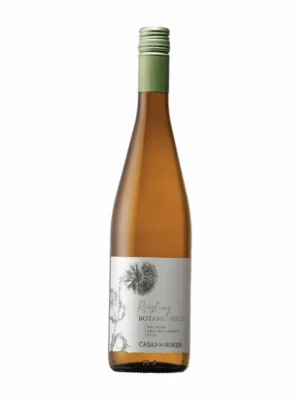
This Riesling expresses the nobility of the vineyards planted in this exceptional site of cold climate and marked maritime influence in the Casablanca Valley, unrepeatable conditions to achieve the elegance, aromatic intensity and refreshing acidity that define it. This wine is the result of an inexhaustible search for the perfect balance and sensory equilibrium.
Juan Cúneo Solari founded Casas del Bosque in 1993, at a time when the Chilean wine industry was pursuing quantity over quality.
A great Chardonnay from the cool Casablanca Valley, recognized as one of the best places in Chile for this variety. Ungrafted vines of the “Mendoza” clone planted on Tapihue Sandy Loam and Santa Rosa Clay Loam soils between 1997 and 2003. The vineyard is 18 km from the Pacific Ocean at 250 m altitude.
Juan Cúneo Solari founded Casas del Bosque in 1993, at a time when the Chilean wine industry was pursuing quantity over quality.
The fruits for La Cantera Sauvignon Blanc come part from the red sandy loam soil of “Lo Vásquez” planted on a hillside and part from Olivos Camino’s vineyard located 18 km from the Pacific Ocean at 250 meters of altitude. The vineyard is located in the coldest and western part of the Casablanca Valley.
This La Cantera 2024 is an outstandingly aromatic wine, which delivers the true cool climate expression of our vineyard, located
in Las Dichas, the coldest end of the Casablanca Valley. The sensation of “saltiness” on the back palate speaks of Las Dichas’site.
The Durup family, winegrowers from father to son, have been cultivating vines in Chablis for fifteen generations. The succession of Jean Durup, who reconstituted the vineyard of Château de Maligny, is ensured by Jean-Paul and Valérie Durup, assisted by Romain Ménissier, operations director. The different wines marketed under the prestigious labels “Château de Maligny”, with the best exposures, and “Églantière” all come from the unique variety of grape varieties used in Chablis: Chardonnay.
The Chablis Premier Cru Fourchaume is the most famous and the most commercial one of the Premiers Crus of Chablis, due first to its area (130 hectares for 850 hectares of Premiers Crus) and to its closeness to the Grands Crus. With 18 hectares planted in the appellation Chablis Premier Cru Fourchaume, Durup estate is the major producer of this appellation in the area.
The wine produced in this appellation is certainly the rounder of all those ones produced in the Chablis vineyard. It is also the suppler but with a good structure typical of the Premiers Crus.
For more info, visit Jean Durup – Château de Maligny website.
The Durup family, winegrowers from father to son, have been cultivating vines in Chablis for fifteen generations. The succession of Jean Durup, who reconstituted the vineyard of Château de Maligny, is ensured by Jean-Paul and Valérie Durup, assisted by Romain Ménissier, operations director. The different wines marketed under the prestigious labels “Château de Maligny”, with the best exposures, and “Églantière” all come from the unique variety of grape varieties used in Chablis: Chardonnay.
The Chablis Premier Cru « Montmain » is one of the most renowned Premier Crus of Chablis. The “Montmains” are located on a medium-size hill between parcels of “Vaillons” and “Chablis”. The original name was “the Mont moyen” and became “Montmain” through the centuries.
The Chablis Premier Cru Montmains is a wine a bit heavier than the other Chablis. Deep and very subtle, its characteristics are often neighbouring to those of the best white wines harvested in Côte d’Or.
For more info, visit Jean Durup – Château de Maligny website.
The Durup family, winegrowers from father to son, have been cultivating vines in Chablis for fifteen generations. The succession of Jean Durup, who reconstituted the vineyard of Château de Maligny, is ensured by Jean-Paul and Valérie Durup, assisted by Romain Ménissier, operations director. The different wines marketed under the prestigious labels “Château de Maligny”, with the best exposures, and “Églantière” all come from the unique variety of grape varieties used in Chablis: Chardonnay.
“La Marche du Roi” is an historical site located between the Premier Cru “Montée de Tonnerre” and the Premier Cru “Mont de Milieu”.
In times past, this hill was the border between the Kingdom of France and the Dukedom of Burgundy, from which the name “La Marche du Roi” has been given. The origin of the appellation “Chablis La Marche du Roi” is a historical fact in relation to the Chablisian area, which used to be divided into the royal Domain and the grand duchy of Burgundy. This very steep slope is located in the commune of Chablis and has the advantage of a Southeast exposure, therefore a very beautiful luminosity from morning till the end of afternoon. That gives the wine a very high concentration in fruit.
For more info, visit Jean Durup – Château de Maligny website.
The Durup family, winegrowers from father to son, have been cultivating vines in Chablis for fifteen generations. The succession of Jean Durup, who reconstituted the vineyard of Château de Maligny, is ensured by Jean-Paul and Valérie Durup, assisted by Romain Ménissier, operations director. The different wines marketed under the prestigious labels “Château de Maligny”, with the best exposures, and “Églantière” all come from the unique variety of grape varieties used in Chablis: Chardonnay.
The Petit Chablis of Domaine Durup is produced on about 30 hectares. It is the major estate in the appellation Petit Chablis. The vines representative of this appellation are in average 30 years old. The vinification is made in the tradition of Chablis.
For more info, visit Jean Durup – Château de Maligny website.
The history of the Chainier family begins in the 18th century when Pierre Chainier’s ancestors cultivated vines in the Bordeaux region. This tradition has been passed down from father to son and the Chainier Company now brings together many professional players, wine companies and major importers.
The Château de Pocé, known as “la Châtellenie”, dates from the 15th century and is located in Pocé-sur-Cisse, on the perimeter of the UNESCO world heritage site, a stone’s throw from the Château d’Amboise.
This 100% Sauvignon is grown on the hillsides located on the north bank of the Loire in the commune of Pocé s/Cisse, on clay-siliceous-calcareous soils.
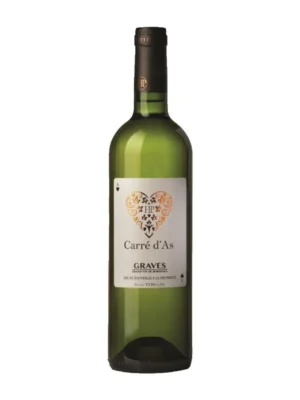
Situated in the commune of Martillac, this 20-hectares property once belonged to Baron de Montesquieu. Today, the estate is owned by Mr. Eric Perrin which also owns the famous Château Carbonnieux. Because of its special localization, its terroir and the choices of winemaking in the vineyard and the cellar, the Château Haut-Vigneau plays between the greatest ones.
This Haut-Vigneau blanc is quite characteristic of the terroir and the appellation of the AOC Pessac-Léognan.
Demanding and passionate, Alain Bessette gave his father’s property the means to produce quality wines. Accessible and worn on the fruit, they tell the revolution undertaken in the vineyard and the cellar.
The white grape varieties of Château La Verriere Sauvignon Blanc are harvested very early in the morning at temperatures allowing the grapes to be vatted to follow a skin maceration of 12 to 18 hours. This maceration will allow an optimum aromatic expression and a balance in the mouth which will guarantee this wine finesse and power over time.
Since 2012, Château La Verriere has embarked on an environmental approach by integrating the certification scope of the SME (Environmental Management System) and HVE (Exploitation of High Environmental Value).
Château Purcari, located in the southwest of the country within the IGP Ștefan Vodă, benefits from rolling hills, limestone bedrock, and fertile black soil — an ideal terroir for grape cultivation. True values do not change with time. Purcari remains Purcari. Since 1827.
The Nocturne range from Chateau Purcari brings together a series of excellent value wines made with grapes harvested manually at night to preserve their freshness and the richness of their aromas.
The Viorica grapes are sourced from a 15-20-year-old vineyard located in the Stefan Voda district of Moldova, at 110-185 meters above sea level on sandy-clay chernozem soil. After manual harvesting, fermentation takes place at a controlled temperature in stainless steel, and the wine ages first in stainless steel and then in the bottle for 6 months. These practices ensure the production of a fresh, expressive, and lively wine.
From France, this crisp and zesty blend will take you through a wine experience, having Claire Patelin encapsulated in this bottle a bit of the French way of life.