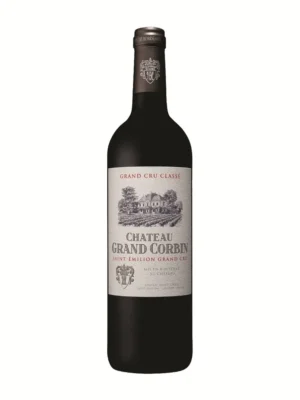
On a map dating from 1811 there are five castles, not far from each other, all bearing the name of Corbin.
Today, the Grand Corbin vineyard extends in one piece over 37 ha of which 28.5 ha are Grand Crus Classés of Saint Emilion.
Thanks to the expertise and know-how of an experienced team, the latest vintages confirm the progress made both in the vineyard and in the cellar. Wines with silky and suave tannins, with a nose marked by truffles, a discreet woodiness and a few touches of mocha. Freshness, elegance, shine are the other characteristics. The blue clays give these wines structure, density and ensure real aging potential.
For more info, visit Château Grand Corbin website.
Three large plots in the best parts of Pauillac form the vineyard of this classified growth, an unusual configuration and a direct inheritance from the estate’s founder, Pierre Ducasse, an eminent lawyer. In the 18th century he gave a single name to a fine vineyard holding, which was put together through inheritance and purchases. When he died in 1797, his son, Pierre, inherited a 60-hectare exploitation, named Ducasse-Grand-Puy-Artigues-Arnaud, of which two third were planted with vines. The estate was classified in 1855, under the name of Artigues Arnaud.
Thanks to impeccable harvesting and tailor-made winemaking, Cabernet Sauvignon and Merlot produced a wine renowned for its aromatic complexity, glorious structure and ageing capacity, all true to the classic Pauillac style.
For more info, visit Château Grand-Puy Ducassewebsite.
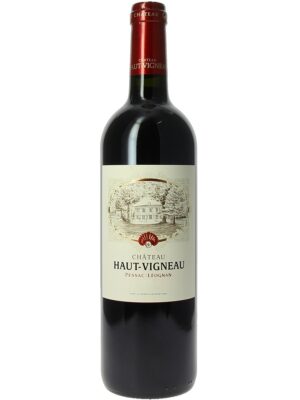
Situated in the commune of Martillac, this 20-hectares property once belonged to Baron de Montesquieu. Today, the estate is owned by Mr. Eric Perrin which also owns the famous Château Carbonnieux. Because of its special localization, its terroir and the choices of winemaking in the vineyard and the cellar, the Château Haut-Vigneau plays between the greatest ones.
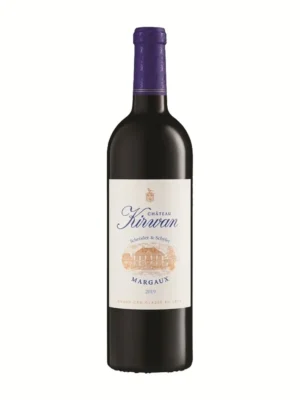
Château Kirwan is an estate located in Cantenac, not far from the city of Bordeaux and the river Garonne, in a terroir where man and nature have been living together harmoniously for hundreds of years.
The Château, built in 1751, was one of the few Medoc properties that Thomas Jefferson, the future third President of the United States, visited on his Bordeaux wine tasting trip in France and mentioned in his diaries written in 1780. Mark Kirwan passed away in 1815 and over the centuries it passed from hand to hand through several owners, until, during the early years of the twentieth century, it was acquired by a family of “negociant”, the Schyler and Schroder, which moved to Bordeaux in 1738 and still in business today.
With 40 hectares divided into 46 parcels that wind within the territory of the AOC Margaux, it is clear and obvious how the keystone of this Château, over the years, has always been the terroir and its strong identity. Its wines have a characteristic soft, gentle attack, followed by a very Margaux lacework of flavours. Cabernet Sauvignon and Petit Verdot provide Kirwan’s main wine with a multi-layered structure that is very big, tempered by the roundness of the Merlot and the delicate elegance of the Cabernet Franc.
The 2019 joins the list of sumptuous vintages ending in the number 9. Throughtout the growing season, the vinse enjoyed smooth, calm conditions. A perfect balance between the amount of foliage and the quantity of grapes was observed in this vintage.
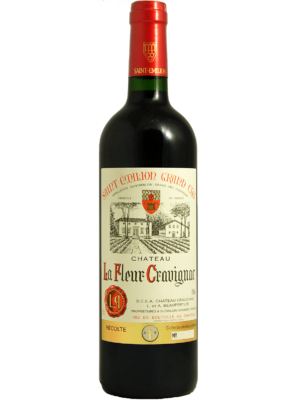
Family property, on the north-west slope, 1 km from the village of Saint-Émilion, based on traditional cultivation with absence of weedkillers, limited yields, manual harvesting, traditional aging in oak barrels/foudres and amphoras.
This Saint-Émilion Grand Cru is the fruit of the work of the land and the grapes harvested by women and men in symbiosis with nature.
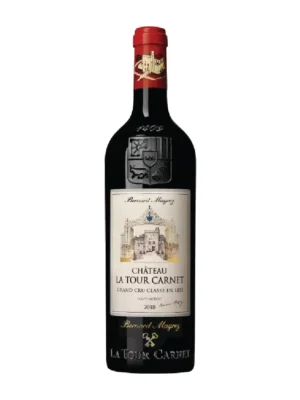
The history of La Tour Carnet merges with the history of France. Bearing the name of the squire who infallibly helped his Lord to resist French royalty at the end of the Hundred Years War, Château La Tour Carnet played a major role in the revolution of the Médoc vineyards and the quality of its wine, rewarded by the entry in the classification of Grands Crus Classés of 1855. The diversity of its terroir and the constant search for perfection make this Haut-Médoc an exceptional wine.
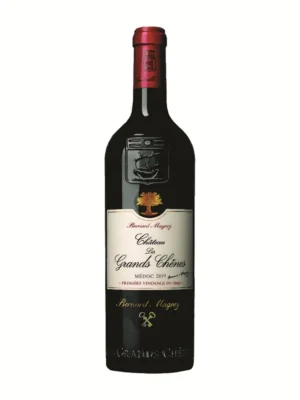
Since purchasing the estate in 2000, Bernard Magrez has returned the estate’s Château, cellars and 311 hectares to their glory days, marrying cutting-edge technology with traditional savoir-faire.
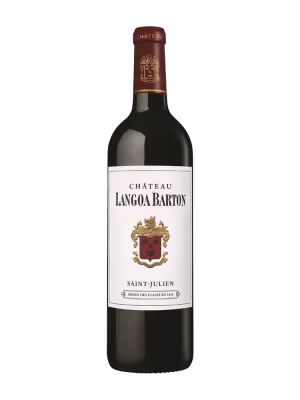
Château Langoa Barton, 3rd Classified Growth, was the first of the two Bordeaux wine estates bought by Hugh Barton in the 1820s, the other being Léoville-Barton, 2nd Classified Growth.
Both Langoa and Léoville wines are models of typical St Julien restraint and elegance, and for years, Langoa Barton was considered slightly lighter and more forward than Léoville. However, in the last decade it has become noticeably deeper in colour and richer and more concentrated on the palate. Langoa Barton is now often the equal of Léoville.
The plots that compose the Château Langoa Barton terroir overlook the river. The splendid slopes of quaternary gravel bring the grapes to full maturity and then they undergo a rigorous selection process before being chosen for the Langoa Barton. The plowing is traditional, without weeding or herbicide.
For more info, visit Château Langoa Bartonwebsite.
VARIETALS
67% Cabernet Sauvignon, 26% Merlot, 7% Cabernet Franc
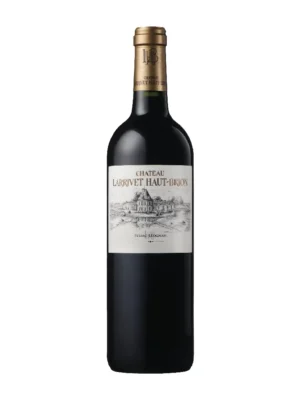
Called at various times Château de Canolle, La Rivette, and Château Brion-Larrivet, the estate was given its current name, château Larrivet Haut-Brion, in 1949 by Jacques Guillemaud (owner since 1941). Devoted and hard-working, he conscientiously managed the estate until 1982. Château Larrivet Haut-Brion was acquired by the Gervoson family in 1987. They restored the estate’s unity, once again combining the château, outbuildings, 13 hectares of grounds, and 42 hectares of vines under one owner, as well as replanting 18 hectares of land that had laid fallow.
Today a team of enthusiastic professionals has done a wonderful job of giving Château Larrivet Haut-Brion back its superb reputation, and the estate is once again universally recognized as one of the finest wines in the Pessac-Léognan appellation.
Great classic 2019 vintage, representative of the new style leaving a large part to the expression of the Cabernet Sauvignon.
For more info, visit Château Larrivet Haut-Brionwebsite.
VARIETALS
65% Cabernet Sauvignon, 20% Merlot, 15% Cabernet Franc
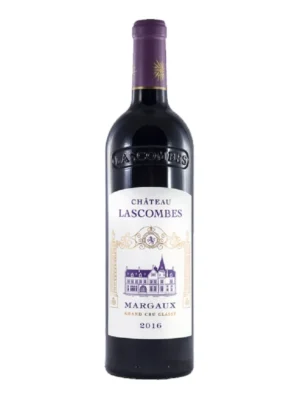
From the 17th century to the present day, ten generations of owners have followed one another and have left their mark on the history of Château Lascombes. A destiny marked by colorful characters who all worked for the excellence of Château Lascombes wines.
An alliance of power and elegance, smoothness and tannic richness, Château Lascombes is a complex wine. Young, its deep robe is still impressive. The palate combines finesse and softness with a grain of very noble tannins. Over the years, you have to rediscover Château Lascombes to fully appreciate its aromatic complexity and see its structure evolve, becoming more and more suave.
Depth, complexity and graceful power characterise this vintage, which reveals all its qualities after long ageing in the bottle. Predominantly Cabernet Sauvignon, it represents the Médoc’s winemaking tradition and embodies the great classicism of Margaux.
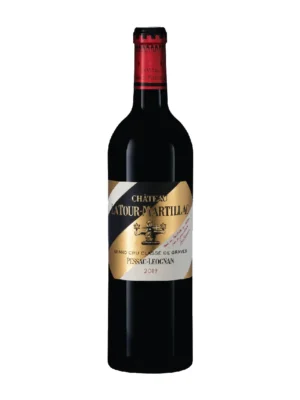
Thanks to the long involvement of generations of the Kressmann family, and the recognition shown in 1953 by the classification of Graves, the wines of Château LaTour-Martillac feature among the best of Pessac-Léognan. The expansion of the range was drawn up by Tristan and Loïc Kressmann. The second wines appeared at the end of the 1980’s under the label Lagrave-Martillac, followed by the Château Langlet, a magnificent property in the Graves appellation, acquired in 1999.
The year 2019 was marked by a succession of climatic events which made this vintage quite complex and interesting to watch voer the years.
The first plantation in the history of the Château Les Grands Chênes, named Cru Bourgeois Supérieur, took place in 1880. This property was one of the first acquired by Bernard Magrez in the Médoc vineyards. This castle is often considered as “The Pearl of the Medoc”. It is located on the famous gravelly ridge of Saint Christoly du Médoc and is built around an old fortress dating from the sixteenth century.
At the tasting, Château Les Grands Chênes offers a full and fleshy wine with beautiful aromas of fruit and surprising volume.
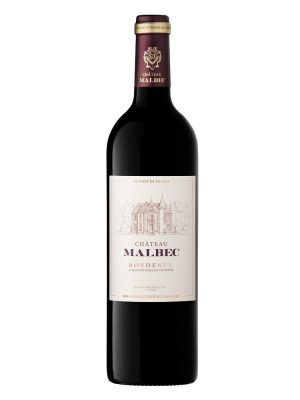
Castel Estates and Vineyards offer a range of unique estate wines, finding some true gems by following the advice of the people who know and love the place best. In Bordeaux, at the gateway to Entre-Deux-Mers, they selected Château Malbec which also houses an education center dedicated to wine and the art of wine tasting. Contrary to appearances, Château Malbec is not named after the famous grape variety, but for one of its former owners, Louis Malbec.
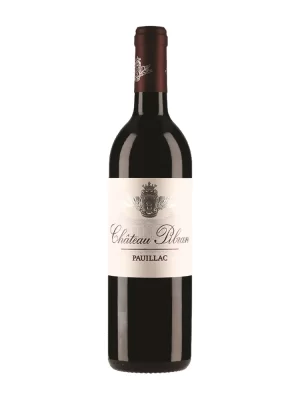
Pibran is an old Médoc name. Its highly reputed vineyard covers one of the finest outcrops of Pauillac. The estate, which originally had only just 10 hectares, was expanded in 2001 following the purchase of neighbouring property to reach the current size of 17 hectares of superb Garonne gravel soil. For a long time it belonged to the Billa family, who sold it to AXA Millésimes in 1987. The vineyards were restructured shortly after the purchase, and drainage was improved in order to get the best possible effect of the soil on the wine. Today Château Pibran is carefully produced by the same technical team that makes Château Pichon Baron and then moved in barrel, for aging in the cellars of Pibran.
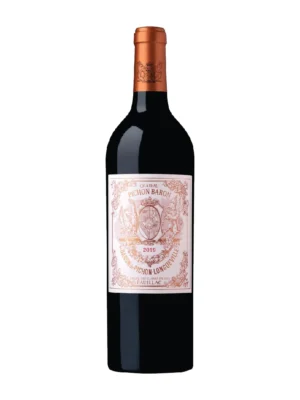
Château Pichon Baron, Second Grand Cru Classé in 1855, is one of the great historic vineyards of Bordeaux. A rigorous selection policy in the vineyard and in the cellars ensures the production of a Grand Vin, Château Pichon Baron, which is the pure expression of Pauillac unique terroir.
2nd Grand Cru Classé in 1855 from Pauillac belonging to the elite of the Grands Crus of Bordeaux, the Château Pichon Baron signs an exceptional 2019 vintage, entirely representative of the Pauillac appellation. A true mosaic of terroirs and superbly located near the Gironde estuary, the Pichon Baron vineyard extends over 73 hectares of vines planted on perfectly drained Médoc gravel soils, characteristic of the Pauillac appellation.
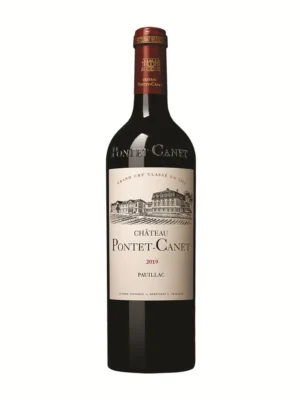
5th Grand Cru Classé of Pauillac, Château Pontet-Canet has experienced an irresistible rise which has made it one of the most emblematic brands of the Médoc. Led by Justine and Alfred Tesseron, Château Pontet-Canet has established itself as one of the finest references on the left bank of Bordeaux.
In this vintage, Pontet-Canet, shows once again that natural refinement is its finest jewel. 2019, without doubt, is a promise of voluptuousness for all wine lovers.


 Download Tasting Note