Tied to the Seigneuries of Lafite and Mouton (future First Classified Growths belonging to two different branches of the Rothschild family), Château Clerc Milon derives its name from its historic owners, the Clerc family, who acquired it when it was sold as a national asset after the French Revolution.
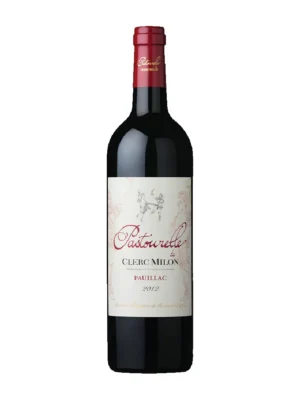
Living testimony to the considerable improvements in quality achieved at the property since the arrival of Baron Philippe and his descendants, Château Clerc Milon now has a second wine. Pastourelle de Clerc Milon has joined the dance and already accomplished its first very confident steps in the company of fine Pauillac wines. Its name comes from a traditional dance, the pastourelle, which evokes a knight’s romantic encounter with a shepherdess: the name echoes the pair of dancers that adorn the label of the Grand Vin. Made of gold, enamel and pearls, this precious miniature from the Museum of Wine in Art at Château Mouton Rothschild belonged to Catherine II, the empress of Russia, and is inspired by characters of the Commedia dell’Arte. Baroness Philippine de Rothschild chose it as the Clerc Milon emblem because of her love of the theatre.
2012 was a year of contrasts. The conditions of the vintage favoured superb expression of the Merlot, here mostly planted on clay-limestone parcels.
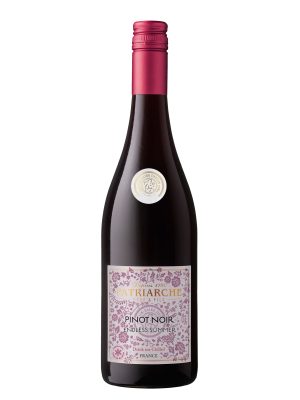
The history of Patriarche was written by audacious men and women starting in 1780 in Beaune. The traditional care of the winemaking methods make their wines a bench-marking classic of the regional style with a lot of freshness and great balance.
Patriarche is pleased to introduce this Pinot Noir, Vin de Pays d’Oc, specially made for a refreshing tasting. Patriarche recommends to put this bottle in your fridge 1h before tasting allowing this varietal to express its best aromatic potential. In order to guide you through this fresh wine experience, place the bottle in the fridge and as soon as the label blooms, you can taste it!
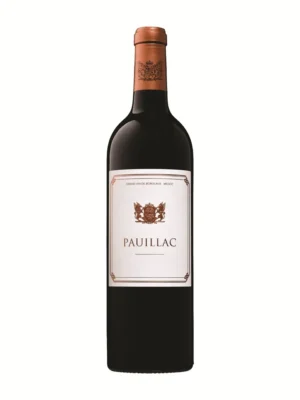
Elaborated since the 2019 vintage, this Pauillac is a fruity, supple and well-balanced wine.
The grapes making up the blend of this cuvée come from young vines in the Tour Pibran and Château Pichon Baron vineyard, with clay-limestone and gravelly soil. These grapes are harvested, vinified and aged by the Château Pichon Baron team. They produce this Pauillac with the same standards of quality as their other wines in order to highlight this appellation.
Château Figeac is one of the leading St. Emilion estates and its wine, with its high Cabernet content, has often been described as the most Médoc-like in Saint-Émilion. It is located in the north-west of the appellation with its vineyards adjoining those of Cheval Blanc. Its 40 hectares of vineyards (unusually for the right bank there is only 30% Merlot in the vineyard with 35% Cabernet Franc and – rare on the right bank – 35% Cabernet Sauvignon) lie on a deep, Médoc-like gravel topsoil (‘Graves’) over a flinty, iron-rich subsoil.
Since 2010 Figeac has been managed by Comte Eric d’Aramon and his wife Laure and there has been some serious improvements here recently under winemaker Frédéric Faye. Michel Rolland has been brought in to consult – but not to change the unique Figeac style. As a consequence, the wines produced now seem a little riper and more polished than before but are still fine, pure and classic.
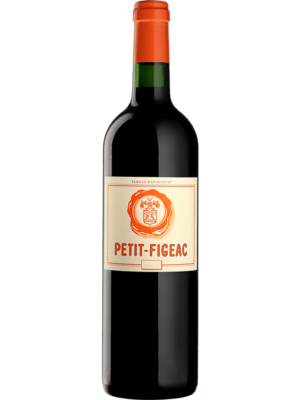
Produced to the same high standards as the Grand Vin, Petit-Figeac is Château Figeac’s second wine. Under the leadership of Thierry Manoncourt, Château Figeac has been producing a Second Wine since 1945. Since the 2012 vintage, it has taken the name of a historic plot of land, “Petit-Figeac” located in the heart of the estate.
2021 is the first vintage vinified in the estate’s new cellar.
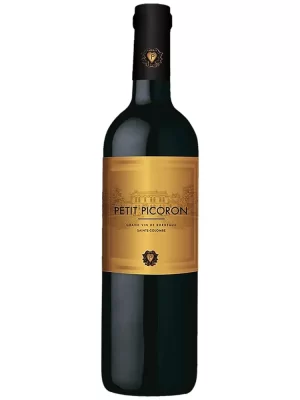
This exceptional Bordeaux wine is from carefully selected plots on the continuation of Saint-Émilion’s celebrated limestone ridge, the perfect terroir to grow a beautiful 100% Merlot.
The south facing ridge shielded Château Picoron from the Bordeaux Spring frost which impacted most other wineries, making 2017 a vintage to celebrate.
Only 1400 cases were produced from the rolling clay and limestone hills of Château Picoron.
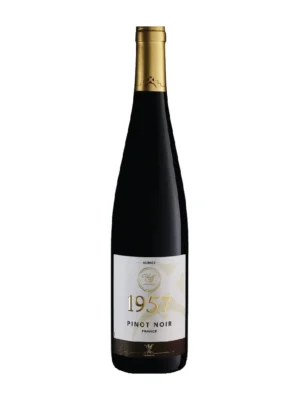
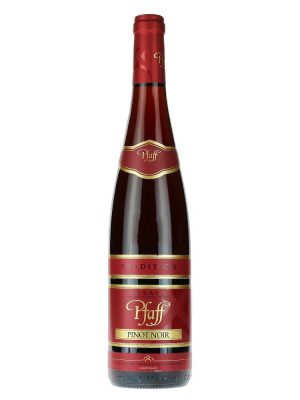
Located at the heart of the vineyard of Alsace since 1957, Cave des Vignerons de Pfaffenheim has developed a taste for quality and innovation in line with its traditions and values.
In 2020, the “1957 by Pfaff” range is a tribute to these founders, the heritage of their know-how, Alsatian excellence.
Located at the heart of the vineyard of Alsace since 1957, Cave des Vignerons de Pfaffenheim has developed a taste for quality and innovation in line with its traditions and values.
Pinot noir often unveils fresh aromas of black currant, red berries and some notes of leather.
Second Grand Cru Classé from Pauillac, the magnificent Château Pichon-Longueville Comtesse de Lalande shines on the left bank of Bordeaux. In 2007, Château Pichon-Longueville Comtesse de Lalande began a new chapter in its history by joining the Rouzaud family, owners of the prestigious Louis Roederer Champagne House.
A reference among the wines of Pauillac, Château Pichon-Longueville Comtesse de Lalande oversees a vineyard of 114 hectares, of which 92 hectares are in production. The soils, composed of gravelly ridges on sandy-clay subsoils, benefit the vines, which are on average 28 years old. In the process of converting to organic farming, the vineyard is certified organic and 65% biodynamic.
Réserve de Pichon Comtesse is considered the Second Wine of the estate.
For more info, visit Château Pichon-Longueville Comtesse de Lalande website.
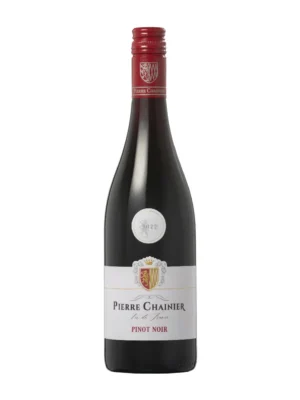
The Pierre Chainier House, based in Amboise, owns over 250 hectares divided between Tours and Amboise, directly cultivating and distributing all legendary grapes of the Loire Valley. The trading business gives opportunities to create harmonies of wine likely to answer to specific requests.
The new range of Pierre Chainier shows blended cuvees of typical Pinot Noir varietals, developing partnerships with wine growers and the various cuvees are selected and blended after several tastings.
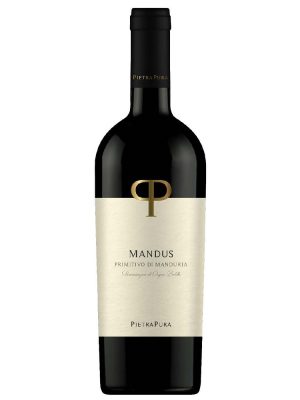
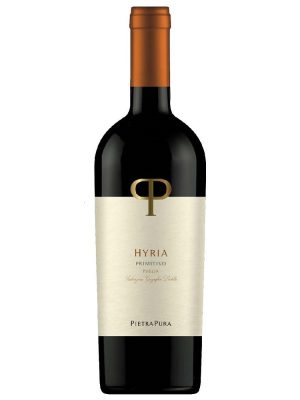
The PietraPura range is the result of the shared objectives of making the most of the native vines of the Salento area and of creating wines that express the very best of the terroir. Rocca delle Macìe has combined experience and expertise to create three different types of wine using Primitivo and Negroamaro grapes, which are vinified and bottled in the Puglia Region, under the watchful eye of the Zingarelli family’s chief winemaker, Luca Francioni.
This wine is produced with Primitivo grapes selected in the Salento Area of Apulia.
After temperature controlled fermentation is over, must is gently pressed and the wine goes through 4 months aging in French oak barrels.
The PietraPura range is the result of the shared objectives of making the most of the native vines of the Salento area and of creating wines that express the very best of the terroir. Rocca delle Macìe has combined experience and expertise to create three different types of wine using Primitivo and Negroamaro grapes, which are vinified and bottled in the Puglia Region, under the watchful eye of the Zingarelli family’s chief winemaker, Luca Francioni.
The Primitivo grapes of this wine come from selected vineyards located in southern Puglia, where the traditional Alberello basso vine training method is employed.
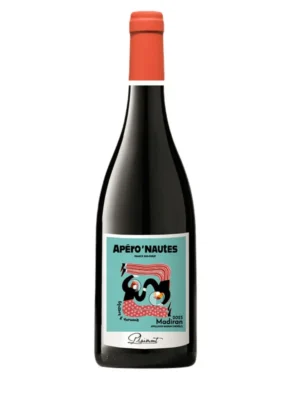
It all began in the mid-1970s when André Dubosc – a third-generation wine grower – set out to build up the reputation of the wines from their region of South-West France. He and other passionate young winegrowers fashioned local dry white wines (now a PGI: Côtes de Gascogne), revived the Saint Mont appellation and gave a new breath of life to the Pacherenc du Vic-Bilh, made from late-harvested grapes. In 1979, these women and men, who put their heart, soul and know-how into producing the best the terroir could offer, decided to strengthen their foothold by uniting their wine cellars and estates. And so they set up the Plaimont union of cooperatives (“Pl” for Plaisance, “Ai” for Aignan and “Mont” for Saint Mont).
Long marked by powerful and structured wines, Madiran offers a new interpretation with Apéro’Nautes 2023. This vintage breaks the codes by highlighting a fresh and fruity Tannat, obtained thanks to a short maceration and aging in vats which preserves all the delicacy of the grape variety. The result: a red with a supple texture, intense aromas of cherry and raspberry, perfect for an aperitif with friends.
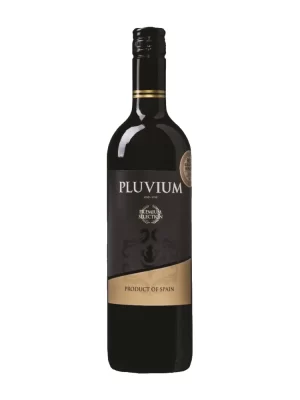
Since 1885, the Vicente Gandía seal gives all its products common characteristics: high quality, reasonable prices, and stability between one harvest and another. Wines that transmit elegance, complexity, softness and balance.
Today, you can find Vicente Gandía in 90 countries on 5 continents, as the largest winery in the Valencian Community. In addition, in 2014 it won the award for the best Spanish winery in the prestigious international competition AWC Vienna. That same year, the World Association of Writers and Journalists of Wines and Spirits included it in their ranking of the top 50 wineries in the world. In 2018, the European Congress of Enogastronomic Brotherhoods (CEUCO) awarded the “Aurum Europa Excellente” Prize to Vicente Gandía as “Best European Winery”, reconfirmed also in 2022.
Pluvium Premium Selection Red is a Spanish red, dry wine from the Valencia region. It is a blend of two grapes: Bobal and Tempranillo. Expressive bouquet, balanced with good acidity and a spicy background.
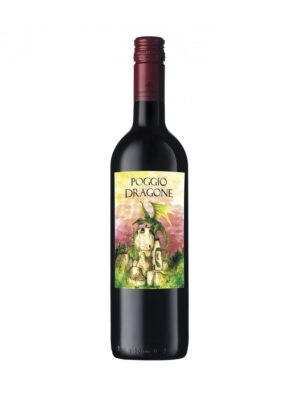
Ancient legends recount tales of nymphs, giants and winged serpents in the encompassing Apennine mountains. During the 5th century BC, the most feared mythical dragon devastated Ate and Tixa, in the southern part of Abruzzo. St. Leucio, famed slayer was summoned to kill the dragon. Today St. Leucio Cathedral stands on the monster’s den and contains the dragon’s 2 meter rib as proof of the diocesan’s bravery.
Hand-harvested grapes from the Abruzzo region make up this fruit-forward red wine. Classic Italian varietal Sangiovese is combined with French Merlot and aged for three months in large vessels made from oak, to soften and round out the tannins. Sangiovese gives crunchy red fruits, brisk acidity and fine tannins for structure, while Merlot adds soft, fleshy red stone fruits, producing a plush, satisfying red.
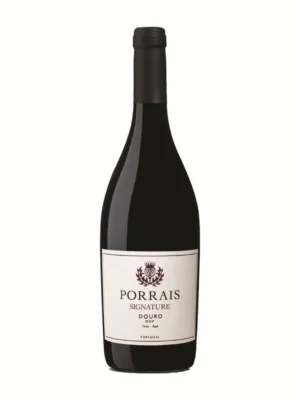
Quinta de Porrais is located in the area of the Douro Demarcated Region, recognized for having defined the world’s first organization model for a wine region and for the quality of its wines. In partnership with Ferreira family, Casa Santos Lima has been a partner of Quinta de Porrais since 2011 and responsible for the production and commercialization of the wines of this historic place.
Situated at an altitude of around 600 metres, winding terraces, the centuries-old vines planted here have excellent exposure to the sun. Made of this region’s traditionally grapes this wine shows great aromatic intensity and Douro’s character.


 Download Tasting Note