
Bernard Magrez’s journey is that of passion, a constant desire for improvement, know-how and exceptional success which has its roots first in Bordeaux, in the Grands Crus Classés, then in other prestigious terroirs in France and around the world.
L’Âme de Pape Clément’s vineyard is nestled in the heart of the Graves region, on the left bank of the Garonne River where the soil and climate are ideal for grapes to ripen and vines to flourish. Dig down into the subsoil and you’ll find gravel and a layer of clay and limestone, which absorbs the sun’s heat during the day and releases it at night to produce remarkably full, ripe grapes. What’s more, the nearby river and the vineyard’s exposure to the sun help create a microclimate which helps protect and nurture the vines.
Paying homage to the famed terroir of Stellenbosch’s historic wine region, L’Avenir was only founded in 1992 by Mauritius native Marc Wiehe.
Under the oenological direction of winemakers Dirk Coetzee, Mattheus Thabo and Francois Conradie, the winery in the foothills of the Simonsberg in Stellenbosch produces now a well-endowed and award-winning wine portfolio of wines, distinguished by their unmistakably South African character with an elegant touch of French flair, with the two classic South African grape varieties Chenin Blanc and Pinotage, as the cornerstone of the South African wine industry, forming the main focus of L’Avenir.
L’Avenir Single Block Pinotage is the winery’s flagship and the best that L’Avenir has to offer. Only grapes from the highest vineyard on the estate were used for this exceptional red wine. Only the 14 best casks were selected for this vintage.
Three large plots in the best parts of Pauillac form the vineyard of this classified growth, an unusual configuration and a direct inheritance from the estate’s founder, Pierre Ducasse, an eminent lawyer. In the 18th century he gave a single name to a fine vineyard holding, which was put together through inheritance and purchases. When he died in 1797, his son, Pierre, inherited a 60-hectare exploitation, named Ducasse-Grand-Puy-Artigues-Arnaud, of which two third were planted with vines. The estate was classified in 1855, under the name of Artigues Arnaud.
L’Héritier de Grand Puy Ducasse is the second wine of Château Grand-Puy Ducasse. A distinguished red wine that embodies the classic elegance of the Pauillac AOC with rich flavors and refined tannins.
For more info, visit Château Grand-Puy Ducassewebsite.
Bernard Magrez’s journey is that of passion, a constant desire for improvement, know-how and exceptional success which has its roots first in Bordeaux, in the Grands Crus Classés, then in other prestigious terroirs in France and around the world. Bernard Magrez’s journey is that of passion, a constant desire for improvement, know-how and exceptional success which has its roots first in Bordeaux, in the Grands Crus Classés, then in other prestigious terroirs in France and around the world.
Located in Saint-Christoly-Médoc, a town once renowned for its trading port that became a gateway to the world, “L’inattendu” des Grands Chênes is a wine that is both structured and smooth, making the most of its Garonne gravel terroir.
Located on a schist Terroir, typical of Languedoc, and with a very sunny Mediterranean microclimate, La Cave de Roquebrun produces wines in AOC Saint-Chinian-Roquebrun, AOC Saint-Chinian, AOC Languedoc and IGP Pays d’Oc, all original and high quality wines.
“La Burgondie” was the historical region of France that gave rise to the term Burgundy. The legendary little knight character that appears on the bottles truly captures the essence of La Burgondie. Courageous, confident and loyal. A forward-thinking, like-minded group of individuals who are fiercely proud of their Burgundian roots, their beautiful region and their wines. The same wines, produced using environmentally friendly farming methods, which are evocative of the hard-working co-operative-winemaker families who give their all, and have done so for generations.
We find the Côte Chalonnaise in the very heart of Burgundy; the vineyards continue the natural line of the Côte de Nuits and the Côte de Beaune. Organized into small individual villages, the regional appellation “Bourgogne Côte Chalonnaise” brings together 44 different communes, it embodies both
white wines made from Chardonnay and red wines from Pinot Noir.
“La Burgondie” was the historical region of France that gave rise to the term Burgundy. The legendary little knight character that appears on the bottles truly captures the essence of La Burgondie. Courageous, confident and loyal. A forward-thinking, like-minded group of individuals who are fiercely proud of their Burgundian roots, their beautiful region and their wines. The same wines, produced using environmentally friendly farming methods, which are evocative of the hard-working co-operative-winemaker families who give their all, and have done so for generations.
In the heart of Burgundy the vineyards of Givry spread across the communes of Givry, Dracy-le-Fort and Jambles in the Côte Chalonnaise. The vines grow at altitudes between 240 and 280 metres in chalky-clay soils on slopes facing east/south-east.
“La Burgondie” was the historical region of France that gave rise to the term Burgundy. The legendary little knight character that appears on the bottles truly captures the essence of La Burgondie. Courageous, confident and loyal. A forward-thinking, like-minded group of individuals who are fiercely proud of their Burgundian roots, their beautiful region and their wines. The same wines, produced using environmentally friendly farming methods, which are evocative of the hard-working co-operative-winemaker families who give their all, and have done so for generations.
The village of Mercurey is situated in the heart of the Côte Chalonnaise and is one of the largest winegrowing appellations of Burgundy. The vines grow at altitudes between 230 and 320 meters in limestone-marl soils on slopes facing the midday sun. Mercurey benefits from cooler climatic conditions than the Côte de Beaune, thus ripening is later but cellaring potential is very good.
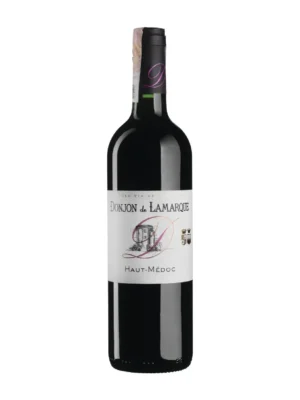
Located in the heart of the Haut-Médoc appellation, on the edge of the Saint-Julien appellation, the Château de Camensac covers 75 hectares. Purchased in 2005 by the Merlaut family, he benefits from the experience and know-how of the Château Chasse Spleen team, it regains its glory of 1855, when it was ranked 5th Grand Cru in the Bordeaux classification and its wines renew with the traditional quality of the castle.
La Closerie de Camensac is the second wine of Château de Camensac and it is a cuvée from the young vines which it enjoys the same careful care during the vinification as the great wine.
A wine with a captivating personality, La Closerie de Camensac offers the opportunity to taste a vintage from a Médoc classified vintage at a very affordable price.
The history of Montrose, written in two centuries by three families of owners, is depositary of their spirit, marked by their quest of excellence and legendary vintages. Pioneers in the Médoc, visionary builders and wise managers, all these families knew how to work and valorise this unique terroir. The estate owes them the foundation on which Montrose builds its image today and its unique place in the world of exceptional wines.
Made from the same vineyard and with the same meticulous care as the Grand Vin, La Dame de Montrose, from a second selection, is a predominantly Merlot wine, supple and silky. Its pronounced red fruit aromas offer another expression of the terroir in a style all its own.
A reliable wine that expresses its maturity more quickly, this wine was created in 1983 in homage to Yvonne Charmolüe, who managed Château Montrose alone from 1944 to 1960. With production varying from year to year, this wine is aged for 12 months in 30% new barrels and represents on average 40 to 45% of the total production of the Montrose vineyard.
The farming co-operative La Guardiense, which is one of the biggest in Italy, was founded in 1960 by 33 farsighted and courageous farmers. Today it counts around 1,000 farmer members and it has been very successful in adapting to the new era and to the many market changes that have occurred over this time, thus becoming a symbol of the technological progress for the entire province of the Sannio region combining as it does experience and modernity.
L’Aglianico Janare is a red wine of the Sannio soft, generous and fruity, excellent value for money. After aging for 6 months in French oak barrels it gives off notes of ripe cherries, red fruit, vanilla and gives a full, soft, warm and enveloping sip.
The history of La Tour Carnet merges with the history of France. Bearing the name of the squire who infallibly helped his Lord to resist French royalty at the end of the Hundred Years War, Château La Tour Carnet played a major role in the revolution of the Médoc vineyards and the quality of its wine, rewarded by the entry in the classification of Grands Crus Classés of 1855. The diversity of its terroir and the constant search for perfection make this Haut-Médoc an exceptional wine.
Since purchasing the estate in 2000, Bernard Magrez has returned the estate’s Château, cellars and 311 hectares to their glory days, marrying cutting-edge technology with traditional savoir-faire.
The Huteau Boulanger winery was founded by Catherine and Francois in the heart of Muscadet Sèvre et Maine. The winery has 45 hectares of vineyards. “If you respect nature, soil, climate, he will give you an exceptional Muscadet that combines sophistication and freshness.”
The company’s philosophy is based on a huge love and passion for winemaking and minimal impact on the ecosystem.
The grapes of this Merlot are harvested when fully ripe.
Fermentation during 4 to 5 days without adding sulfur, alcoholic fermentation starts with indigenous yeasts.
Vignobles Lassagne gather several family properties that were bought since three generations and are grown according to tradition and innovation on unique terroir located in the Libourne area.
Château La Salargue is located on the left bank of the Dordogne in the municipality of Moulon. At that time, its famous wines were shipped in barrels by barge. Here the vines benefit from a privileged terroir, the soil is clayey and loamy on gravel, the fruit of millions of years of work by the watercourse. In the Dordogne, it is humid in the mornings and wonderfully sunny in summer. This contributes to the optimal ripeness of the vines and grapes here.
Coming from younger vines, the second wine of Château Giscours comes from the same terroirs and the same grape varieties as its elder.
La Sirène de Giscours, a name full of delicacy and elegance that reflects so well the personality of the second wine.
Developed with the same philosophy that guides the teams in making Château Giscours, La Sirène is a magnificent expression of Margaux’s terroir. A wine of pure pleasure.