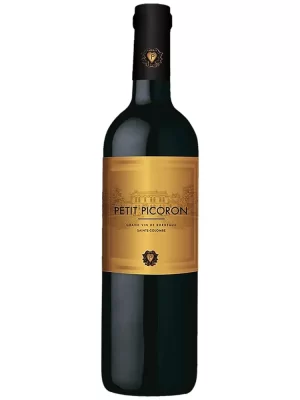
This exceptional Bordeaux wine is from carefully selected plots on the continuation of Saint-Émilion’s celebrated limestone ridge, the perfect terroir to grow a beautiful 100% Merlot.
The south facing ridge shielded Château Picoron from the Bordeaux Spring frost which impacted most other wineries, making 2017 a vintage to celebrate.
Only 1400 cases were produced from the rolling clay and limestone hills of Château Picoron.
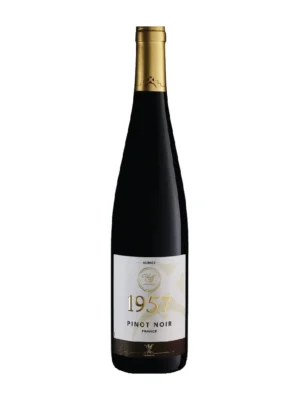
Located at the heart of the vineyard of Alsace since 1957, Cave des Vignerons de Pfaffenheim has developed a taste for quality and innovation in line with its traditions and values.
In 2020, the “1957 by Pfaff” range is a tribute to these founders, the heritage of their know-how, Alsatian excellence.
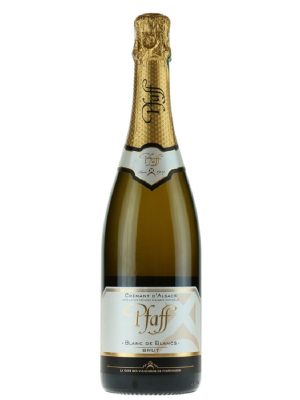
Located at the heart of the vineyard of Alsace since 1957, Cave des Vignerons de Pfaffenheim has developed a taste for quality and innovation in line with its traditions and values.
The Crémant of Cave des Vignerons de Pfaffenheim is first and foremost a festive wine that can be served at any moment of the day.
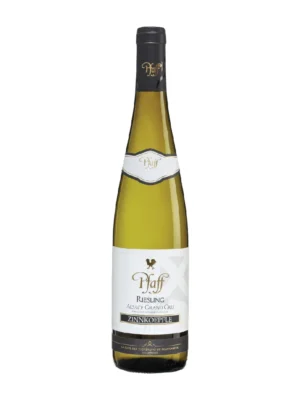
Located at the heart of the vineyard of Alsace since 1957, Cave des Vignerons de Pfaffenheim has developed a taste for quality and innovation in line with its traditions and values.
Zinnkoepflé soils sits upon shelly Muschelkalk limestone strewn with sandstone inclusions which provide aromatic finesse and remarkable acidity – the base for the superb intensity of these terroir wines. Zinnkoepflé produces wines marked by generous maturity which translates on the palate into aromas of candied fruit and toasted notes. Simultaneously, the mouth structure reveals complex freshness. This duality bestows weight, finishing with a subtle, sweeping and highly precise minerality. In particolar, Riesling unfolds notes of citrus fruit peel giving a succulent sensation, a mere prelude to intense minerality.
Located at the heart of the vineyard of Alsace since 1957, Cave des Vignerons de Pfaffenheim has developed a taste for quality and innovation in line with its traditions and values.
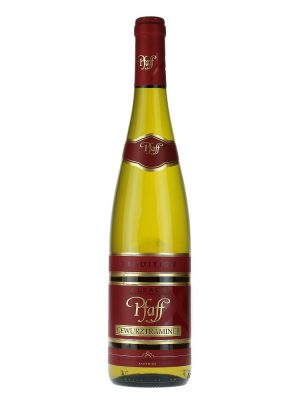
“Gewurz” means spice, in line with the character of this variety.
Gewurztraminer expresses strong fruit flavours, like pineapple or lichi, and in most cases, notes of rose petal.
This wine is a typical example of the grape variety.
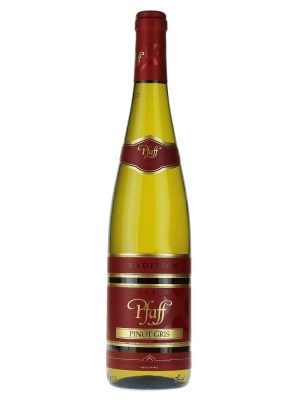
Located at the heart of the vineyard of Alsace since 1957, Cave des Vignerons de Pfaffenheim has developed a taste for quality and innovation in line with its traditions and values.
Pinot Gris develops floral, dried fruit and jammy aromas. It is both fresh and full-bodied, with suppleness and a very nice gastronomic wine.
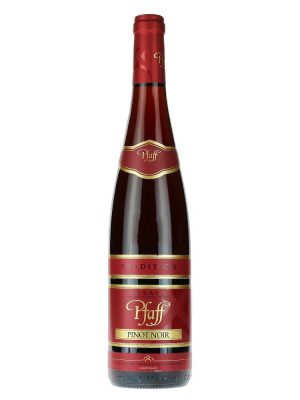
Located at the heart of the vineyard of Alsace since 1957, Cave des Vignerons de Pfaffenheim has developed a taste for quality and innovation in line with its traditions and values.
Pinot noir often unveils fresh aromas of black currant, red berries and some notes of leather.
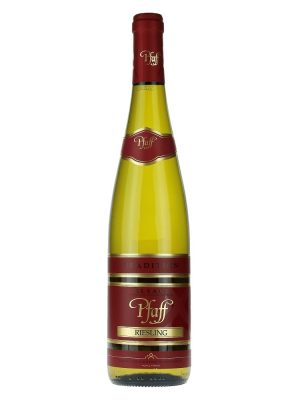
Located at the heart of the vineyard of Alsace since 1957, Cave des Vignerons de Pfaffenheim has developed a taste for quality and innovation in line with its traditions and values.
The 2023 vintage produced this dry and refined Riesling with an extremely elegant bouquet.
Second Grand Cru Classé from Pauillac, the magnificent Château Pichon-Longueville Comtesse de Lalande shines on the left bank of Bordeaux. In 2007, Château Pichon-Longueville Comtesse de Lalande began a new chapter in its history by joining the Rouzaud family, owners of the prestigious Louis Roederer Champagne House.
A reference among the wines of Pauillac, Château Pichon-Longueville Comtesse de Lalande oversees a vineyard of 114 hectares, of which 92 hectares are in production. The soils, composed of gravelly ridges on sandy-clay subsoils, benefit the vines, which are on average 28 years old. In the process of converting to organic farming, the vineyard is certified organic and 65% biodynamic.
Réserve de Pichon Comtesse is considered the Second Wine of the estate.
For more info, visit Château Pichon-Longueville Comtesse de Lalande website.
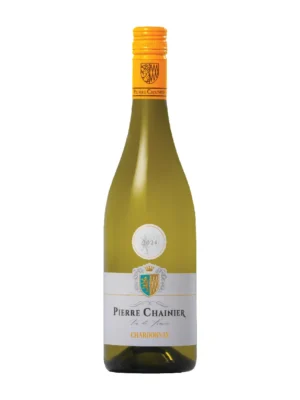
The Pierre Chainier House, based in Amboise, owns over 250 hectares divided between Tours and Amboise, directly cultivating and distributing all legendary grapes of the Loire Valley. The trading business gives opportunities to create harmonies of wine likely to answer to specific requests.
The new range of Pierre Chainier shows blended cuvees of typical Chardonnay varietals, developing partnerships with wine growers and the various cuvees are selected after several tastings.
The Pierre Chainier House, based in Amboise, owns over 250 hectares divided between Tours and Amboise, directly cultivating and distributing all legendary grapes of the Loire Valley. The trading business gives opportunities to create harmonies of wine likely to answer to specific requests.
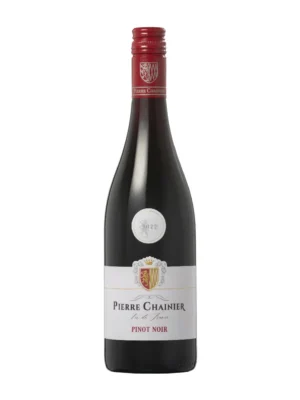
The new range of Pierre Chainier shows blended cuvees of typical Pinot Noir varietals, developing partnerships with wine growers and the various cuvees are selected and blended after several tastings.
The Pierre Chainier House, based in Amboise, owns over 250 hectares divided between Tours and Amboise, directly cultivating and distributing all legendary grapes of the Loire Valley. The trading business gives opportunities to create harmonies of wine likely to answer to specific requests.
Anjou appellation covers an area of 128 communes, including a number of sub-regional and communal AOP.
Anjou region has a temperate oceanic climate, but mainly dry, with a narrow variation in temperature, known as the proverbial “douceur angevine” (Angevin delight).
The Pierre Chainier House, based in Amboise, owns over 250 hectares divided between Tours and Amboise, directly cultivating and distributing all legendary grapes of the Loire Valley. The trading business gives opportunities to create harmonies of wine likely to answer to specific requests.
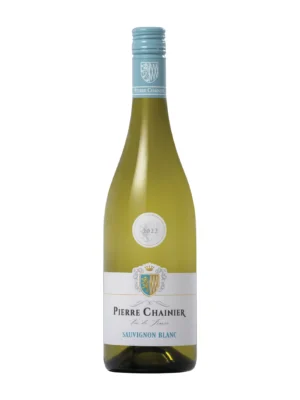
The new range of Pierre Chainier shows blended cuvees of typical Sauvignon Blanc varietals, developing partnerships with wine growers and the various cuvees are selected after several tastings.
It all began in the mid-1970s when André Dubosc – a third-generation wine grower – set out to build up the reputation of the wines from their region of South-West France. He and other passionate young winegrowers fashioned local dry white wines (now a PGI: Côtes de Gascogne), revived the Saint Mont appellation and gave a new breath of life to the Pacherenc du Vic-Bilh, made from late-harvested grapes. In 1979, these women and men, who put their heart, soul and know-how into producing the best the terroir could offer, decided to strengthen their foothold by uniting their wine cellars and estates. And so they set up the Plaimont union of cooperatives (“Pl” for Plaisance, “Ai” for Aignan and “Mont” for Saint Mont).
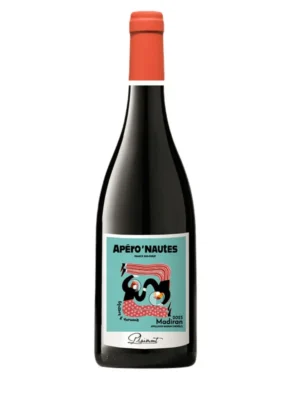
Long marked by powerful and structured wines, Madiran offers a new interpretation with Apéro’Nautes 2023. This vintage breaks the codes by highlighting a fresh and fruity Tannat, obtained thanks to a short maceration and aging in vats which preserves all the delicacy of the grape variety. The result: a red with a supple texture, intense aromas of cherry and raspberry, perfect for an aperitif with friends.
It all began in the mid-1970s when André Dubosc – a third-generation wine grower – set out to build up the reputation of the wines from their region of South-West France. He and other passionate young winegrowers fashioned local dry white wines (now a PGI: Côtes de Gascogne), revived the Saint Mont appellation and gave a new breath of life to the Pacherenc du Vic-Bilh, made from late-harvested grapes. In 1979, these women and men, who put their heart, soul and know-how into producing the best the terroir could offer, decided to strengthen their foothold by uniting their wine cellars and estates. And so they set up the Plaimont union of cooperatives (“Pl” for Plaisance, “Ai” for Aignan and “Mont” for Saint Mont).
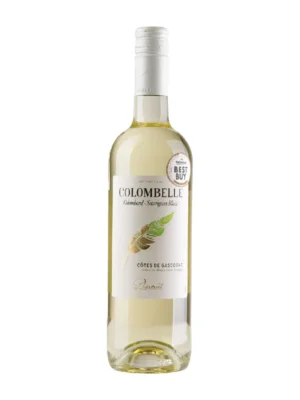
A wine-growing area for many years given over to producing Armagnac brandy, Côtes de Gascogne enjoyed a winemaking revival in the late 1970s, when André DUBOSC, founder of the PLAIMONT union, rediscovered the “French Colombard of the Gers”. First created about thirty years ago following the rediscovery of the Colombard grape, Colombelle has since become THE emblematic wine of Côtes de Gascogne. Known throughout the world for its inimitable aromatic style, paired with Sauvignon blanc, Colombelle’s vivacity and freshness offers a mirror image of a region of South-West France niched between ocean and mountain range: exuberant, crisp, and characterful.


 Download Tasting Note