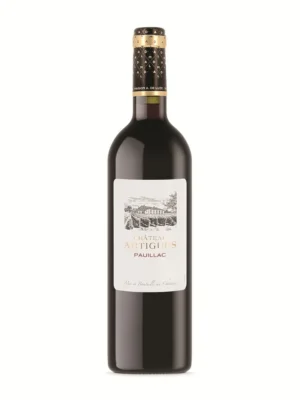

A Cru Bourgeois located in the heart of the Médoc, Château Artigues has been owned by the Meffre family since 1958. Today, Claude Meffre leads the estate, after a career in journalism.
The 30-hectare vineyard, near the hamlet of Artigues, sits on silico-gravel and Garonne gravel soils. Interestingly, the small Château Artigues borders some famous estates classified as “cru classé” – so it offers the typical Pauillac character at a much more affordable price.
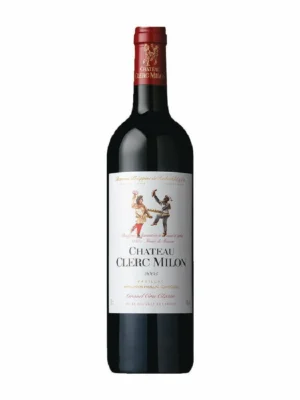
Tied to the Seigneuries of Lafite and Mouton (future First Classified Growths belonging to two different branches of the Rothschild family), Château Clerc Milon derives its name from its historic owners, the Clerc family, who acquired it when it was sold as a national asset after the French Revolution.
Today, the third generation, represented by Camille and Philippe Sereys de Rothschild and Julien de Beaumarchais de Rothschild, perpetuates Baron Philippe de Rothschild’s values and expertise and continues to develop Château Clerc Milon with the same dynamism and desire for modernity. Thanks to over 50 years of continuous work and a dedicated team with cutting-edge technical facilities, Château Clerc Milon is more than ever a benchmark of Médoc excellence.
2015 vintage in Pauillac is very similar in its heft and opulence to the 2005 vintage. The wines immediately showed plenty of colour and a complete array of very intense aromas ranging from red and black fruit to spice and incense.
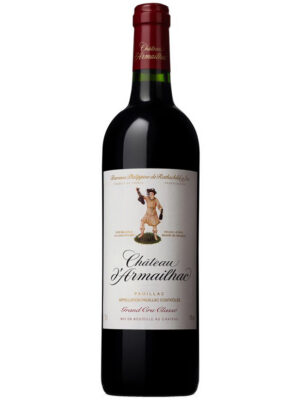
Château d’Armailhac is not only a beautiful setting but also a vibrant working and meeting place for the three Pauillac estates and their beating heart.
A place that reflects the identity of Château d’Armailhac, a combination of timelessness, local roots and elegant sobriety. The owners wanted to create buildings that would look as though they had always been there. As a result, Château d’Armailhac blends seamlessly into the Pauillac winegrowing landscape.
Typically for a Pauillac wine, Cabernets predominate in the blend. However, the relatively high proportion of Cabernet Franc is a hallmark of Château d’Armailhac. The wine is defined by a kind of elegant classicism, discernible whatever the vintage.
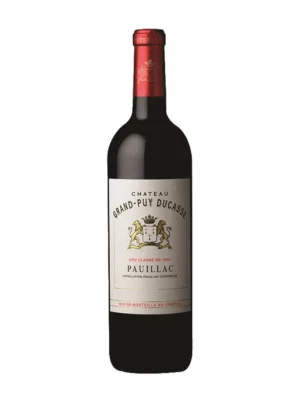
Three large plots in the best parts of Pauillac form the vineyard of this classified growth, an unusual configuration and a direct inheritance from the estate’s founder, Pierre Ducasse, an eminent lawyer. In the 18th century he gave a single name to a fine vineyard holding, which was put together through inheritance and purchases. When he died in 1797, his son, Pierre, inherited a 60-hectare exploitation, named Ducasse-Grand-Puy-Artigues-Arnaud, of which two third were planted with vines. The estate was classified in 1855, under the name of Artigues Arnaud.
Thanks to impeccable harvesting and tailor-made winemaking, Cabernet Sauvignon and Merlot produced a wine renowned for its aromatic complexity, glorious structure and ageing capacity, all true to the classic Pauillac style.
For more info, visit Château Grand-Puy Ducassewebsite.
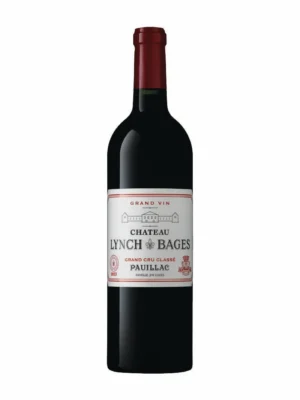
Château Lynch-Bages is a prestigious wine estate in the Pauillac appellation of Bordeaux, France. Though officially classified as a Fifth Growth in the 1855 Bordeaux Classification, it is widely regarded as a “super second” because its quality consistently rivals that of higher-ranked Second Growth estates.
Situated on the Bages plateau just southwest of Pauillac, overlooking the Gironde estuary, Château Lynch-Bages is owned by the Cazes family since 1939. Under the leadership of the late Jean-Michel Cazes and currently his son Jean-Charles Cazes, the estate has gained international legendary status.
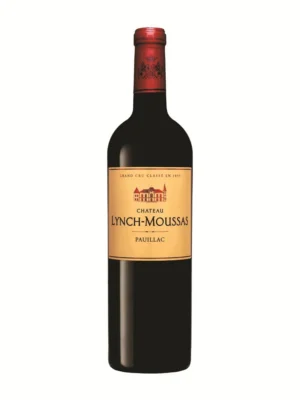
The Château was founded in the 18th century by a member of the Lynch Family. We can trace the origin of the “Moussas” name back to the 16th century.
In 1919 the property was purchased by the Castéja family, at that time also owner of Duhart-Milon and later was inherited by Emile Castéja. Philippe Castéja, Emile Castéja’s son, has been in charge of the property and its vineyards since.
Château Lynch-Moussas is a typical Pauillac exhibiting a dark colour, a fruitful bouquet, a lot of softness with ripe tannins.
For more info, visit Château Lynch-Moussaswebsite.
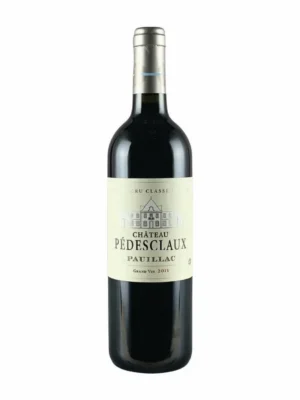
Like all the greatest wines of the appellation, Château Pédesclaux has the complexity that reflects the terroir it springs from. On this mosaic of soils, the clays convey power while the gravels express pure elegance. Pédesclaux embodies the depth that is the quintessence of Pauillac, balanced by a unique sensuality With each vintage, the painstaking work on these excellent plots pays off, while the revolutionary equipment in the winery enables the wine to develop its own unique personality.
Across the years, a narrative arc has become visible: a scent special to this terroir that is a blend of blackcurrant, violet and cigar box. Sometimes denser and more tropical, at other times more ethereal, always maintaining the balance between powerful aromas and the silky delicacy of the tannins, Château Pédesclaux also boasts a formidable cellaring potential – another key feature of the great Pauillac terroirs.
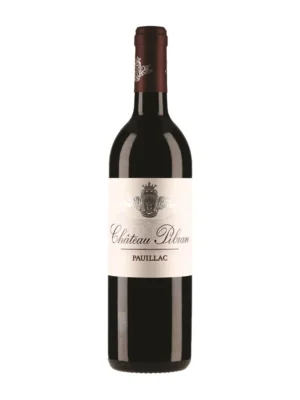
Pibran is an old Médoc name. Its highly reputed vineyard covers one of the finest outcrops of Pauillac. The estate, which originally had only just 10 hectares, was expanded in 2001 following the purchase of neighbouring property to reach the current size of 17 hectares of superb Garonne gravel soil. For a long time it belonged to the Billa family, who sold it to AXA Millésimes in 1987. The vineyards were restructured shortly after the purchase, and drainage was improved in order to get the best possible effect of the soil on the wine. Today Château Pibran is carefully produced by the same technical team that makes Château Pichon Baron and then moved in barrel, for aging in the cellars of Pibran.
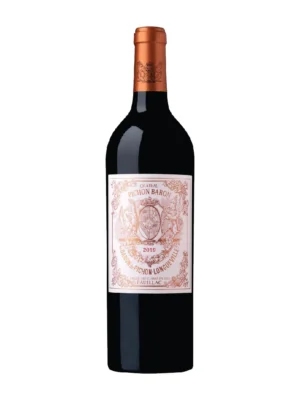
Château Pichon Baron, Second Grand Cru Classé in 1855, is one of the great historic vineyards of Bordeaux. A rigorous selection policy in the vineyard and in the cellars ensures the production of a Grand Vin, Château Pichon Baron, which is the pure expression of Pauillac unique terroir.
2nd Grand Cru Classé in 1855 from Pauillac belonging to the elite of the Grands Crus of Bordeaux, the Château Pichon Baron signs an exceptional 2019 vintage, entirely representative of the Pauillac appellation. A true mosaic of terroirs and superbly located near the Gironde estuary, the Pichon Baron vineyard extends over 73 hectares of vines planted on perfectly drained Médoc gravel soils, characteristic of the Pauillac appellation.
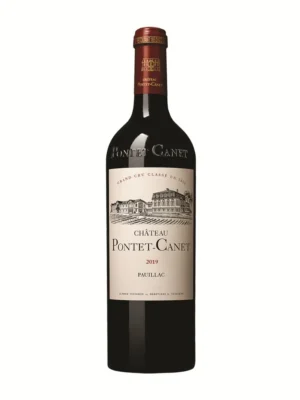
5th Grand Cru Classé of Pauillac, Château Pontet-Canet has experienced an irresistible rise which has made it one of the most emblematic brands of the Médoc. Led by Justine and Alfred Tesseron, Château Pontet-Canet has established itself as one of the finest references on the left bank of Bordeaux.
In this vintage, Pontet-Canet, shows once again that natural refinement is its finest jewel. 2019, without doubt, is a promise of voluptuousness for all wine lovers.
Like all the greatest wines of the appellation, Château Pédesclaux has the complexity that reflects the terroir it springs from. On this mosaic of soils, the clays convey power while the gravels express pure elegance. Pédesclaux embodies the depth that is the quintessence of Pauillac, balanced by a unique sensuality with each vintage, the painstaking work on these excellent plots pays off, while the revolutionary equipment in the winery enables the wine to develop its own unique personality.
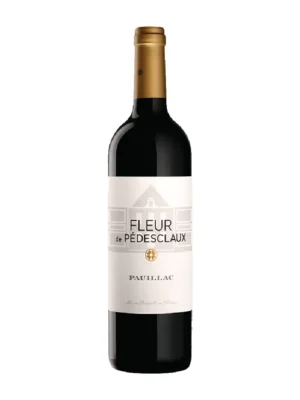
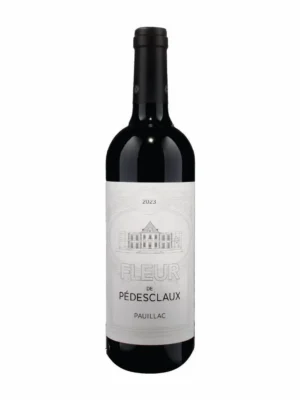
Ethereal, fresh, appealing to both the nose and the palate, Pédesclaux’s second wine is a flower that unfurls as you approach. Unusually for Pauillac, the Fleur de Pedesclaux is predominantly made from Merlot along with a dash of Cabernet Sauvignon, Cabernet Franc and Petit Verdot depending on the vintage.
Exhibiting a more high-spirited elegance yet nonetheless showing remarkable length, Fleur de Pédesclaux 2016 is a delight. In this more floral expression, the marvellous complexity of our terroir is once again evident, but in a mouth-watering style that is instantly festive.
Three large plots in the best parts of Pauillac form the vineyard of this classified growth, an unusual configuration and a direct inheritance from the estate’s founder, Pierre Ducasse, an eminent lawyer. In the 18th century he gave a single name to a fine vineyard holding, which was put together through inheritance and purchases. When he died in 1797, his son, Pierre, inherited a 60-hectare exploitation, named Ducasse-Grand-Puy-Artigues-Arnaud, of which two third were planted with vines. The estate was classified in 1855, under the name of Artigues Arnaud.
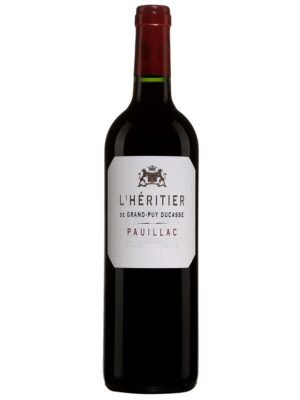
L’Héritier de Grand Puy Ducasse is the second wine of Château Grand-Puy Ducasse. A distinguished red wine that embodies the classic elegance of the Pauillac AOC with rich flavors and refined tannins.
For more info, visit Château Grand-Puy Ducassewebsite.
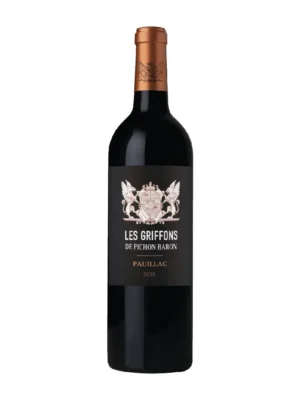
Les Griffons de Pichon Baron is one of the second wines of the property. Created since the 2012 vintage, it has a pure and direct character.
The grapes which make up this wine’s blend come primarily from gravelly plots of land near the Gironde estuary, a good environment for Cabernet-Sauvignon.
Les Griffons offers a vigorous and fresh tasting experience, full-bodied and clean, overflowing with energy.
Tied to the Seigneuries of Lafite and Mouton (future First Classified Growths belonging to two different branches of the Rothschild family), Château Clerc Milon derives its name from its historic owners, the Clerc family, who acquired it when it was sold as a national asset after the French Revolution.
Living testimony to the considerable improvements in quality achieved at the property since the arrival of Baron Philippe and his descendants, Château Clerc Milon now has a second wine. Pastourelle de Clerc Milon has joined the dance and already accomplished its first very confident steps in the company of fine Pauillac wines. Its name comes from a traditional dance, the pastourelle, which evokes a knight’s romantic encounter with a shepherdess: the name echoes the pair of dancers that adorn the label of the Grand Vin. Made of gold, enamel and pearls, this precious miniature from the Museum of Wine in Art at Château Mouton Rothschild belonged to Catherine II, the empress of Russia, and is inspired by characters of the Commedia dell’Arte. Baroness Philippine de Rothschild chose it as the Clerc Milon emblem because of her love of the theatre.
2012 was a year of contrasts. The conditions of the vintage favoured superb expression of the Merlot, here mostly planted on clay-limestone parcels.
Elaborated since the 2019 vintage, this Pauillac is a fruity, supple and well-balanced wine.
The grapes making up the blend of this cuvée come from young vines in the Tour Pibran and Château Pichon Baron vineyard, with clay-limestone and gravelly soil. These grapes are harvested, vinified and aged by the Château Pichon Baron team. They produce this Pauillac with the same standards of quality as their other wines in order to highlight this appellation.