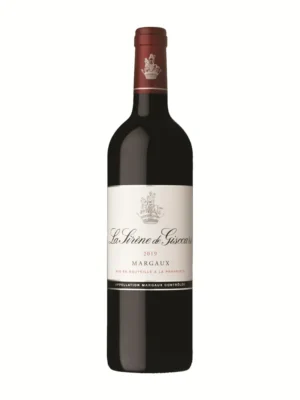
Coming from younger vines, the second wine of Château Giscours comes from the same terroirs and the same grape varieties as its elder.
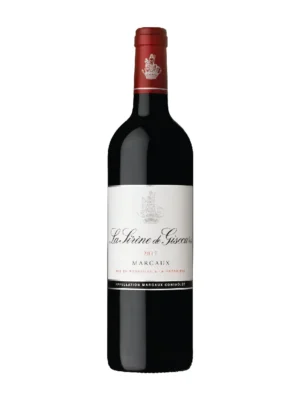
La Sirène de Giscours, a name full of delicacy and elegance that reflects so well the personality of the second wine.
Developed with the same philosophy that guides the teams in making Château Giscours, La Sirène is a magnificent expression of Margaux’s terroir. A wine of pure pleasure.
Coming from younger vines, the second wine of Château Giscours comes from the same terroirs and the same grape varieties as its elder.
La Sirène de Giscours, a name full of delicacy and elegance that reflects so well the personality of the second wine.
Developed with the same philosophy that guides the teams in making Château Giscours, La Sirène is a magnificent expression of Margaux’s terroir. A wine of pure pleasure.
La Sirène de Giscours 2019 is perfectly in line with the style of the property while showing at the same time depth and richness. A real “Vin de Plaisir” characterized by a deep color, a juicy fruit, a dense and round palate.
Thanks to the long involvement of generations of the Kressmann family, and the recognition shown in 1953 by the classification of Graves, the wines of Château LaTour-Martillac feature among the best of Pessac-Léognan. The expansion of the range was drawn up by Tristan and Loïc Kressmann. The second wines appeared at the end of the 1980’s under the label Lagrave-Martillac, followed by the Château Langlet, a magnificent property in the Graves appellation, acquired in 1999.
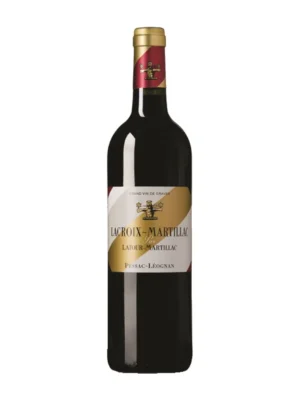
Lacroix-Martillac comes from selected plots at Château LaTour-Martillac, highlighting the Merlot in the red wines blending.
With each new vintage, the Kressmann family strive to achieve in these wines the best from this true Graves terroir by prioritising a quality yield, in keeping with traditional viticulture practices.
For more info, visit Château LaTour-Martillacwebsite.
Thanks to the long involvement of generations of the Kressmann family, and the recognition shown in 1953 by the classification of Graves, the wines of Château LaTour-Martillac feature among the best of Pessac-Léognan. The expansion of the range was drawn up by Tristan and Loïc Kressmann. The second wines appeared at the end of the 1980’s under the label Lagrave-Martillac, followed by the Château Langlet, a magnificent property in the Graves appellation, acquired in 1999.
Lacroix-Martillac comes from selected plots at Château LaTour-Martillac, highlighting the Merlot in the red wines blending.
With each new vintage, the Kressmann family strive to achieve in these wines the best from this true Graves terroir by prioritising a quality yield, in keeping with traditional viticulture practices.
For more info, visit Château LaTour-Martillacwebsite.
Vignobles Lassagne gather several family properties that were bought since three generations and are grown according to tradition and innovation on unique terroir located in the Libourne area.
Vignobles Lassagne encompasses these three properties: Château des Arnauds (the original estate), Château des Landes and Château Maltus, the latest addition to the Vignobles Lassagne.
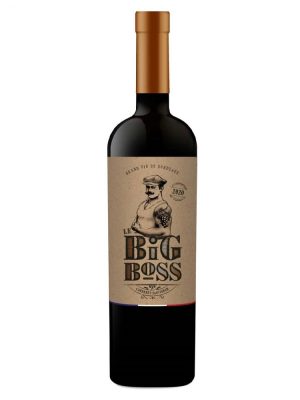
Le Big Boss is a cuvée in homage to all the winegrowers who love their terroirs and are driven by the passion of their profession.
It is made exclusively from Cabernet-Sauvignon in organic conversion from 50 years old vines.
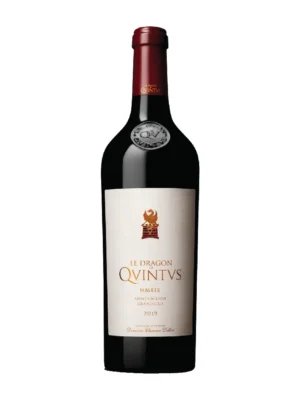
Château Quintus is the 5th child within the Domaine Clarence Dillon family of wines. Its name is a tribute to the Gallo-Romans, creators of Saint-Emilion’s vineyards, who had the custom of naming their fifth child Quintus.
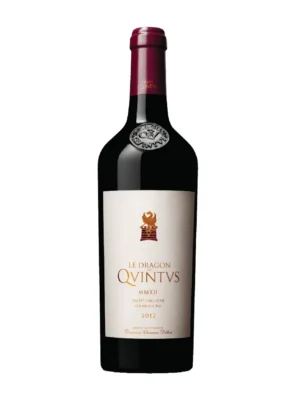
Le Dragon de Quintus is the second wine of Château Quintus. The name originates from the dragon statue that towers above the magical terroir of Saint-Emilion, perched high upon the promontory, where the estate is located.
2012 is a truly fine vintage for early-ripening terroirs such as Saint-Emilion.The first word that comes to mind here is: harmonious. It will be ready to drink fairly young and should provide a great deal of pleasure.
Château Quintus is the 5th child within the Domaine Clarence Dillon family of wines. Its name is a tribute to the Gallo-Romans, creators of Saint-Emilion’s vineyards, who had the custom of naming their fifth child Quintus.
Le Dragon de Quintus is the second wine of Château Quintus. The name originates from the dragon statue that towers above the magical terroir of Saint-Emilion, perched high upon the promontory, where the estate is located.
Thanks to this ideal spell of weather in 2019, all the grape varieties were harvested at peak ripeness and at a leisurely pace. This Dragon is definitely well-balanced and delicious.
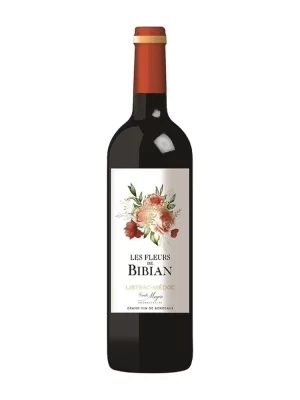
Château Bibian is a historic (and one of the oldest) property in Listrac-Médoc, located between the more famous communes of Margaux and Saint-Julien.
The château, purchased by the Meyre family in 1999 and a Cru Bourgeois Supérieur classified, is today run by the 6th generation, where Nathalie and Julien Meyre, in consultation with the famous wine consultant (Michel Rolland), carry on the family traditions and produce classic Bordeaux wines.
This wine is a rigorous selection of young plots of vines from Château Bibian and it comes from the best terroirs of Listrac.
Le Fleurs de Bibian can be enjoyed in its youth, to savor all its roundness and fruitiness.
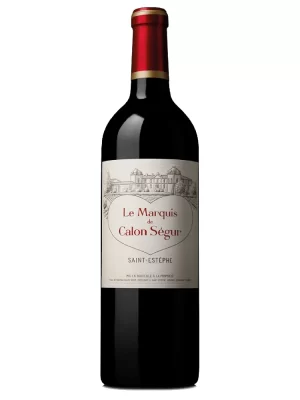
The estate’s Second Wine offers a different interpretation of the Calon terroir. Le Marquis de Calon Ségur is totally distinct from the First Wine, Château Calon Ségur Grand Cru Classé. “It benefits from a true expression of its own”, underlines Vincent Millet. “The plots are separated out from the beginning.”
Le Marquis de Calon Ségur provides immediate enjoyment, warmth and a velvety texture. It is carefully aged generally for 17 months in oak barrels, a third of which are new. Deliciously easy-drinking, silky and expressive, its charm comes to the fore, while at the same time bringing to our minds the elegance of the Grand Vin.
For more info, visit Château Calon Ségurwebsite.
VARIETALS
57% Merlot, 38% Cabernet Sauvignon, 5% Cabernet Franc
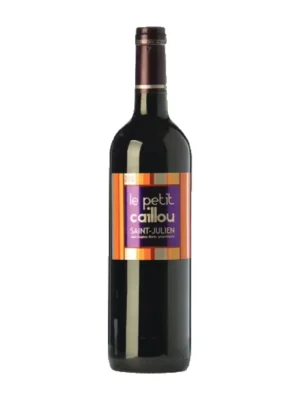
Le Petit Caillou 2017 is a red Bordeaux wine from the Saint-Julien appellation, produced by the esteemed Château Ducru-Beaucaillou estate. Known for its excellent value, it is one of the best wines in the Saint-Julien appellation, offering a typical and approachable style.
Family owned since 1810, the Château Cap Léon Veyrin originates from the meeting of Château Cap Léon and the Veyrin estate. Cape comes from the word “head”. In fact, the vineyards of Cap Léon are located on the highest points of Listrac-Médoc, favoring natural drainage and ideal sunshine. Nathalie and Julien Meyre, are the 6th generation of the family running this property, perpetuate the tradition: predominance of Merlot, collage with egg white, aging of 12 months in barrels, manual harvesting for young parcels and for old vines, while bringing their dynamism to this renowned Cru Bourgeois du Médoc.
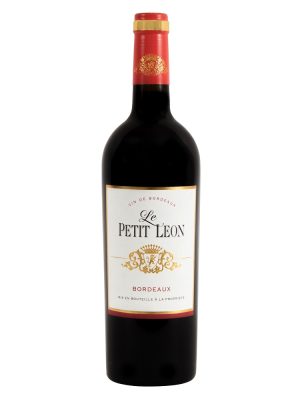
Le Petit Leon is de-facto the second wine of Château Cap Leon Veyrin, even though some grapes are bought in for this wine. The quality is outstanding and the presentation top drawer. Certainly one to look out for if you are on the hunt for quality at a great price.
For more info, visit Château Cap Léon Veyrinwebsite.
Located in the heart of the Pessac-Léognan appellation and dating back to 1365, Château Smith Haut Lafitte is one of the oldest châteaux in Bordeaux. This magnificent property entered a new era in its history following its acquisition by Daniel and Florence Cathiard in 1990. Driven with passion and ambition by the Cathiards, Château Smith Haut Lafitte has established itself as one of the finest properties in the Graves region, with wines world-renowned for their elegance and style, both red and white.
The Petit Smith Haut Lafitte is is the second wine of Château Smith Haut Lafitte but produced and cared for with the same attention reserved for the château’s first wine. The château uses its own vines, thanks to a mother vine preserved in the nursery on Lalande Island.
For more info, visit Château Smith Haut Lafittewebsite.
The history of Montrose, written in two centuries by three families of owners, is depositary of their spirit, marked by their quest of excellence and legendary vintages. Pioneers in the Médoc, visionary builders and wise managers, all these families knew how to work and valorise this unique terroir. The estate owes them the foundation on which Montrose builds its image today and its unique place in the world of exceptional wines.
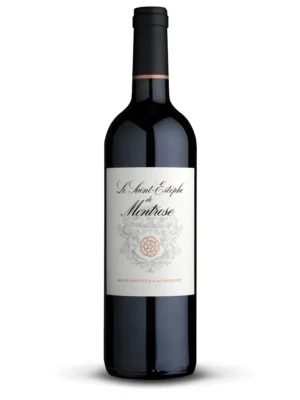
Produced on the exceptional terroir of Château Montrose and made in the château’s winery, Saint Estèphe de Montrose is the estate’s third wine and a traditional blend of classic Bordeaux grape varieties. Previously available only to the estate’s owners and employees, it uses wines from younger vines and lees wines.
Vignobles Lassagne gather several family properties that were bought since three generations and are grown according to tradition and innovation on unique terroir located in the Libourne area.
Vignobles Lassagne encompasses these three properties: Château des Arnauds (the original estate), Château des Landes and Château Maltus, the latest addition to the Vignobles Lassagne.
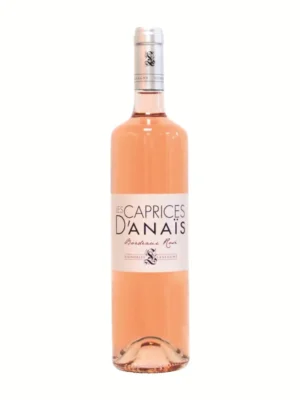
A pressed rosé made from the best Cabernet Franc, harvested at perfect maturity.
Originally from Schönberg, in the Rhineland, fleeing the consequences of the defeat of Napoleon I, the Yung family origins settled for more than a century in Algeria. Already listed in the first edition of Féret des Vins d’Oranie in 1886, the family developed its vineyard until independence, until forced to abandon the wine estates it had owned since 1859.
In 1862 Charles Young joined his older brother, already settled in Gironde. He then decides to acquire for his 2 children and his 2 nephews, the Château Haut Mondain, a 42-hectare AOC Bordeaux wine estate, followed then by Château Barail, Les Hauts de Palette and Moulin de Tassin.
Since 2020, the Charles Yung & Fils vineyards have been committed to a societal and environmental approach by obtaining High Environmental Value, level 3 (HVE) certification.


 Download Tasting Note