The history of Château d’Issan consists primarily of a long list of property transmissions and legacies. By inheritance and marriage, the estate has been handed down from owner to owner, and all of them have contributed in their own way to its renown and helped to forge its unique character. Over a period of nearly three centuries, the estate was passed down along a line involving a number of families with names such as Noailhan, Meyrac, Ségur, Salignac, de la Vergne, Escodeca de Boisse, etc. From 1575 onwards, the property was owned by five generations of the Essenault family, who ended up renaming it, contracting their name to “Issan” and thus Château d’Issan was born…
Blason d’Issan, the second wine, was introduced from 1995 onwards to enable selection amongst our vines growing in the Margaux appellation area. Fruit from the youngest vines is used to produce this wine, which respects the identity of its terroir, while offering a tasty round fruitiness, which can be enjoyed earlier.
This is a very well-crafted Blason d’Issan that follows their very fine deuxieme vin in both 2010 and 2012. Therefore 2014 vintage cannot be compared with any other one but is clearly identificable to its original terroir.
At the beginning of the 19th century, John-Lewis Brown (1769-1851), bought a vineyard and designed in the village of Cantenac, a traditional Tudor style château, reminding him of his Scottish origins. His name is forever linked to the Grand Cru Classé. After the 1855 Grand Cru Classification, Louis Armand Lalande (1820-1894), Bordeaux winemerchant and owner of several estates in Médoc, extended the building. Surrounded by a remarkable British style park, Château Cantenac Brown is since then among the most original in Médoc and of the wines to watch out for, getting better vintage after vintage.
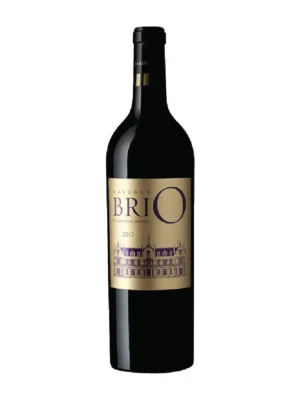
BriO de Cantenac Brown is the second wine of Château Cantenac Brown and was first created in the 2001 vintage. From the style of its label, through to the careful selection of lots and to the bottling, the wine aims to express the modernity of Château Cantenac Brown in the 21st Century. Charming, delicate and brilliant, a pleasurable wine for sharing. It can be enjoyed young, but will improve when kept for a few years.
For more info, visit Château Cantenac Brownwebsite.
VARIETALS
69% Cabernet Sauvignon, 26% Merlot, 5% Cabernet Franc
The Caccia al Piano tenuta, or wine estate, is set into the enchanting winegrowing environment of Bolgheri, where the perfect combination of Mediterranean climate and limestone-clay soils has created a terroir ideal for yielding world-class wines. The romantic Via Bolgherese, with its vineyards and olive groves, is the background for winemaker Franco Ziliani’s new adventure in creating wines that always leave their mark.
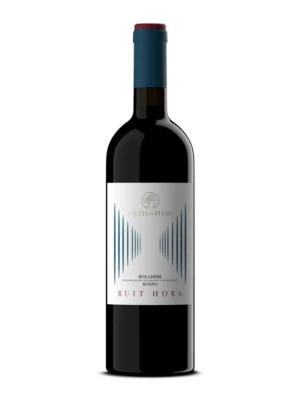
Historic Bolgheri Rosso by Caccia al Piano takes its name from a poem by Giosuè Carducci, testifying to the sense of belonging to the territory of Castagneto, birthplace of the famous poet. A blend composed mainly of Merlot grapes to which are added Cabernet Sauvignon, Syrah and Petit Verdot, all from the various company crus. Able to fully reveal the structure and complexity typical of the Bolgheri amphitheater, it is a wine that expresses immediate pleasantness without sacrificing excellent aging potential.
The grapes come from vineyards located in Villa Alegre, 285 km south of Santiago, in Maule Valley. This place has a Mediterranean-like climate, with mild winters and dry summers, with marked range of temperatures between day and night.
This allows the grapes to get ripe tannins, as well as excellent aromas and color concentration. Soils are a combination of sand and volcanic ash and the flat terrain gets and superb sunlight exposition. Yields are carefully controlled to produce concentrated wines, excellent quality and elegance.
Camino del Chile indicates the direction of Bodegas De Aguirre, today known as VDA, Viña de Aguirre, from their origins and their ancestors towards excellence.
Classified as AA Company under the BRC Global Standards Quality Program.
In central Italy there is fossil evidence of grapevines dating back two million years, but the first traces of agricultural activities oriented to grape cultivation itself date back to the end of the Bronze Age. In Abruzzo, the first evidence of wine production stretches back in pre-Roman times, with funerary pottery unearthed in the monumental cemeteries around L’Aquila.
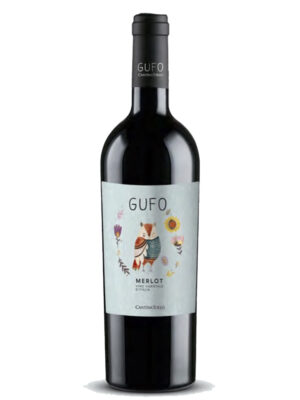
In ancient Rome, an owl was the soul bird of Goddess Minerva.”Gufo” stands for Owl, the mysterious night creature moving at ease through the dark, in all times symbol of knowledge, wisdom and prophecy.
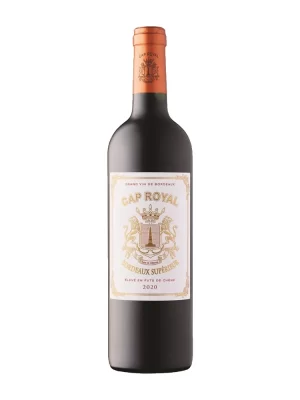
Cap Royal takes its name from the royal Cordouan lighthouse, the oldest lighthouse of Europe, situated at the entrance of Gironde Estuary. This 14th century beacon once signalled safe passage to Bordeaux wine merchants, returning home after sharing the great wines of Bordeaux with the world. Cap Royal benefits from the expertise of Jean René Matignon, winemaker of Château Pichon Baron, Grand Cru Classé Pauillac.
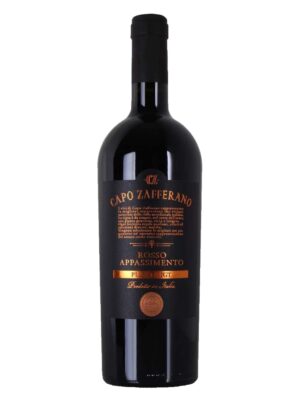
Capo Zafferano is a famous promontory, with a magnificent view of the gulf with turquoise water and a centuries-old white lighthouse, so characteristic to represent the best expression of the wines of Southern Italy: the wines of Puglia.
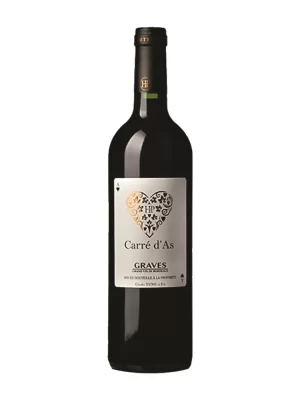
Originally from Schönberg, in the Rhineland, fleeing the consequences of the defeat of Napoleon I, the Yung family origins settled for more than a century in Algeria. Already listed in the first edition of Féret des Vins d’Oranie in 1886, the family developed its vineyard until independence, until forced to abandon the wine estates it had owned since 1859.
In 1862 Charles Young joined his older brother, already settled in Gironde. He then decides to acquire for his 2 children and his 2 nephews, the Château Haut Mondain, a 42-hectare AOC Bordeaux wine estate, followed then by Château Barail, Les Hauts de Palette and Moulin de Tassin.
Since 2020, the Charles Yung & Fils vineyards have been committed to a societal and environmental approach by obtaining High Environmental Value (HVE), level 3 certification.
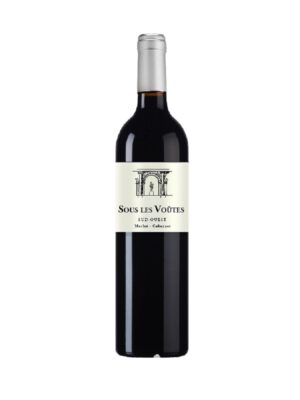
Proud ambassadors of the “Made in Sud-Ouest” way of life, Cave du Marmandais combines warmth, festivities and gastronomy to reveal the personality of the people and wines from this terroir. A few kilometres away from the city of Marmande, the vineyards of the Côtes du Marmandais appellation cover both riversides of the Garonne.
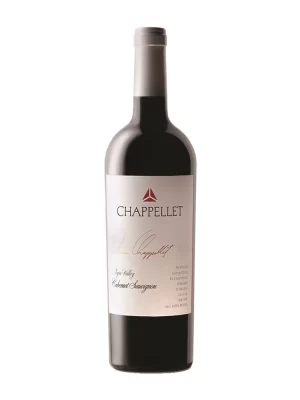
Chappellet is recognized as one of the great Napa Valley wineries, and one of the few which remains family owned. Today, the second generation is committed to continuing the vision of their parents, Donn and Molly Chappellet. Together, the siblings are dedicated to maintaining sustainable farming techniques, a relentless focus on wine quality, respect for Pritchard Hill’s natural beauty and the preservation of family ownership for generations to come.
The Signature Cabernet Sauvignon has been a foundational wine in Chappellet Winery portfolio for more than five decades. It is a benchmark for the long-lived hillside wines of the Napa Valley; full of structure and aging potential, yet seductively forward in its concentrated varietal character. The dry, rocky soils of Pritchard Hill produce small, intensely flavorful grapes. Crop thinning allows for full, even ripening and elevates flavor complexity.
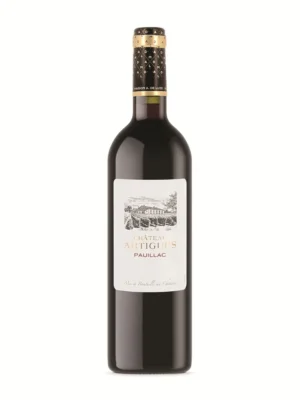
A Cru Bourgeois located in the heart of the Médoc, Château Artigues has been owned by the Meffre family since 1958. Today, Claude Meffre leads the estate, after a career in journalism.
The 30-hectare vineyard, near the hamlet of Artigues, sits on silico-gravel and Garonne gravel soils. Interestingly, the small Château Artigues borders some famous estates classified as “cru classé” – so it offers the typical Pauillac character at a much more affordable price.
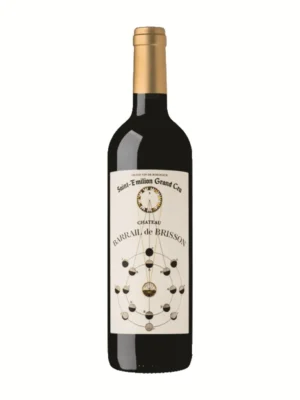
Small family-owned vineyard located in Vignonet, to the South of the Saint-Emilion Appellation and recently converted to organic farming.
Château Barrail de Brisson, from the first organic vintage (2014), showed the typical Saint-Emilion Grand Cru appellation’s characteristics.
Organic wine certified AB (Agriculture Biologique).
The Melet family has owned Château Bel-Air in Pomerol since 1914 and Château Beausejour in Fronsac for five generations. Following the family tradition, the focus remains on quality. Since 2011, the consultant oenologist has been Bordeaux’s rising star, Stéphane Derenoncourt.
VARIETALS
85% Merlot, 10% Cabernet Sauvignon, 5% Cabernet Franc
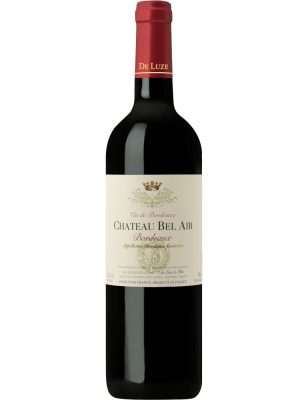
Family owned for three generations, the The A. de Luze & Fils estate covers 20 hectares of vineyards located a few kilometers from Saint-Emilion. In a single piece, it surrounds house and cellar with an exceptional exposure on a clay-limestone hillside, facing south, with a superficial rock that gives the wines of the castle a typicity much appreciated by connoisseurs.
The Château Bel Air presents itself to the wine lover as pleasantly dry, red Bordeaux wine.
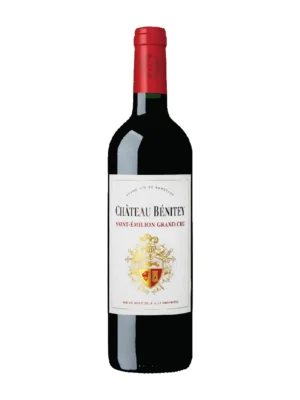
Château Bénitey is located at the foot of the coast, east of Saint-Emilion, in the town of Saint-Laurent des Combes. It takes its name from a cross at the junction of the road above the vineyard, a cross reminiscent of that of a holy water font.
The area is 5 ha with vines whose average age is 40 years and the wine is usually composed mainly of 70% Merlot, aged for 10 months in French oak barrels (20 to 40% new).



 Download Tasting Note