Château du Tertre is a property steeped in history. This property has existed since the 12th century and its vineyard of 52 hectares remains unchanged since 1855. Since the 19th century, their wines have become worldwide recognised thanks to the classification of 1855 which makes Château du Tertre a Grand Cru Classé de Margaux.
Crafted with the same precision, passion, and expertise as Château du Tertre, Les Hauts du Tertre reveals another side of the estate, that of a wine best discovered and appreciated in its younger years. Lively, with silky tannins, its fruity and spicy notes blend with the delicacy of Margaux wines.
Listel is above all a strong story told for over 100 years. It was in 1883 that the Salins du Midi, owners of large expanses of sand in the Camargue, decided to plant the first vines on the “Isles de Stel”, a plot that gave its name to the emblematic rosé: Listel.
The Grain de Gris Rosé is a delicate rosé that makes you want to breathe it gently, a wine that coaxes the taste buds before stimulating them with fruity and spices notes.
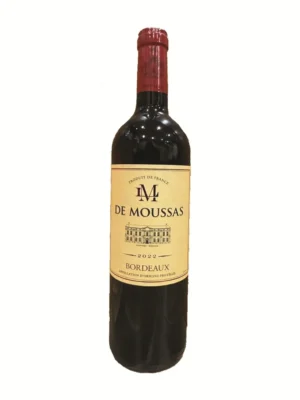
Created under the guidance of Philippe Castéja, Château Lynch-Moussas, LM de Moussas embodies the essence of the great Bordeaux terroirs. Entrusted to the finest oenologists of the Maison A. de Luze, its creation is based on one absolute principle: to reveal a wine that is both structured, balanced, and marked by beautiful freshness.
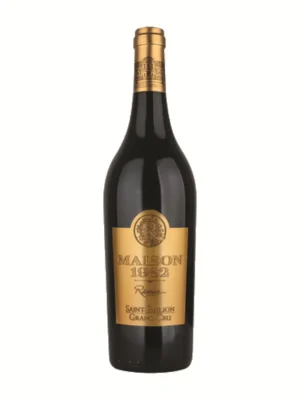
The Teycheney family has been cultivating vineyards since 1837, when the first generation settled in the heart of Entre-Deux-Mers, on the family’s historic estate. They are perhaps most widely known for Cheteau Fleur de La Lisse from Saint Emilion.
Since 2015, the 6th generation, Caroline Teycheney, has been in charge of the vineyards, which now cover 62 hectares in Entre-Deux-Mers and 32 hectares in Saint-Émilion Grand Cru. The vineyard from which the Maison 1982 Réserve is produced is located on the edge of the medieval village of Saint-Émilion, at the foot of the clay and limestone hill. It has been cultivated with passion using organic and biodynamic methods since 2016, with the utmost respect for man and nature. The best Merlot plots are meticulously worked and blended to produce the estate’s finest cuvées.
Organic wine certified AB (Agriculture Biologique).
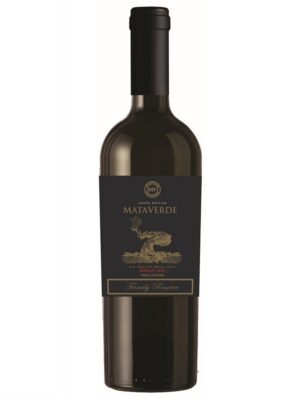
Founded in 1642, Mandan is the oldest wine estate in Chile and now listed by the government as one of the oldest historic buildings.
Mandan is the name originally meant for the first tribe of American Indians, migrated from Siberia to the Americas more than 20,000 years ago, where they formed a unique culture there.
Americans believe that the birds soaring in the sky have a sacred charm. In ancient sports or war, whoever wins will get a feather, which will be inserted into the hat as a prize and become a symbol of honor. The higher the number of feathers, the higher the bravery and the greater the prestige of war.
That’s why the winery is marked by feathers, which, at the same time, represent the enthusiastic and sunny winemaking spirit of the winery and the endless exploration and passion for high-quality wine.
In Arsac in the heart of the Margaux appellation, Château du Tertre overlooks a single holding vineyard of 52 hectares. The property, situated on one of the highest hills in the Médoc is composed of gravel, clay and sand. It was during the XIXth century that the wines acquired international renown, amplified by the 1855 classification which established the property as a 5th Growth.
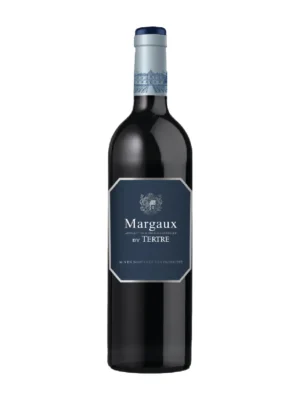
Margaux by Tertre is a nice introduction to the wines produced by Château du Tertre.
The viticulture and vinification are carried out with the same high level of quality. Margaux by Tertre is mainly produced from the
young vines of Château du Tertre giving the wine a very fruity style, with a nice smoothness and roundness.
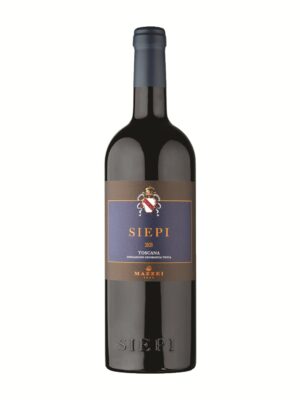
Siepi, owned by Mazzei family since 1435, has always been a model farm, still managed today with the same kind of respect. A unique location, a special microclimate, the foresight in the early 1980s to plant Merlot as the ideal grape to complement Sangiovese in a very particular “terroir” produce a wine which is perfectly balanced between elegance, power and complexity.
“One of the 50 wines that changed Italy wine style” – Gambero Rosso
The history of La Tour Carnet merges with the history of France. Bearing the name of the squire who infallibly helped his Lord to resist French royalty at the end of the Hundred Years War, Château La Tour Carnet played a major role in the revolution of the Médoc vineyards and the quality of its wine, rewarded by the entry in the classification of Grands Crus Classés of 1855. The diversity of its terroir and the constant search for perfection make this Haut-Médoc an exceptional wine.
the grapes of Médoc de La Tour Carnet comes from a vineyard crowning the Estuary, dominantly Merlot, on a soil of Garonne gravel, in a very privileged and protected environment.
Mes 5 Pépites by Bernard Magrez is a unique micro-blend of barrels selected by world-famous Michel Rolland from Bernard Magrez’s five top chateaux: Pape-Clement Grand Cru Classé (Pessac-Leognan), La Tour Carnet Grand Cru Classé (Haut-Médoc), Les Grands Chênes (Médoc), Fombrauge Grand Cru Classé and Magrez Fombrauge Grand Cru Classé (Saint-Émilion).
Imagine iconic Château Pape-Clement in an innovative super blend with Chateau Magrez Fombrauge from St-Émilion. And completed with barrels rolled in from three other top chateaux at Bernard Magrez!
“My ambition for the exceptional…crafted from the blend of five jewels of our wine heritage – Château Pape Clément, La Tour Carnet, Fombrauge, Les Grands Chênes, and Magrez Fombrauge – it reflects the perfect union of five unique terroirs, where each vineyard contributes its own singularity.” – Bernard Magrez
For generations, everything in the Moser family has revolved around wine and its associated traditions. It was Alfred Moser’s son, Gernot Moser, who integrated international standards into the lovingly managed family business, thus laying the foundations for the Moser philosophy that is lived in every fiber of the company today: quality takes time. And space.
Terra Austria is a selection of reserves, possibly with light barrique aging. The typicity of the region, the soil, the harmonious interplay of fruit, spice and acidity are reflected in these wines.
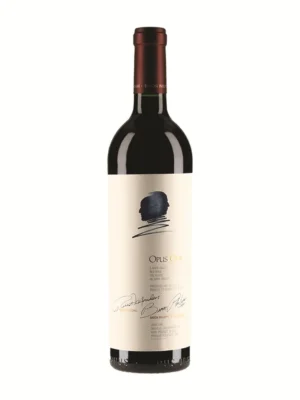
Opus One is the realized dream of two men: Baron Philippe de Rothschild of Chateau Mouton Rothschild in Bordeaux and Napa Valley vintner Robert Mondavi. Together, our founders set out to create a single wine dedicated to the pursuit of uncompromising quality. This singular mission shapes every vintage, today and for generations to come.
The “Opus One” is the result of a careful selection of the best Cabernet Sauvignon bunches, which are combined with small percentages of other varieties of Bordeaux origin. It matures in new oak barrels for about 17 months. The result is a red wine of incredible depth and elegance. Long and enveloping, it probably represents the best that California wine has been able to express for decades.
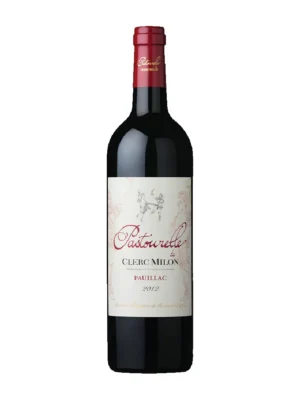
Tied to the Seigneuries of Lafite and Mouton (future First Classified Growths belonging to two different branches of the Rothschild family), Château Clerc Milon derives its name from its historic owners, the Clerc family, who acquired it when it was sold as a national asset after the French Revolution.
Living testimony to the considerable improvements in quality achieved at the property since the arrival of Baron Philippe and his descendants, Château Clerc Milon now has a second wine. Pastourelle de Clerc Milon has joined the dance and already accomplished its first very confident steps in the company of fine Pauillac wines. Its name comes from a traditional dance, the pastourelle, which evokes a knight’s romantic encounter with a shepherdess: the name echoes the pair of dancers that adorn the label of the Grand Vin. Made of gold, enamel and pearls, this precious miniature from the Museum of Wine in Art at Château Mouton Rothschild belonged to Catherine II, the empress of Russia, and is inspired by characters of the Commedia dell’Arte. Baroness Philippine de Rothschild chose it as the Clerc Milon emblem because of her love of the theatre.
2012 was a year of contrasts. The conditions of the vintage favoured superb expression of the Merlot, here mostly planted on clay-limestone parcels.
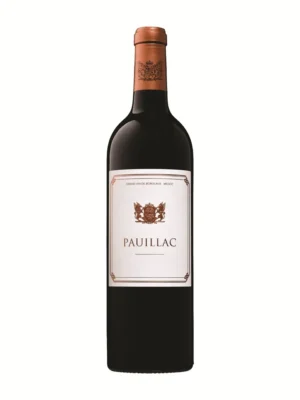
Elaborated since the 2019 vintage, this Pauillac is a fruity, supple and well-balanced wine.
The grapes making up the blend of this cuvée come from young vines in the Tour Pibran and Château Pichon Baron vineyard, with clay-limestone and gravelly soil. These grapes are harvested, vinified and aged by the Château Pichon Baron team. They produce this Pauillac with the same standards of quality as their other wines in order to highlight this appellation.
Château Figeac is one of the leading St. Emilion estates and its wine, with its high Cabernet content, has often been described as the most Médoc-like in Saint-Émilion. It is located in the north-west of the appellation with its vineyards adjoining those of Cheval Blanc. Its 40 hectares of vineyards (unusually for the right bank there is only 30% Merlot in the vineyard with 35% Cabernet Franc and – rare on the right bank – 35% Cabernet Sauvignon) lie on a deep, Médoc-like gravel topsoil (‘Graves’) over a flinty, iron-rich subsoil.
Since 2010 Figeac has been managed by Comte Eric d’Aramon and his wife Laure and there has been some serious improvements here recently under winemaker Frédéric Faye. Michel Rolland has been brought in to consult – but not to change the unique Figeac style. As a consequence, the wines produced now seem a little riper and more polished than before but are still fine, pure and classic.
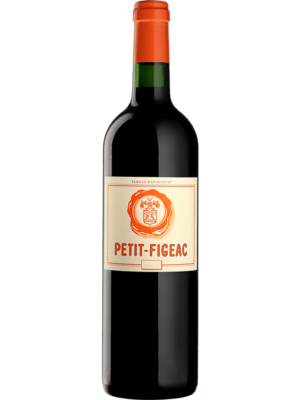
Produced to the same high standards as the Grand Vin, Petit-Figeac is Château Figeac’s second wine. Under the leadership of Thierry Manoncourt, Château Figeac has been producing a Second Wine since 1945. Since the 2012 vintage, it has taken the name of a historic plot of land, “Petit-Figeac” located in the heart of the estate.
2021 is the first vintage vinified in the estate’s new cellar.



 Download Tasting Note