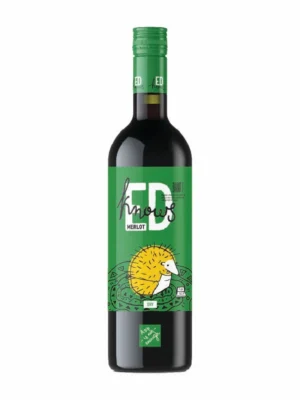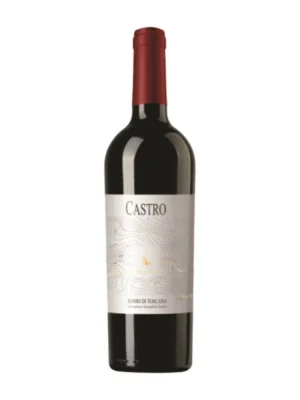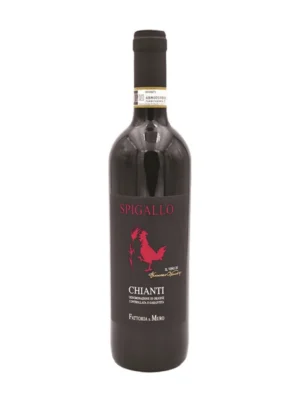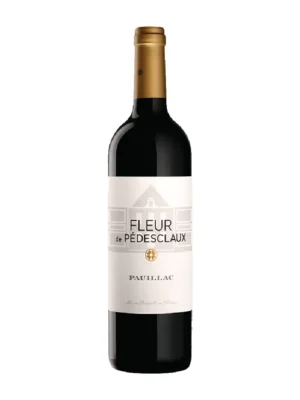

The estate’s Second Wine offers a different interpretation of the Calon terroir. Le Marquis de Calon Ségur is totally distinct from the First Wine, Château Calon Ségur Grand Cru Classé. “It benefits from a true expression of its own”, underlines Vincent Millet. “The plots are separated out from the beginning.”
Le Marquis de Calon Ségur provides immediate enjoyment, warmth and a velvety texture. It is carefully aged generally for 17 months in oak barrels, a third of which are new. Deliciously easy-drinking, silky and expressive, its charm comes to the fore, while at the same time bringing to our minds the elegance of the Grand Vin.
For more info, visit Château Calon Ségurwebsite.
VARIETALS
50% Cabernet Sauvignon, 49% Merlot, 1% Petit Verdot
Le Petit Caillou 2017 is a red Bordeaux wine from the Saint-Julien appellation, produced by the esteemed Château Ducru-Beaucaillou estate. Known for its excellent value, it is one of the best wines in the Saint-Julien appellation, offering a typical and approachable style.
Family owned since 1810, the Château Cap Léon Veyrin originates from the meeting of Château Cap Léon and the Veyrin estate. Cape comes from the word “head”. In fact, the vineyards of Cap Léon are located on the highest points of Listrac-Médoc, favoring natural drainage and ideal sunshine. Nathalie and Julien Meyre, are the 6th generation of the family running this property, perpetuate the tradition: predominance of Merlot, collage with egg white, aging of 12 months in barrels, manual harvesting for young parcels and for old vines, while bringing their dynamism to this renowned Cru Bourgeois du Médoc.
Le Petit Leon is de-facto the second wine of Château Cap Leon Veyrin, even though some grapes are bought in for this wine. The quality is outstanding and the presentation top drawer. Certainly one to look out for if you are on the hunt for quality at a great price.
For more info, visit Château Cap Léon Veyrinwebsite.
Located in the heart of the Pessac-Léognan appellation and dating back to 1365, Château Smith Haut Lafitte is one of the oldest châteaux in Bordeaux. This magnificent property entered a new era in its history following its acquisition by Daniel and Florence Cathiard in 1990. Driven with passion and ambition by the Cathiards, Château Smith Haut Lafitte has established itself as one of the finest properties in the Graves region, with wines world-renowned for their elegance and style, both red and white.
The Petit Smith Haut Lafitte is is the second wine of Château Smith Haut Lafitte but produced and cared for with the same attention reserved for the château’s first wine. The château uses its own vines, thanks to a mother vine preserved in the nursery on Lalande Island.
For more info, visit Château Smith Haut Lafittewebsite.
The brand Le Preare was created by Cantina Valpolicella Negrar to pay tribute to a history, where previous generations very often paid a very high price, allowing todays generation of vine growers to benefit from the hard work of their forefathers.
Located in the heart of the Valpolicella Classico, this area was also known for its prestigious stones, such as the red marble of Verona. It was widely used by the Venetians when building their villas. However, the use of other local stones, less prestigious then marble, was wide spread. The antique mines where the stone was taken, were called “preare” in local dialect. The local stones were used to separate the vineyards and also to build the terraces, allowing the vines to grow also on steep slopes.
“Appassimento” is made from indigenous red grape varieties. Following a thorough and rigorous blending process, both the appassimento and traditional methods are fused together in the production of this fine red wine.
It was in 1981 that the Marquis Lodovico Antinori, cousin of Piero Antinori, founded the Ornellaia Estate, in the heart of the Bolgheri area, a few kilometers from the Mediterranean coast. Thus, with the first harvest of 1985, what would become an icon among the SuperTuscans was born: the “Ornellaia”. With the inauguration of the company, the world-famous enologist, Michel Rolland, begins to deal with the technical part of the cellar. Subsequently, in the 90s the other two labels were born: “Le Volte” and “Le Serre Nuove”.
Crafted from the same varieties, under the same sky, from the same philosophy: Le Serre Nuove dell’Ornellaia is a proud second vin, which has the ability to foretell the personality of the estate’s flagship wine. Together, the two wines provide their own distinctive points of view. The pleasure of sipping Le Serre Nuove dell’Ornellaia evolves over time, adding the charm of maturity to the vigour of youth.
“Elegant, excellent ageing potential and immediately pleasing, this wine elicits the surrounding Mediterranean brush on the note. The tasting experience ends with a long finish and unexpected freshness.” – Olga Fusari – Winemaker
It was in 1981 that the Marquis Lodovico Antinori, cousin of Piero Antinori, founded the Ornellaia Estate, in the heart of the Bolgheri area, a few kilometers from the Mediterranean coast. Thus, with the first harvest of 1985, what would become an icon among the SuperTuscans was born: the “Ornellaia”. With the inauguration of the company, the world-famous enologist, Michel Rolland, begins to deal with the technical part of the cellar. Subsequently, in the 90s the other two labels were born: “Le Volte” and “Le Serre Nuove”.
Instantly enjoyable, versatile and playful, Le Volte dell’Ornellaia is all about conviviality. This bright red wine opens the door to the world of Ornellaia and simply shares the passion for quality that is experienced every day on our estate and with every sip. Le Volte dell’ Ornellaia is a fine wine for spontaneous wine lovers and needs no ceremony.
Originally from Schönberg, in the Rhineland, fleeing the consequences of the defeat of Napoleon I, the Yung family origins settled for more than a century in Algeria. Already listed in the first edition of Féret des Vins d’Oranie in 1886, the family developed its vineyard until independence, until forced to abandon the wine estates it had owned since 1859.
In 1862 Charles Young joined his older brother, already settled in Gironde. He then decides to acquire for his 2 children and his 2 nephews, the Château Haut Mondain, a 42-hectare AOC Bordeaux wine estate, followed then by Château Barail, Les Hauts de Palette and Moulin de Tassin.
The first plantation in the history of the Château Les Grands Chênes, named Cru Bourgeois Supérieur, took place in 1880. This property was one of the first acquired by Bernard Magrez in the Médoc vineyards. This castle is often considered as “The Pearl of the Medoc”. It is located on the famous gravelly ridge of Saint Christoly du Médoc and is built around an old fortress dating from the sixteenth century.
It’s in Saint-Christoly Médoc, a town once famous for its port where the sounds of barrels rolling onto the quayside, is where the vineyards of Château Les Grands Chênes are located. Ideally planted on a beautiful hillside of Garonne gravel, it makes the most of this top-quality terroir.
Crafted with input from renowned consultant Michel Rolland, the 2019 Les Grands Chênes L’Élégance is a refined Médoc wine from the extensive portfolio of Bernard Magrez, often referred to as a “hidden treasure” for its quality-to-price ratio.
Les Griffons de Pichon Baron is one of the second wines of the property. Created since the 2012 vintage, it has a pure and direct character.
The grapes which make up this wine’s blend come primarily from gravelly plots of land near the Gironde estuary, a good environment for Cabernet-Sauvignon.
Les Griffons offers a vigorous and fresh tasting experience, full-bodied and clean, overflowing with energy.
Château du Tertre is a property steeped in history. This property has existed since the 12th century and its vineyard of 52 hectares remains unchanged since 1855. Since the 19th century, their wines have become worldwide recognised thanks to the classification of 1855 which makes Château du Tertre a Grand Cru Classé de Margaux.
Crafted with the same precision, passion, and expertise as Château du Tertre, Les Hauts du Tertre reveals another side of the estate, that of a wine best discovered and appreciated in its younger years. Lively, with silky tannins, its fruity and spicy notes blend with the delicacy of Margaux wines.
Listel is above all a strong story told for over 100 years. It was in 1883 that the Salins du Midi, owners of large expanses of sand in the Camargue, decided to plant the first vines on the “Isles de Stel”, a plot that gave its name to the emblematic rosé: Listel.
The Grain de Gris Rosé is a delicate rosé that makes you want to breathe it gently, a wine that coaxes the taste buds before stimulating them with fruity and spices notes.
Created under the guidance of Philippe Castéja, Château Lynch-Moussas, LM de Moussas embodies the essence of the great Bordeaux terroirs. Entrusted to the finest oenologists of the Maison A. de Luze, its creation is based on one absolute principle: to reveal a wine that is both structured, balanced, and marked by beautiful freshness.
The Teycheney family has been cultivating vineyards since 1837, when the first generation settled in the heart of Entre-Deux-Mers, on the family’s historic estate. They are perhaps most widely known for Cheteau Fleur de La Lisse from Saint Emilion.
Since 2015, the 6th generation, Caroline Teycheney, has been in charge of the vineyards, which now cover 62 hectares in Entre-Deux-Mers and 32 hectares in Saint-Émilion Grand Cru. The vineyard from which the Maison 1982 Réserve is produced is located on the edge of the medieval village of Saint-Émilion, at the foot of the clay and limestone hill. It has been cultivated with passion using organic and biodynamic methods since 2016, with the utmost respect for man and nature. The best Merlot plots are meticulously worked and blended to produce the estate’s finest cuvées.
Organic wine certified AB (Agriculture Biologique).
Founded in 1642, Mandan is the oldest wine estate in Chile and now listed by the government as one of the oldest historic buildings.
Mandan is the name originally meant for the first tribe of American Indians, migrated from Siberia to the Americas more than 20,000 years ago, where they formed a unique culture there.
Americans believe that the birds soaring in the sky have a sacred charm. In ancient sports or war, whoever wins will get a feather, which will be inserted into the hat as a prize and become a symbol of honor. The higher the number of feathers, the higher the bravery and the greater the prestige of war.
That’s why the winery is marked by feathers, which, at the same time, represent the enthusiastic and sunny winemaking spirit of the winery and the endless exploration and passion for high-quality wine.