Valle del Rapel is located in the central part of Chile. It exhibits a semi-arid Mediterranean climate with warm and dry days and pleasantly cool nights during the growing season, as a result of cold breezes coming from the Andes. Rapel has also a cool influence from the Pacific’s Humboldt Current, which lowers temperatures in the coastal areas of the valley. This leads to warm days with ample sunlight and dry conditions, allowing a slow ripening period and maintain its natural acidity that is a characteristic of this elegant Merlot.
The yields in 2021 ended up being generous, and most importantly with grapes that produced wines of excellent quality.
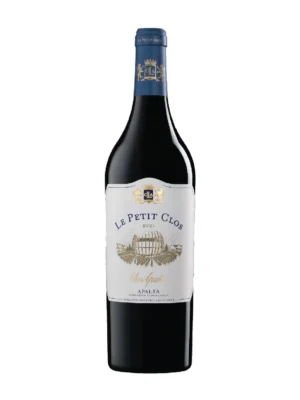
In 2014, Clos Apalta gave birth to its second wine, Le Petit Clos de Clos Apalta, in order to offer a different interpretation of this unique terroir, using the same grapes, but in different proportion, and offering young vines a chance to prove their worth before thay can make it into the Grand Vin.
The 2021 vintage was challenging as it brought a scenario of climatic disruptions and the development of the COVID-19 pandemic. The yields ended up being generous considering the challenges faced, and most importantly with grapes that produced wines of excellent quality.
“Le Petit Clos is a different interpretation of the Clos Apalta Terroir, using the mastery of blending that is the heart of the winemaking philosophy from the Domaines Bournet ”. – Jacques Begarie, Chief Winemaker.
Made with Organic Grapes and Biodynamic vineyard management.
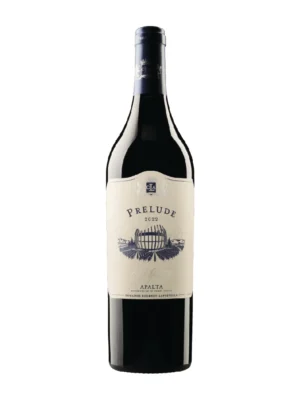
The Prelude to Clos Apalta is not just a wine; it is an overture to an enduring legacy. It is a wine crafted with the same meticulous care and attention that has defined three decades of winemaking in our vineyards. This wine is a harmonious blend of our dedication, knowledge, and respect for the land, serving as an invitation to a grander symphony that awaits.
Prelude is the third wine in the esteemed line up from Clos Apalta, offering a more approachable and youthful expression of the Apalta Valley terroir.Crafted with the same meticulous care as its counterparts, Clos Apalta and Le Petit Clos, Prelude serves as an inviting introduction to the estate’s winemaking philosophy.
“Prelude of Clos Apalta is a vibrant, fruit-driven red blend, showcasing Carménère’s spice and elegance with a modern, approachable style.” – Jacques Begarie, Chief Winemaker.
Château Quintus is the 5th child within the Domaine Clarence Dillon family of wines. Its name is a tribute to the Gallo-Romans, creators of Saint-Emilion’s vineyards, who had the custom of naming their fifth child Quintus.
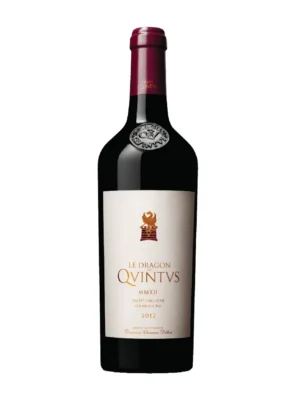
Le Dragon de Quintus is the second wine of Château Quintus. The name originates from the dragon statue that towers above the magical terroir of Saint-Emilion, perched high upon the promontory, where the estate is located.
2012 is a truly fine vintage for early-ripening terroirs such as Saint-Emilion.The first word that comes to mind here is: harmonious. It will be ready to drink fairly young and should provide a great deal of pleasure.
Château Quintus is the 5th child within the Domaine Clarence Dillon family of wines. Its name is a tribute to the Gallo-Romans, creators of Saint-Emilion’s vineyards, who had the custom of naming their fifth child Quintus.
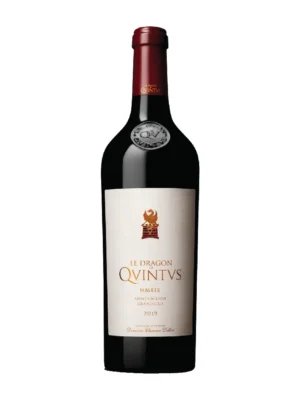
Le Dragon de Quintus is the second wine of Château Quintus. The name originates from the dragon statue that towers above the magical terroir of Saint-Emilion, perched high upon the promontory, where the estate is located.
Thanks to this ideal spell of weather in 2019, all the grape varieties were harvested at peak ripeness and at a leisurely pace. This Dragon is definitely well-balanced and delicious.
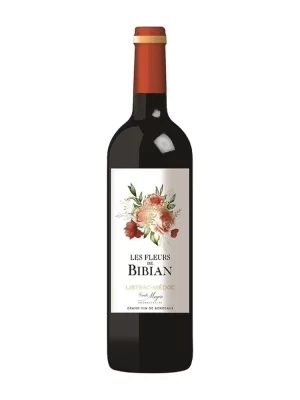
Château Bibian is a historic (and one of the oldest) property in Listrac-Médoc, located between the more famous communes of Margaux and Saint-Julien.
The château, purchased by the Meyre family in 1999 and a Cru Bourgeois Supérieur classified, is today run by the 6th generation, where Nathalie and Julien Meyre, in consultation with the famous wine consultant (Michel Rolland), carry on the family traditions and produce classic Bordeaux wines.
This wine is a rigorous selection of young plots of vines from Château Bibian and it comes from the best terroirs of Listrac.
Le Fleurs de Bibian can be enjoyed in its youth, to savor all its roundness and fruitiness.
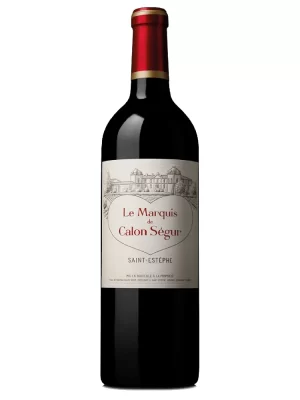
The estate’s Second Wine offers a different interpretation of the Calon terroir. Le Marquis de Calon Ségur is totally distinct from the First Wine, Château Calon Ségur Grand Cru Classé. “It benefits from a true expression of its own”, underlines Vincent Millet. “The plots are separated out from the beginning.”
Le Marquis de Calon Ségur provides immediate enjoyment, warmth and a velvety texture. It is carefully aged generally for 17 months in oak barrels, a third of which are new. Deliciously easy-drinking, silky and expressive, its charm comes to the fore, while at the same time bringing to our minds the elegance of the Grand Vin.
For more info, visit Château Calon Ségurwebsite.
VARIETALS
54% Cabernet Sauvignon, 44% Merlot, 2% Cabernet Franc
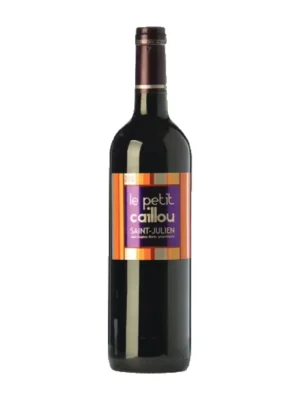
Le Petit Caillou 2017 is a red Bordeaux wine from the Saint-Julien appellation, produced by the esteemed Château Ducru-Beaucaillou estate. Known for its excellent value, it is one of the best wines in the Saint-Julien appellation, offering a typical and approachable style.
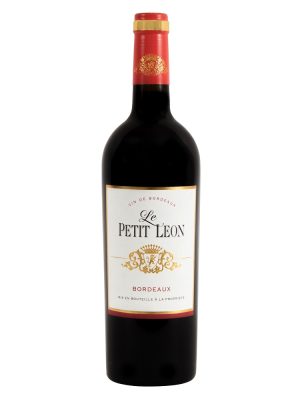
Family owned since 1810, the Château Cap Léon Veyrin originates from the meeting of Château Cap Léon and the Veyrin estate. Cape comes from the word “head”. In fact, the vineyards of Cap Léon are located on the highest points of Listrac-Médoc, favoring natural drainage and ideal sunshine. Nathalie and Julien Meyre, are the 6th generation of the family running this property, perpetuate the tradition: predominance of Merlot, collage with egg white, aging of 12 months in barrels, manual harvesting for young parcels and for old vines, while bringing their dynamism to this renowned Cru Bourgeois du Médoc.
Le Petit Leon is de-facto the second wine of Château Cap Leon Veyrin, even though some grapes are bought in for this wine. The quality is outstanding and the presentation top drawer. Certainly one to look out for if you are on the hunt for quality at a great price.
For more info, visit Château Cap Léon Veyrinwebsite.
Located in the heart of the Pessac-Léognan appellation and dating back to 1365, Château Smith Haut Lafitte is one of the oldest châteaux in Bordeaux. This magnificent property entered a new era in its history following its acquisition by Daniel and Florence Cathiard in 1990. Driven with passion and ambition by the Cathiards, Château Smith Haut Lafitte has established itself as one of the finest properties in the Graves region, with wines world-renowned for their elegance and style, both red and white.
The Petit Smith Haut Lafitte is is the second wine of Château Smith Haut Lafitte but produced and cared for with the same attention reserved for the château’s first wine. The château uses its own vines, thanks to a mother vine preserved in the nursery on Lalande Island.
For more info, visit Château Smith Haut Lafittewebsite.
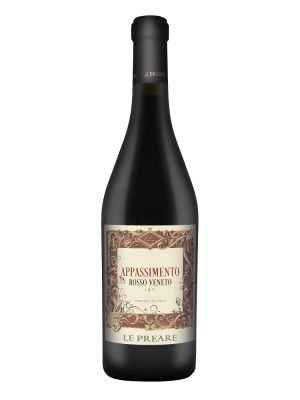
The brand Le Preare was created by Cantina Valpolicella Negrar to pay tribute to a history, where previous generations very often paid a very high price, allowing todays generation of vine growers to benefit from the hard work of their forefathers.
Located in the heart of the Valpolicella Classico, this area was also known for its prestigious stones, such as the red marble of Verona. It was widely used by the Venetians when building their villas. However, the use of other local stones, less prestigious then marble, was wide spread. The antique mines where the stone was taken, were called “preare” in local dialect. The local stones were used to separate the vineyards and also to build the terraces, allowing the vines to grow also on steep slopes.
“Appassimento” is made from indigenous red grape varieties. Following a thorough and rigorous blending process, both the appassimento and traditional methods are fused together in the production of this fine red wine.
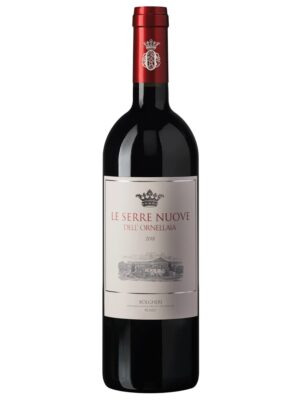
It was in 1981 that the Marquis Lodovico Antinori, cousin of Piero Antinori, founded the Ornellaia Estate, in the heart of the Bolgheri area, a few kilometers from the Mediterranean coast. Thus, with the first harvest of 1985, what would become an icon among the SuperTuscans was born: the “Ornellaia”. With the inauguration of the company, the world-famous enologist, Michel Rolland, begins to deal with the technical part of the cellar. Subsequently, in the 90s the other two labels were born: “Le Volte” and “Le Serre Nuove”.
Crafted from the same varieties, under the same sky, from the same philosophy: Le Serre Nuove dell’Ornellaia is a proud second vin, which has the ability to foretell the personality of the estate’s flagship wine. Together, the two wines provide their own distinctive points of view. The pleasure of sipping Le Serre Nuove dell’Ornellaia evolves over time, adding the charm of maturity to the vigour of youth.
“Aromatic complexity is the hallmark of this vintage, with fruits of the forest aromas, accompanied by wild rose, pink pepper and liquorice notes. Nice tannins with a savoury and crunchy finish.” – Olga Fusari – Winemaker
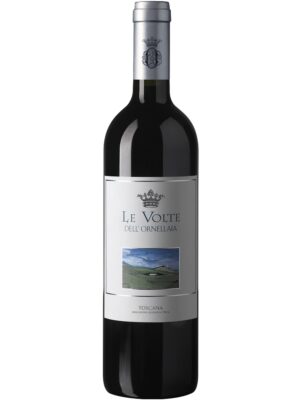
It was in 1981 that the Marquis Lodovico Antinori, cousin of Piero Antinori, founded the Ornellaia Estate, in the heart of the Bolgheri area, a few kilometers from the Mediterranean coast. Thus, with the first harvest of 1985, what would become an icon among the SuperTuscans was born: the “Ornellaia”. With the inauguration of the company, the world-famous enologist, Michel Rolland, begins to deal with the technical part of the cellar. Subsequently, in the 90s the other two labels were born: “Le Volte” and “Le Serre Nuove”.
Instantly enjoyable, versatile and playful, Le Volte dell’Ornellaia is all about conviviality. This bright red wine opens the door to the world of Ornellaia and simply shares the passion for quality that is experienced every day on our estate and with every sip. Le Volte dell’ Ornellaia is a fine wine for spontaneous wine lovers and needs no ceremony.
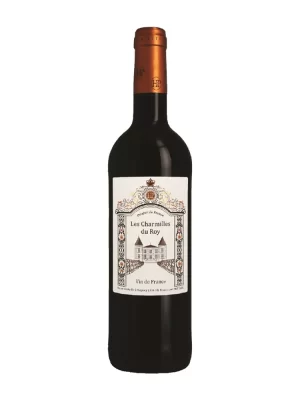
Originally from Schönberg, in the Rhineland, fleeing the consequences of the defeat of Napoleon I, the Yung family origins settled for more than a century in Algeria. Already listed in the first edition of Féret des Vins d’Oranie in 1886, the family developed its vineyard until independence, until forced to abandon the wine estates it had owned since 1859.
In 1862 Charles Young joined his older brother, already settled in Gironde. He then decides to acquire for his 2 children and his 2 nephews, the Château Haut Mondain, a 42-hectare AOC Bordeaux wine estate, followed then by Château Barail, Les Hauts de Palette and Moulin de Tassin.
Since 2020, the Charles Yung & Fils vineyards have been committed to a societal and environmental approach by obtaining High Environmental Value, level 3 (HVE) certification.
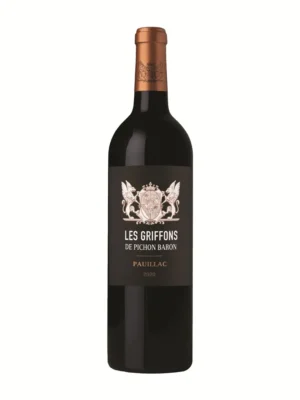
Les Griffons de Pichon Baron is one of the second wines of the property. Created since the 2012 vintage, it has a pure and direct character.
The grapes which make up this wine’s blend come primarily from gravelly plots of land near the Gironde estuary, a good environment for Cabernet-Sauvignon.
Les Griffons offers a vigorous and fresh tasting experience, full-bodied and clean, overflowing with energy.



 Download Tasting Note