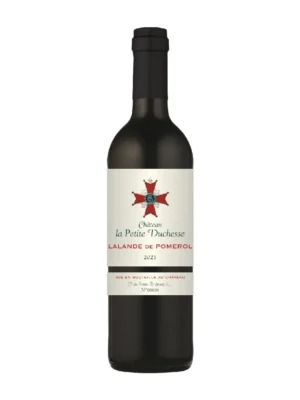
Château La Petite Duchesse is a family property owned by Jean-Louis Champagne. After inheriting from his father, he continued to enlarge the vineyard and modernized the winery. His son Xavier, recently joined him on the wine estate.
This property also produces the appellations Bordeaux Rouge; Bordeaux Supérieur; Bordeaux Rosé and Bordeaux Blanc.
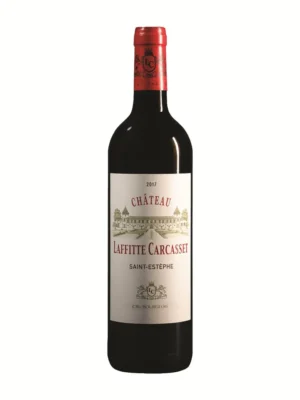
Château Laffitte Carcasset was founded in 1759 at «Le Carcasset», an area located at the heart of Saint-Estèphe appellation. In 1781
his owner, Jean Laffitte, lawyer and prosecutor of the King Louis XVI in Bordeaux, gave his name to the estate.
This beautiful chartreuse typical of the 18th century, is surrounded by the Classified Growths of Saint-Estèphe. The vineyard is on the gravellous plateau, near the Gironde estuary where the Cabernet and the Merlot best express their potential.
Château Laffitte Carcasset is a classic Saint-Estèphe red wine. A powerful, deep and well-structured wine, round and elegant, with excellent ageing potential.
For more info, visit Château Laffitte Carcassetwebsite.
VARIETALS
59% Cabernet Sauvignon, 40% Merlot, 1% Cabernet Franc
Château Lalande-Borie was created almost entirely in 1970, through the purchase of a 30 hectare third growth plot in the Saint Julien appellation. The name Lalande-Borie combines the names of the plot on the land register and a great winegrowing family who have been established in the Médoc for more than a century and own several prestigious grands crus: Ducru-Beaucaillou, Grand-Puy-Lacoste and Haut-Batailley.
Lalande-Borie’s wines are vinified and matured with the same techniques, the same care and same spirit as those produced by the Borie family’s other properties. The winery buildings were fully renovated in 1982. The modern vat room and cellar facilities are designed for optimal vinification.
Château Lalande-Borie has acquired a very good reputation in a relatively short space of time and produces fleshy and sappy wines, not overly tannic, where we find the balance and elegance of Saint-Julien wines.
VARIETALS
50% Cabernet Sauvignon, 45% Merlot, 5% Cabernet Franc
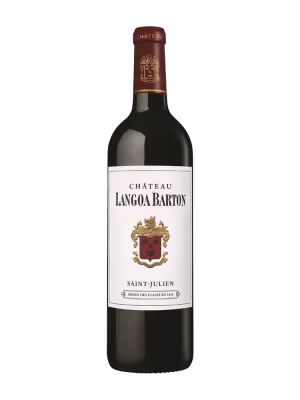
Château Langoa Barton, 3rd Classified Growth, was the first of the two Bordeaux wine estates bought by Hugh Barton in the 1820s, the other being Léoville-Barton, 2nd Classified Growth.
Both Langoa and Léoville wines are models of typical St Julien restraint and elegance, and for years, Langoa Barton was considered slightly lighter and more forward than Léoville. However, in the last decade it has become noticeably deeper in colour and richer and more concentrated on the palate. Langoa Barton is now often the equal of Léoville.
The plots that compose the Château Langoa Barton terroir overlook the river. The splendid slopes of quaternary gravel bring the grapes to full maturity and then they undergo a rigorous selection process before being chosen for the Langoa Barton. The plowing is traditional, without weeding or herbicide.
For more info, visit Château Langoa Bartonwebsite.
VARIETALS
67% Cabernet Sauvignon, 26% Merlot, 7% Cabernet Franc
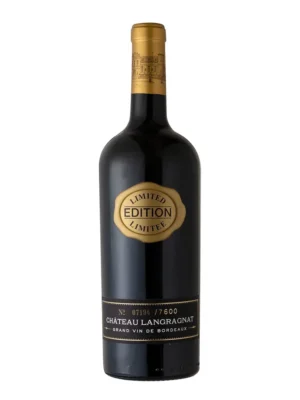
This “limited edition” is a unique selection of the 20 best oak casks, corresponding to 6000 bottles of Château Langragnat, corresponding to a limited quantity of bottles of Chteau Franc Couplet.
It is aged in french oak barrels for 12 months, softening the palate and adding delicate spices and coffee notes to the wine.
VARIETALS
70% Merlot, 20% Cabernet Sauvignon, 10% Cabernet Franc
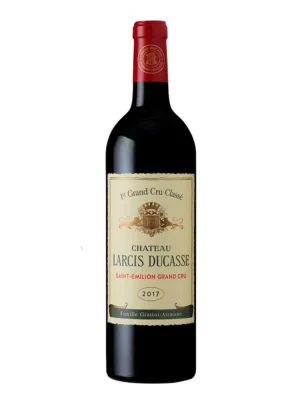
The Château Larcis Ducasse has existed since the 17th century. Preservation, terroir expression and vine care are the watchwords of this estate, elevated to the rank of Premier Grand Cru Classé of Saint-Émilion in 2012 thanks to the work of Nicolas Thienpont, after he took the reins of the domaine in 2002.
Chateau Larcis Ducasse 2017 reveals a velvety, sensual and fleshy mouthfeel, which envelops the palate in a succession of different sensations.
For more info, visit Château Larcis Ducasse website.
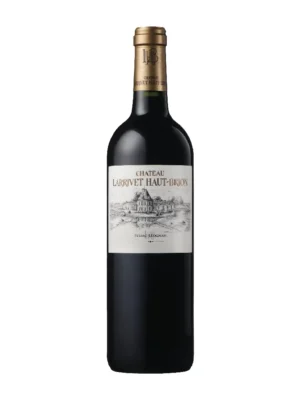
Called at various times Château de Canolle, La Rivette, and Château Brion-Larrivet, the estate was given its current name, château Larrivet Haut-Brion, in 1949 by Jacques Guillemaud (owner since 1941). Devoted and hard-working, he conscientiously managed the estate until 1982. Château Larrivet Haut-Brion was acquired by the Gervoson family in 1987. They restored the estate’s unity, once again combining the château, outbuildings, 13 hectares of grounds, and 42 hectares of vines under one owner, as well as replanting 18 hectares of land that had laid fallow.
Today a team of enthusiastic professionals has done a wonderful job of giving Château Larrivet Haut-Brion back its superb reputation, and the estate is once again universally recognized as one of the finest wines in the Pessac-Léognan appellation.
Great classic 2019 vintage, representative of the new style leaving a large part to the expression of the Cabernet Sauvignon.
For more info, visit Château Larrivet Haut-Brionwebsite.
VARIETALS
65% Cabernet Sauvignon, 20% Merlot, 15% Cabernet Franc
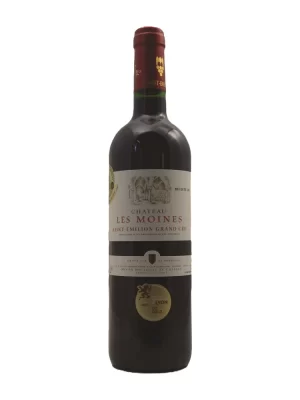
The Château Les Moines belongs to the estate Château la Grâce Dieu which in the Middle Ages was a Cistercian prioress called «A LA Grâce De Dieu».
The vineyard of Château Les Moines is situated on the western hillside of the city (estate) of Saint Emilion, located just 2 km from the famous village of Saint Emilion.
Bernard Magrez’s journey is that of passion, a constant desire for improvement, know-how and exceptional success which has its roots first in Bordeaux, in the Grands Crus Classés, then in other prestigious terroirs in France and around the world. Bernard Magrez’s journey is that of passion, a constant desire for improvement, know-how and exceptional success which has its roots first in Bordeaux, in the Grands Crus Classés, then in other prestigious terroirs in France and around the world.
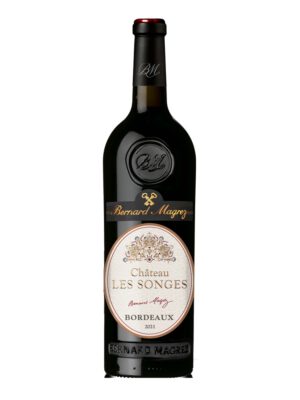
Located in the town of Pompignac, “Château Les Songes boasts a beautiful clay and limestone terroir where Merlot, the ‘king’ of grape varieties on
the Right Bank flourishes. This supple, fruity and full-bodied wine reflects the style of the area, lively and energetic.
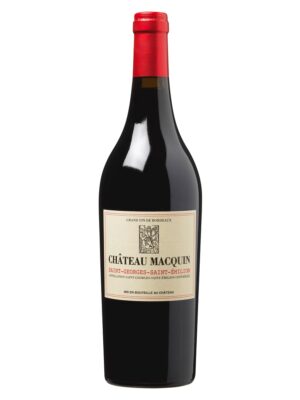
Wines have been made at Château Macquin since 1885, when the first cellar was developed by François-Albert Macquin. François was the first to re-plant vines in the Saint-Émilion region following the phylloxera outbreak in the 19th century.
Château Macquin is located just three kilometres north of Saint- Émilion, in the small village of Saint-Georges, the smallest of all Bordeaux appellations. However, at its peak of 89 metres above sea level, Saint-Georges enjoys one of the best elevations on the right bank, giving the wines freshness and concentration.
The south facing vines are planted on clay and limestone soils and range from 15 to 60 years old. The vines are sustainably farmed, without the use of herbicides, fertilizers, or other harmful chemicals.
VARIETALS
80% Merlot, 10% Cabernet Sauvignon, 10% Cabernet Franc
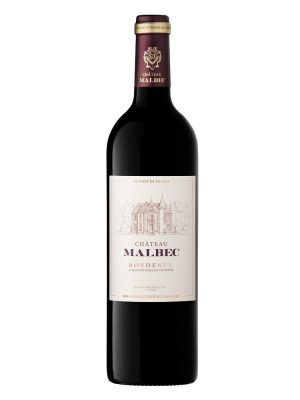
Castel Estates and Vineyards offer a range of unique estate wines, finding some true gems by following the advice of the people who know and love the place best. In Bordeaux, at the gateway to Entre-Deux-Mers, they selected Château Malbec which also houses an education center dedicated to wine and the art of wine tasting. Contrary to appearances, Château Malbec is not named after the famous grape variety, but for one of its former owners, Louis Malbec.
Vignobles Lassagne gather several family properties that were bought since three generations and are grown according to tradition and innovation on unique terroir located in the Libourne area.
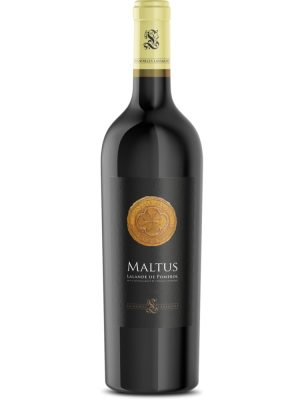
Vignobles Lassagne encompasses these three properties: Château des Arnauds (the original estate), Château des Landes and Château Maltus, the latest addition to the Vignobles Lassagne.
History tells us that the origin of the Château Maltus goes back to the Middle Ages, in the time of the crusades.
The Order of Malta, well implanted on the land named Lalande de Pomerol, cultivated vines for the first time on the grounds of the Château Maltus.
Nicolas Lassagne acquired this parcel in 2015 of sixty-year-old vines with the purpose of producing this richly dense wine.
A well regarded 28ha property on the borders of St Georges-St Emilion owned by the Amart family since 1949, which it is looking out over her neighbours like Cheval Blanc, Vieux Chateau Certan and Chateau Petrus who are just over the Barbanne stream. Tasted against far greater names this is a exceptional value, very elegant, with a lovely weight of fruit. It will not disappoint.
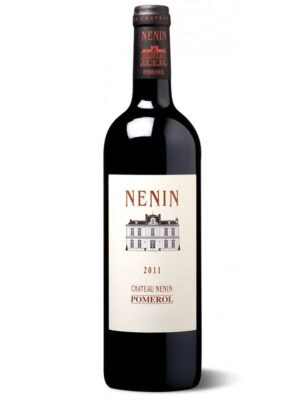
Château Nénin is located in the village of Pomerol, one of the most prestigious areas of Bordeaux. The Domaine was bought by Jean-Hubert Delon in 1997 from his cousins, the Despujols, owners of the estate since 1847. Jean-Hubert had the intention of continuing the centuries-old tradition of the Château, and precisely for this reason, since immediately, extensive renovation and modernization works, including technical ones, were carried out. Under his direction, the land was in fact drained, the vineyards renewed and the cellars modernised, to improve the vinification and aging processes.
According to the Delon family, Château Nénin is the epitome of a great Pomerol “vin de garde” (wine for laying down). It combines power and elegance, complexity and balance, purity and refi nement. The gradual increase of Cabernet Franc within the vineyards gives the wine tautness, distinction and freshness. To really appreciate the Grand Vin’s ageing ability, you may need to be patient. Like all great Pomerol vins de garde, Château Nénin blossoms over time.
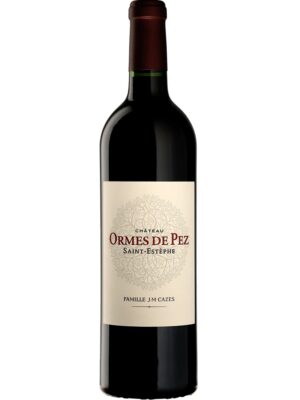
Château Ormes de Pez belongs to the Médoc landscape since the 18th century. Located West of Saint-Estèphe and bordering the hamlet of Pez, the estate owes its name to a magnificent grove of elm trees, which no longer exists today. Château Ormes de Pez is the second property – after Château Lynch-Bages – acquired by the Cazes family in 1939.
With distinctive harmonious spicy character, Château Ormes de Pez is true to its terroir. Wine lovers appreciate its opulence, elegance and well-rounded structure. Its powerful, rich and excellent tannic backbone allows graceful ageing.


 Download Tasting Note