
Tied to the Seigneuries of Lafite and Mouton (future First Classified Growths belonging to two different branches of the Rothschild family), Château Clerc Milon derives its name from its historic owners, the Clerc family, who acquired it when it was sold as a national asset after the French Revolution.
Today, the third generation, represented by Camille and Philippe Sereys de Rothschild and Julien de Beaumarchais de Rothschild, perpetuates Baron Philippe de Rothschild’s values and expertise and continues to develop Château Clerc Milon with the same dynamism and desire for modernity. Thanks to over 50 years of continuous work and a dedicated team with cutting-edge technical facilities, Château Clerc Milon is more than ever a benchmark of Médoc excellence.
2015 vintage in Pauillac is very similar in its heft and opulence to the 2005 vintage. The wines immediately showed plenty of colour and a complete array of very intense aromas ranging from red and black fruit to spice and incense.
“Fons Brogiera: a spring surrounded by heather”. This was the first mention of the name Fombrauge which, for 6 centuries now, has epitomised the elegance of the Grand Cru Classé wines of Saint Emilion. From the Canolle family in the 15th century to Bernard Magrez today, six families have succeeded each other in owning and running Château Fombrauge, providing the estate, which harvested its first grapes in 1599, with a rare stability and a pioneering spirit beyond compare.
To ensure the full expression of the estate’s rich terroir, Bernard Magrez, the owner since 1999, today combines ancestral savoir-faire with precision viticulture. The result is a sublime wine, the epitome of a Saint-Emilion Grand Cru Classé.
The Château Haut-Veyrac property, owned by the Castaing family, is located on one of the hills overlooking the village of Saint-Émilion in Saint-Étienne de Lisse. The vineyard now extends over an exceptional terroir of 9 hectares in one piece. The clay-limestone soil makes it possible to cultivate the Merlot Noir and Cabernet Franc grape varieties in the best conditions.
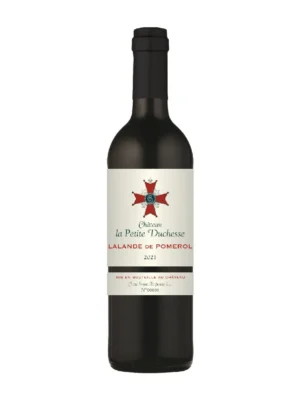
Château La Petite Duchesse is a family property owned by Jean-Louis Champagne. After inheriting from his father, he continued to enlarge the vineyard and modernized the winery. His son Xavier, recently joined him on the wine estate.
This property also produces the appellations Bordeaux Rouge; Bordeaux Supérieur; Bordeaux Rosé and Bordeaux Blanc.
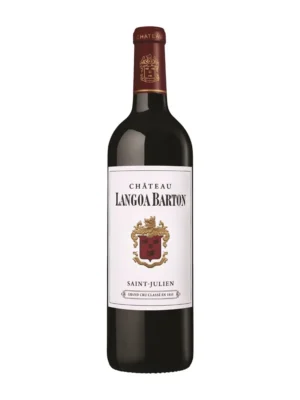
Château Langoa Barton, 3rd Classified Growth, was the first of the two Bordeaux wine estates bought by Hugh Barton in the 1820s, the other being Léoville-Barton, 2nd Classified Growth.
Both Langoa and Léoville wines are models of typical St Julien restraint and elegance, and for years, Langoa Barton was considered slightly lighter and more forward than Léoville. However, in the last decade it has become noticeably deeper in colour and richer and more concentrated on the palate. Langoa Barton is now often the equal of Léoville.
The plots that compose the Château Langoa Barton terroir overlook the river. The splendid slopes of quaternary gravel bring the grapes to full maturity and then they undergo a rigorous selection process before being chosen for the Langoa Barton. The plowing is traditional, without weeding or herbicide.
For more info, visit Château Langoa Bartonwebsite.
VARIETALS
67% Cabernet Sauvignon, 26% Merlot, 7% Cabernet Franc
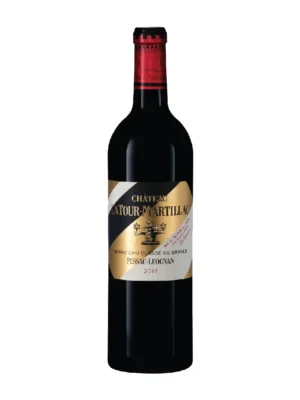
Thanks to the long involvement of generations of the Kressmann family, and the recognition shown in 1953 by the classification of Graves, the wines of Château LaTour-Martillac feature among the best of Pessac-Léognan. The expansion of the range was drawn up by Tristan and Loïc Kressmann. The second wines appeared at the end of the 1980’s under the label Lagrave-Martillac, followed by the Château Langlet, a magnificent property in the Graves appellation, acquired in 1999.
The year 2019 was marked by a succession of climatic events which made this vintage quite complex and interesting to watch voer the years.
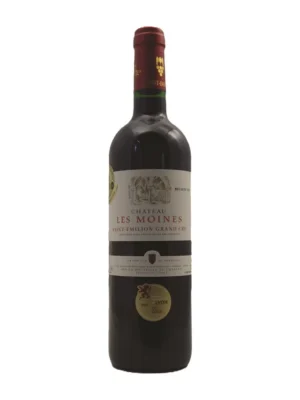
The Château Les Moines belongs to the estate Château la Grâce Dieu which in the Middle Ages was a Cistercian prioress called «A LA Grâce De Dieu».
The vineyard of Château Les Moines is situated on the western hillside of the city (estate) of Saint Emilion, located just 2 km from the famous village of Saint Emilion.
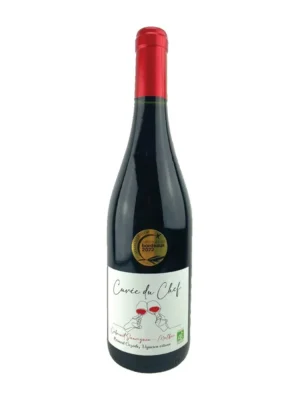
Bernard Cazade composed this harmonious, modern Bordeaux variant from Malbec and Cabernet.
Soft and approachable, like all Cazade organic wines, the grape varieties are easily recognizable and very finely rounded off with a little wood.
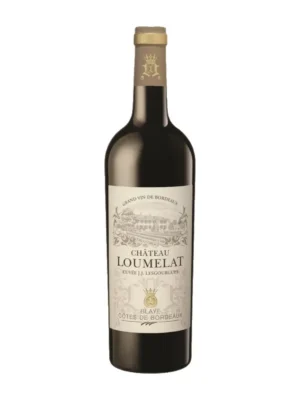
Château Loumelat was established in 1778. The Cuvée J.J. Lesgourgues is a limited production made from low yields with nice concentration and high complexity between red, black fruits, vanilla and spicy notes.
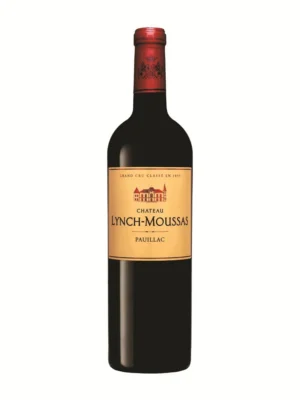
The Château was founded in the 18th century by a member of the Lynch Family. We can trace the origin of the “Moussas” name back to the 16th century.
In 1919 the property was purchased by the Castéja family, at that time also owner of Duhart-Milon and later was inherited by Emile Castéja. Philippe Castéja, Emile Castéja’s son, has been in charge of the property and its vineyards since.
Château Lynch-Moussas is a typical Pauillac exhibiting a dark colour, a fruitful bouquet, a lot of softness with ripe tannins.
For more info, visit Château Lynch-Moussaswebsite.
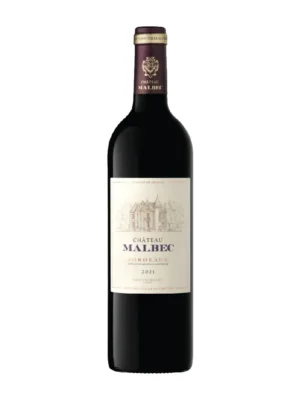
Castel Estates and Vineyards offer a range of unique estate wines, finding some true gems by following the advice of the people who know and love the place best. In Bordeaux, at the gateway to Entre-Deux-Mers, they selected Château Malbec which also houses an education center dedicated to wine and the art of wine tasting. Contrary to appearances, Château Malbec is not named after the famous grape variety, but for one of its former owners, Louis Malbec.
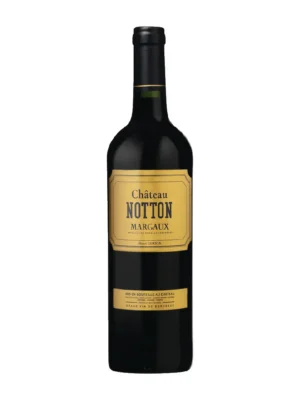
Ideally situated on deep gravel soils, Château Notton is vinified and aged in the cellars of Château Brane-Cantenac and comes from a vineyard whose name it bears, made up of young vines and various plots in Margaux
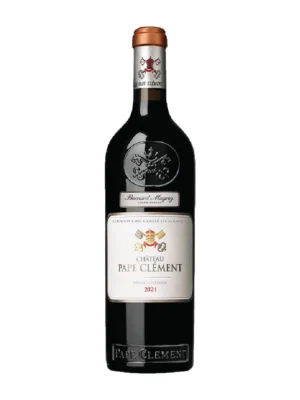
Near Bordeaux, discover the 7 centuries of history of a mythical Grand Cru Classé of the Graves surrounded by vines and a sumptuous garden. The unique castle, whose first grape harvest took place in 1252, gives life to a wine that was reserved for ecclesiastical ceremonies for almost 400 years, and wasn’t available publicly until after the French Revolution. Bernard Magrez acquires the prestigious estatein the 1980s. It was then his very first vineyard.
The winemaking here epitomises the phrase ‘attention to detail’. Every bunch of grapes is de-stemmed by hand and chemical fertilizing and aeration rejected in favour of horse-drawn ploughing. All this has resulted in an extremely strong brand identity. Pape Clement is known as one of the jewels of Bordeaux and though its appellation, Pessac-Leognan, was overlooked in the 1855 Classification, exchange platform Liv-ex has marked it as a probable Second-Growth estate in its reimagining of that classification.
Certified sustainableHVE (High Environmental Value) and TERRA VITIS.
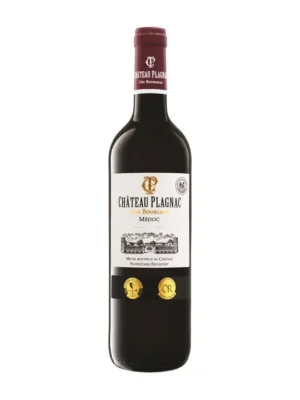
Classified as Cru Bourgeois since 1932 and in a constant quest for excellence, Château Plagnac combines respect for the terroir, tradition and cutting-edge innovation. The three towers of Plagnac, traces of the past of this site, guard the entrance to the prestigious building and give this place nobility and character.
Château Plagnac perfectly embodies the Médoc with the power, vigorous tannins and finesse of its clay-limestone terroir.
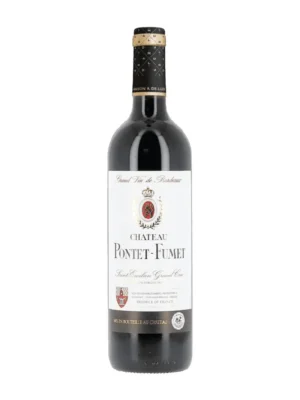
The Château Pontet-Fumet is located near the village of Vignonet in the well-known wine-growing region of Saint-Émillion.
It is one of the outstanding Grand Crus in Saint-Émillion, where the soils of the vineyards are characterized by sandy gravel soils.