
Paying homage to the famed terroir of Stellenbosch’s historic wine region, L’Avenir was only founded in 1992 by Mauritius native Marc Wiehe.
Under the oenological direction of winemakers Dirk Coetzee, Mattheus Thabo and Francois Conradie, the winery in the foothills of the Simonsberg in Stellenbosch produces now a well-endowed and award-winning wine portfolio of wines, distinguished by their unmistakably South African character with an elegant touch of French flair, with the two classic South African grape varieties Chenin Blanc and Pinotage, as the cornerstone of the South African wine industry, forming the main focus of L’Avenir.
L’Avenir Single Block Pinotage is the winery’s flagship and the best that L’Avenir has to offer. Only grapes from the highest vineyard on the estate were used for this exceptional red wine. Only the 14 best casks were selected for this vintage.
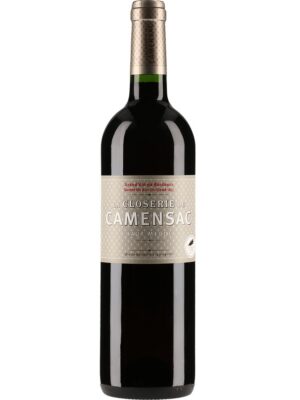
Located in the heart of the Haut-Médoc appellation, on the edge of the Saint-Julien appellation, the Château de Camensac covers 75 hectares. Purchased in 2005 by the Merlaut family, he benefits from the experience and know-how of the Château Chasse Spleen team, it regains its glory of 1855, when it was ranked 5th Grand Cru in the Bordeaux classification and its wines renew with the traditional quality of the castle.
La Closerie de Camensac is the second wine of Château de Camensac and it is a cuvée from the young vines which it enjoys the same careful care during the vinification as the great wine.
A wine with a captivating personality, La Closerie de Camensac offers the opportunity to taste a vintage from a Médoc classified vintage at a very affordable price.
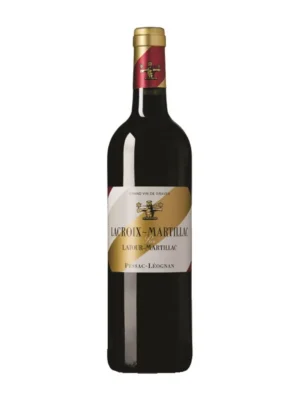
Thanks to the long involvement of generations of the Kressmann family, and the recognition shown in 1953 by the classification of Graves, the wines of Château LaTour-Martillac feature among the best of Pessac-Léognan. The expansion of the range was drawn up by Tristan and Loïc Kressmann. The second wines appeared at the end of the 1980’s under the label Lagrave-Martillac, followed by the Château Langlet, a magnificent property in the Graves appellation, acquired in 1999.
Lacroix-Martillac comes from selected plots at Château LaTour-Martillac, highlighting the Merlot in the red wines blending.
With each new vintage, the Kressmann family strive to achieve in these wines the best from this true Graves terroir by prioritising a quality yield, in keeping with traditional viticulture practices.
For more info, visit Château LaTour-Martillacwebsite.
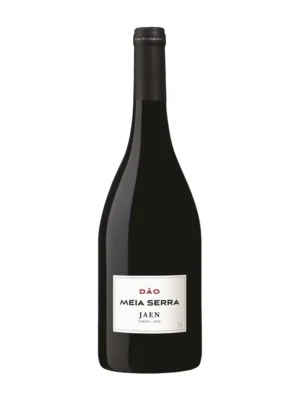
Casa Santos Lima was created to ensure the continuous development of Santos Lima’s wine producing activity created several generations ago. This activity was first started by Joaquim Santos Lima, who, by the turn of 19th century, was already a great producer and exporter of Portuguese wines. Still a family owned company, today is present in the regions of Lisboa, Algarve, Alentejo, Vinho Verde and Douro.
The altitude vineyards, planted in this region between mountains and deep valleys in granitic soils originate wines of great character and elegance. Gained through generations during centuries, the local know-how allows the production of this wine made exclusively with the indigenous Jaen grape, which is called Mencía in the nearby Bierzo region of Spain. Delicate aromas with notes of wild fruit and dark pepper, it reveals a silky and well-balanced aftertaste. This is a great example of the fine wines from this region.
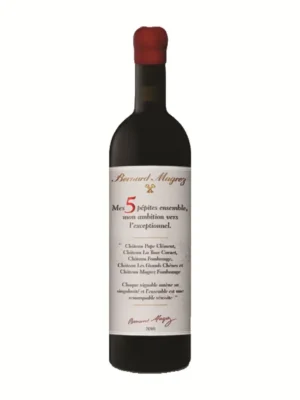
Mes 5 Pépites by Bernard Magrez is a unique micro-blend of barrels selected by world-famous Michel Rolland from Bernard Magrez’s five top chateaux: Pape-Clement Grand Cru Classé (Pessac-Leognan), La Tour Carnet Grand Cru Classé (Haut-Médoc), Les Grands Chênes (Médoc), Fombrauge Grand Cru Classé and Magrez Fombrauge Grand Cru Classé (Saint-Émilion).
Imagine iconic Château Pape-Clement in an innovative super blend with Chateau Magrez Fombrauge from St-Émilion. And completed with barrels rolled in from three other top chateaux at Bernard Magrez!
“My ambition for the exceptional…crafted from the blend of five jewels of our wine heritage – Château Pape Clément, La Tour Carnet, Fombrauge, Les Grands Chênes, and Magrez Fombrauge – it reflects the perfect union of five unique terroirs, where each vineyard contributes its own singularity.” – Bernard Magrez
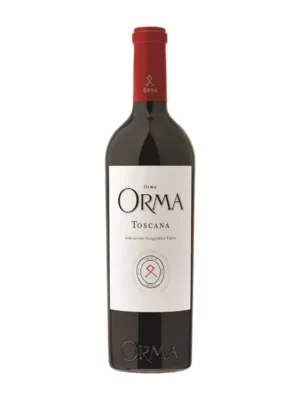
It was in 1981 that the Marquis Lodovico Antinori, cousin of Piero Antinori, founded the Ornellaia Estate, in the heart of the Bolgheri area, a few kilometers from the Mediterranean coast. Thus, with the first harvest of 1985, what would become an icon among the SuperTuscans was born: the “Ornellaia”. With the inauguration of the company, the world-famous enologist, Michel Rolland, begins to deal with the technical part of the cellar. Subsequently, in the 90s the other two labels were born: “Le Volte” and “Le Serre Nuove”.
Ornellaia is a blend of nature and musing. Complex ancient soils converse through human wisdom with a delicate microclimate that is echoed and reflected in the Mediterranean Sea. Prolonged ageing accompanies the estate’s fine wine in achieving its utmost expression, revealing finesse and generosity over time.
“Ornellaia 2018 features a lively and intense aromatic expression, a distinctive mark of the vintage.” – Olga Fusari – Winemaker
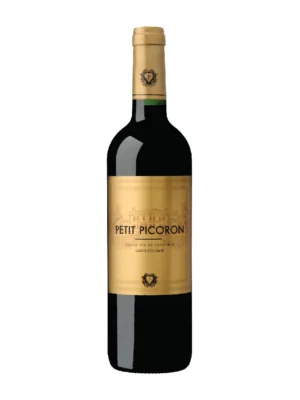
This exceptional Bordeaux wine is from carefully selected plots on the continuation of Saint-Émilion’s celebrated limestone ridge, the perfect terroir to grow a beautiful 100% Merlot.
The Petit Picoron Castillon Côtes de Bordeaux 2018 is a bold, high-alcohol expression from a sweltering and concentrated vintage. Like the 2015, it is a 100% Merlot sourced from the limestone ridge shared with neighboring Saint-Émilion. The 2018 Petit Picoron retains the estate’s low-intervention style, focusing on the purity of the fruit with minimal oak influence.
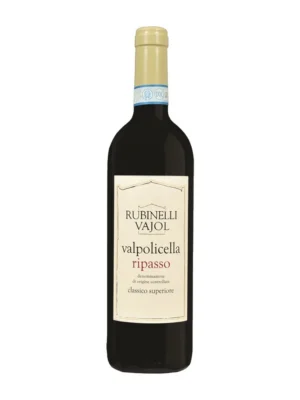
Vajol is a is a sunny, warm, welcoming valley in the heart of the Valpolicella classica.
The cradle shape, the micro-climate that envelopes it, the ancient stones that generate and support it are the aspects that qualify the uniqueness of its vineyards, its grapes and its wine.
Emblematic expression of the typicality of the Valpolicella territory, the ripasso technique is unmatched in any other region of Italy.
The story of the Viberti winery begins when Cavalier Antonio Viberti buys the Locanda del Buon Padre. It was the year 1923 when Antonio began to produce wine for the guests of his Locanda in the basement of the Buon Padre.
This wine is only made with Nebbiolo grapes from the single vineyard Bricco delle Viole, planted in 1964. Produced exclusively in particular years, only if considered suitable for the long again of the Riserva version, this wine has characteristics of marked minerality, freshness and evident balsamic notes.