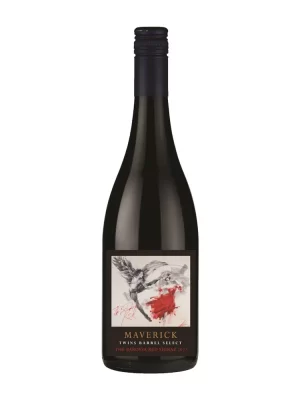
To produce top quality wines from domaine-grown fruit, which are complex but elegant and understated, which are the perfect accompaniments for food, and which represent outstanding value and quality. Ronald Brown, a practitioner of biodynamic culture in France since 1993, worked for 8 years with the late Francois Beuchet. Ronald has imported both the technology and practical philosophy to Australia from Europe, making Maverick one of the leading edge biodynamic vineyards and wineries in the New World.
Shiraz and Barossa still epitomise the best of Australian wine for many wine lovers around the world. This Shiraz comes from the very top terroirs in the Twin Shiraz vineyards – at Ahrens’ Creek and Barossa Ridge in Vine Vale in the warm dry Barossa Valley. This remarkable “twinning” results in a voluptuous yet elegant wines, expressed also in the label painted by Sidney-based artist Charles Billich.
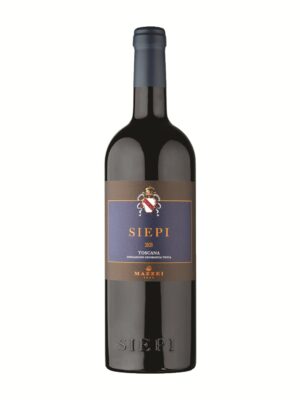
Siepi, owned by Mazzei family since 1435, has always been a model farm, still managed today with the same kind of respect. A unique location, a special microclimate, the foresight in the early 1980s to plant Merlot as the ideal grape to complement Sangiovese in a very particular “terroir” produce a wine which is perfectly balanced between elegance, power and complexity.
“One of the 50 wines that changed Italy wine style” – Gambero Rosso
The history of La Tour Carnet merges with the history of France. Bearing the name of the squire who infallibly helped his Lord to resist French royalty at the end of the Hundred Years War, Château La Tour Carnet played a major role in the revolution of the Médoc vineyards and the quality of its wine, rewarded by the entry in the classification of Grands Crus Classés of 1855. The diversity of its terroir and the constant search for perfection make this Haut-Médoc an exceptional wine.
the grapes of Médoc de La Tour Carnet comes from a vineyard crowning the Estuary, dominantly Merlot, on a soil of Garonne gravel, in a very privileged and protected environment.
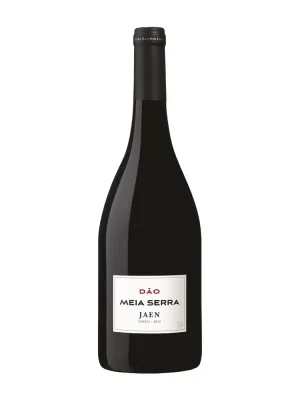
Casa Santos Lima was created to ensure the continuous development of Santos Lima’s wine producing activity created several generations ago. This activity was first started by Joaquim Santos Lima, who, by the turn of 19th century, was already a great producer and exporter of Portuguese wines. Still a family owned company, today is present in the regions of Lisboa, Algarve, Alentejo, Vinho Verde and Douro.
The altitude vineyards, planted in this region between mountains and deep valleys in granitic soils originate wines of great character and elegance. Gained through generations during centuries, the local know-how allows the production of this wine made exclusively with the indigenous Jaen grape, which is called Mencía in the nearby Bierzo region of Spain. Delicate aromas with notes of wild fruit and dark pepper, it reveals a silky and well-balanced aftertaste. This is a great example of the fine wines from this region.
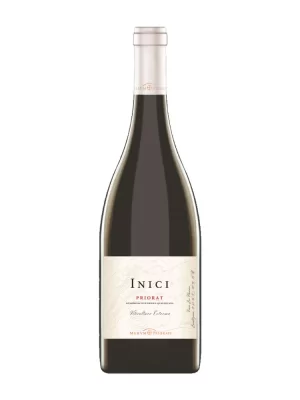
Merum Priorati, a notable Priorat estate was founded in 2004 and is located in the east of the appellation around the pretty village of Porrera in the hills northwest of Tarragona.
Inici is a 100% estate grown red wine from Merum Priorati winery in Porrera. The grapes are sourced exclusively from the three estates owned by the Bodega, making a total of 29 ha planted with vines. Their vineyards are planted on a slate terrain on the hillsides of Porrera village, a terrain that is locally known as “llicorella”. Inici is a blend with the Grenache as a greater protagonist, a wine that expresses the characteristics of this unique terroir where it comes from and enjoys the prestige of being classified as “Vi de Vila” and certified as “Viticultura Heróica” by the CERVIM, the Centre for Research, Environmental Sustainability and Advancement of Mountain Viticulture, the international organization in charge of promoting and protecting the mountain viticulture as Heroic Viticulture, and certified vegan.
Mes 5 Pépites by Bernard Magrez is a unique micro-blend of barrels selected by world-famous Michel Rolland from Bernard Magrez’s five top chateaux: Pape-Clement Grand Cru Classé (Pessac-Leognan), La Tour Carnet Grand Cru Classé (Haut-Médoc), Les Grands Chênes (Médoc), Fombrauge Grand Cru Classé and Magrez Fombrauge Grand Cru Classé (Saint-Émilion).
Imagine iconic Château Pape-Clement in an innovative super blend with Chateau Magrez Fombrauge from St-Émilion. And completed with barrels rolled in from three other top chateaux at Bernard Magrez!
“My ambition for the exceptional…crafted from the blend of five jewels of our wine heritage – Château Pape Clément, La Tour Carnet, Fombrauge, Les Grands Chênes, and Magrez Fombrauge – it reflects the perfect union of five unique terroirs, where each vineyard contributes its own singularity.” – Bernard Magrez
In the Egrots, a small hamlet in the commune of Sury-en-Vaux, 4 kilometers from Sancerre, Michel and Laurent Thomas operate a family estate comprising 17 hectares of vineyards, on 3 different types of terroirs: limestone and stony soil giving fine and fruity wines; clay and shellfish soils giving a wine with intense aromas of almonds and citrus; and sedimentary rock very hard siliceous, giving smoked aromas.
The production is harvested, vinified and bottled by them at the property.
The Miles from Nowhere name comes from the journey Franklin Tate’s ancestors made over 100 years ago from Eastern Europe to Australia: upon their arrival, they felt they had travelled “miles from nowhere”.
The philosophy of Miles from Nowhere is based on a passion for seeking out precious pockets of exceptional land and vineyards across the Margaret River region.
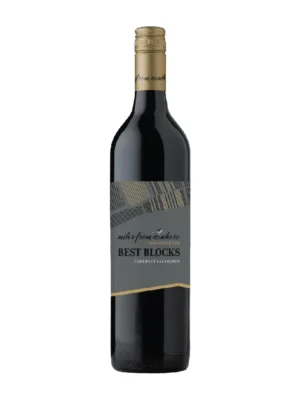
This blend of Cabernet Sauvignon is created by selecting only the best individual panels and rows (the so called “Best Blocks“) from across 3 different sub-regions of Margaret River.
The Miles From Nowhere Best Blocks Cabernet Sauvignon 2022 is a structured, medium-to-full-bodied red wine crafted from selected premium rows in the Wilyabrup sub-region of Margaret River. It is recognized for its balance of intense dark fruit and savory herbal notes.
Miles From Nowhere is all about a passion for winemaking.
This passion drove oenologist Rory Clifton-Parks and a well-known industry veteran Franklin Tate to gathered precious little pockets of exceptional land and vineyards, scattered across the Margaret River region of Western Australia.
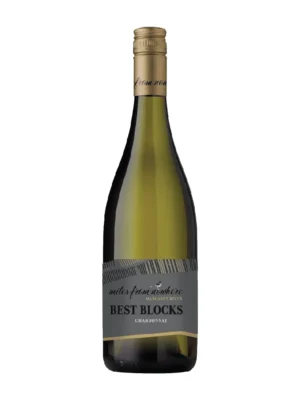
This is solid, well-made Chardonnay, something really special, unique and distinct, that from the ground up truly expresses what is unique about the terroir of Margaret River. The majority of this wine, came from vineyards in the Wilyabrup sub-region in Margaret River. The 2023 vintage in Margaret River is frequently described by winemakers and critics as a “Goldilocks Vintage”—a nearly perfect season that favored Chardonnay with exceptional balance, elegance, and natural acidity.
The Miles from Nowhere name comes from the journey Franklin Tate’s ancestors made over 100 years ago from Eastern Europe to Australia: upon their arrival, they felt they had travelled “miles from nowhere”.
The philosophy of Miles from Nowhere is based on a passion for seeking out precious pockets of exceptional land and vineyards across the Margaret River region.
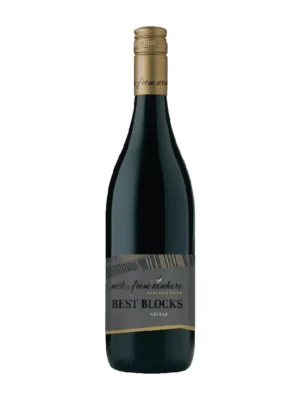
The Miles From Nowhere Best Blocks Shiraz 2022 is a bold and structured red wine from the Margaret River region, recognized for its concentration and integration of dark fruit and oak. This vintage is frequently praised for its “creamy” mouthfeel and approachable tannins.
The Miles from Nowhere name comes from the journey Franklin Tate’s ancestors made over 100 years ago from Eastern Europe to Australia: upon their arrival, they felt they had travelled “miles from nowhere”.
The philosophy of Miles from Nowhere is based on a passion for seeking out precious pockets of exceptional land and vineyards across the Margaret River region.
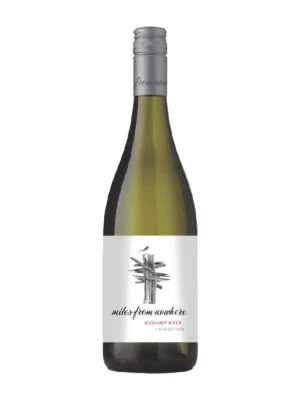
The 2024 vintage in Margaret River is marked by being the earliest and fastest-paced harvest on record, driven by an exceptionally warm and dry growing season. Despite the heat, the region’s white varieties, particularly Chardonnay, are being hailed for their unexpected freshness and concentrated flavors.
Some drinkers may expect to find a full bodied, heavily oaked chardonnay, this Chardonnay takes a slightly different approach in showing a more delicate and youthful side, of the beloved variety.
The Miles from Nowhere name comes from the journey Franklin Tate’s ancestors made over 100 years ago from Eastern Europe to Australia: upon their arrival, they felt they had travelled “miles from nowhere”.
The philosophy of Miles from Nowhere is based on a passion for seeking out precious pockets of exceptional land and vineyards across the Margaret River region.
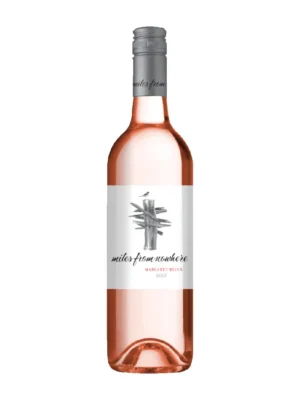
The 2024 vintage in Margaret River is being hailed by winemakers as “epic” and potentially one of the best on record, characterized by an exceptionally early and fast-paced harvest. For their rosé, Miles From Nowhere focus their sourcing from the southern, cooler parts of Margaret River that produce delicate, ethereal Shiraz.
The Miles from Nowhere name comes from the journey Franklin Tate’s ancestors made over 100 years ago from Eastern Europe to Australia: upon their arrival, they felt they had travelled “miles from nowhere”.
The philosophy of Miles from Nowhere is based on a passion for seeking out precious pockets of exceptional land and vineyards across the Margaret River region.
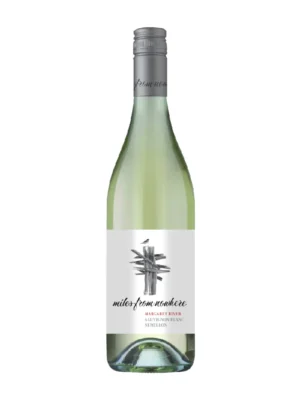
The 2024 vintage in Margaret River was the driest and warmest growing season on record, leading to the earliest harvest the region has ever seen. Despite the heat, the white wines are noted for their exceptional clarity, freshness, and surprisingly high natural acidity. A wine Margaret River produces better than most: the classical styled Sauvignon Blanc Semillon.
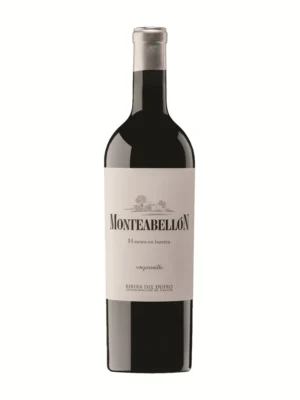
For several generations, the García family has been fully dedicated to viticulture. In 2000, leveraging decades of experience and winemaking know-how, they founded Bodegas Monteabellón, a family winery located in the small town of Nava de Roa. Nava de Roa still preserves a multitude of wine presses and wineries where its people once produced and stored wine. As in the rest of the Ribera del Duero region, its history and traditions are closely linked to wine.
A dry, cold winter and a dry, dry spring with a water deficit were followed by a very dry, hot summer with temperatures exceeding 42°C for more than 10 consecutive days. All of this has resulted in a high alcohol content and high tannin concentration for the vintage 2022. The result is a characteristically rich layer of color in the wines, with fewer fresh fruit notes than in previous vintages, but more ripe fruit notes this time. These characteristics are appreciated both on the palate and nose. A very good harvest is expected given the high concentration of the wines. This also includes an excellent skin-to-pulp ratio that is more balanced than in previous years.



 Download Tasting Note