Château d’Armailhac is not only a beautiful setting but also a vibrant working and meeting place for the three Pauillac estates and their beating heart.
A place that reflects the identity of Château d’Armailhac, a combination of timelessness, local roots and elegant sobriety. The owners wanted to create buildings that would look as though they had always been there. As a result, Château d’Armailhac blends seamlessly into the Pauillac winegrowing landscape.
Typically for a Pauillac wine, Cabernets predominate in the blend. However, the relatively high proportion of Cabernet Franc is a hallmark of Château d’Armailhac. The wine is defined by a kind of elegant classicism, discernible whatever the vintage.
The vineyards around Chateau de Clotte may date back to the 13th century, while the chateau was built in 1782 by Mr. Roy de Clotte, after whom the estate is named. The current owner is Bruno Laporte, who purchased the chateau in 2002 and also owns a number of other properties in the area.
The blend of 4 varieties in the 2016 vintage gives the wine complexity. Merlot brings aromas of red fruit and silky tannins. Cabernet Franc gives the wine a distinctive color and aroma of black fruit, while Cabernet Sauvignon balances with character and structure. Finally Malbec adds a hint of spice, which is enhanced by aging in oak barrels.
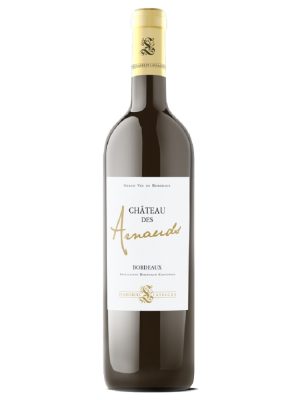
Vignobles Lassagne gather several family properties that were bought since three generations and are grown according to tradition and innovation on unique terroir located in the Libourne area.
Vignobles Lassagne encompasses these three properties: Château des Arnauds (the original estate), Château des Landes and Château Maltus, the latest addition to the Vignobles Lassagne.
The soils and basements of the Château des Arnauds located in Abzac, are composed of gravel that can be red with a caliber between fine pebble and coarse sand. Sometimes the gravel is mixed with the clay, sometimes they follow one another in layers. The pebbles flush with the surface allow the sun to reflect on the grapes, thus allowing excellent ripeness. This vineyard developed by father Daniel Lassagne, is located on a beautiful, south-facing plateau of red gravel around the town of Abzac, and being a 100% Merlot varietal, it prodeuces a wine of beautiful balance of roundness and structure.
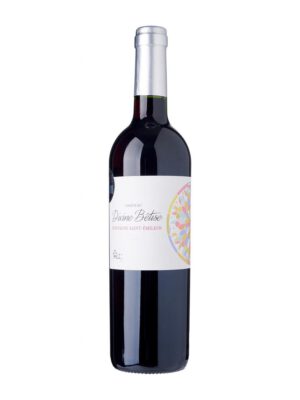
Between Pomerol to the West and Saint-Emilion to the South, the Montagne Saint-Emilion vineyard nestles in the middle of the most prestigious terroirs of Libourne. Among the small character properties found in Montagne, the Château Divine Bêtise invites you to indulge and enjoy the table. To discover now!
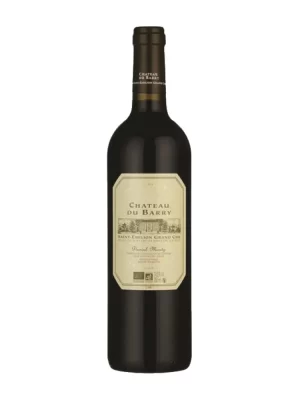
It was in 1923, at the Château du Barry , that the history of the Mouty vineyards began.
Donat Mouty , enamored of the culture of Saint-Émilion wines, then set his sights on the vines of Château du Barry.
Here, on this great terroir of character, the vines produce a unique fruit with delicacy.
From this fruit are born silky, fleshy, complex and elegant wines.
Acquired in 1905 by the Gauvin family, this estate is now run by the 4th generation.
This cuvée Laroque offers a good balance with notes of red fruit and tannins already supple on the palate.
VARIETALS
65% Merlot, 25% Cabernet Sauvignon, 10% Cabernet Franc
Château du Tertre takes its name from the superb group of graves, culminating point of the Margaux appellation, on which is erected the castle. This millennial property of 52 hectares (of which 18 are grown biodynamic) enjoys worldwide renown thanks to the prestigiousGrand Cru Classé de Margaux title it has had since 1855.
The arrival of Eric Albada-Jelgersma, the current owner, in 1997 will profoundly mark the field. A restructuring program and heavy investments have restored its reputation to Château du Tertre. This program has resulted in upgrading technical equipment, reducing yields and setting up a new team. Under the direction of Alexander Van Beek ,Eric Boissenot for winemaking, the vineyard has significantly increased the quality of these wines, giving Château du Tertre its character and nobility, where silky and freshness are combined to bring you the elegance expected of a great Margaux wine.
Château du Tertre takes its name from the superb group of graves, culminating point of the Margaux appellation, on which is erected the castle. This millennial property of 52 hectares (of which 18 are grown biodynamic) enjoys worldwide renown thanks to the prestigiousGrand Cru Classé de Margaux title it has had since 1855.
The arrival of Eric Albada-Jelgersma, the current owner, in 1997 will profoundly mark the field. A restructuring program and heavy investments have restored its reputation to Château du Tertre. This program has resulted in upgrading technical equipment, reducing yields and setting up a new team. Under the direction of Alexander Van Beek ,Eric Boissenot for winemaking, the vineyard has significantly increased the quality of these wines, giving Château du Tertre its character and nobility, where silky and freshness are combined to bring you the elegance expected of a great Margaux wine.
Château du Tertre takes its name from the superb group of graves, culminating point of the Margaux appellation, on which is erected the castle. This millennial property of 52 hectares (of which 18 are grown biodynamic) enjoys worldwide renown thanks to the prestigiousGrand Cru Classé de Margaux title it has had since 1855.
The arrival of Eric Albada-Jelgersma, the current owner, in 1997 will profoundly mark the field. A restructuring program and heavy investments have restored its reputation to Château du Tertre. This program has resulted in upgrading technical equipment, reducing yields and setting up a new team. Under the direction of Alexander Van Beek ,Eric Boissenot for winemaking, the vineyard has significantly increased the quality of these wines, giving Château du Tertre its character and nobility, where silky and freshness are combined to bring you the elegance expected of a great Margaux wine.
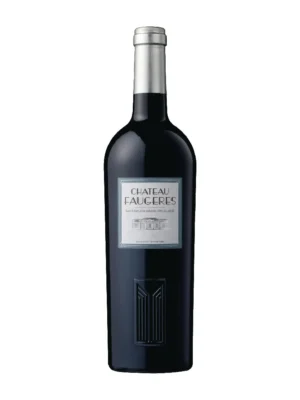
Château Faugèresis known for wines that demonstrate a stylistic evolution focused on finesse. This trend was put in place at the property by Silvio Denz, a Swiss-German businessman passionate about wine and owner of several vineyards in the Bordeaux region.
A Grand Cru Classé Saint-Émilion, Château Faugères extends over a vineyard of 37 ha located on one of the most beautiful terroirs of the Right Bank, the famous limestone plateau of Saint-Emilion. In order to better respect the environment and to enhance the richness of the soil, the vineyard is cultivated according to a sustainable natural viticulture.
2017 was a vintage of many challenges and an early harvest. Fortunately, Château Faugères was one of the properties spared by frost. The quality of the fruit was preserved throughout the vegetative cycle. An exceptional wine, the Château Faugères 2017 is the second vintage of the estate’s Grand Vin adorned with a Lalique “Calice” engraving.
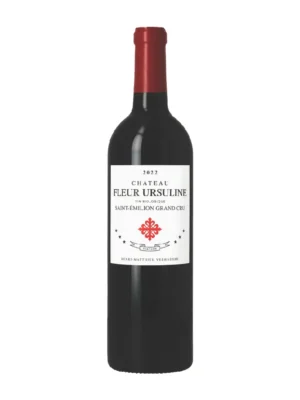
The wines of the Château Fleur Ursuline have their roots in the terroir of Saint-Émilion. This internationally renowned bastion of taste is a village with rich historical heritage, surrounded by a hillside and natural ecosystem which Matthieu and Karine Verhaeghe fervently protect. By choosing to cultivate naturally since 2001, they are looking to the future, with respect for the land and the plains surrounding them at heart. They are pioneers of biological fermentation, working in harmony with lunar cycles to create their wines for a unique and natural tasting experience.
The old vines of this former convent, planted with high density, make you discover the finesse and charm of this Saint-Émilion Grand Cru Organic.
For more info, visit Château Fleur Ursuline website.
Organic wine certified AB (Agriculture Biologique).
“Fons Brogiera: a spring surrounded by heather”. This was the first mention of the name Fombrauge which, for 6 centuries now, has epitomised the elegance of the Grand Cru Classé wines of Saint Emilion. From the Canolle family in the 15th century to Bernard Magrez today, six families have succeeded each other in owning and running Château Fombrauge, providing the estate, which harvested its first grapes in 1599, with a rare stability and a pioneering spirit beyond compare.
To ensure the full expression of the estate’s rich terroir, Bernard Magrez, the owner since 1999, today combines ancestral savoir-faire with precision viticulture. The result is a sublime wine, the epitome of a Saint-Emilion Grand Cru Classé.
The flagship of the estate, this wine is simply the expression of the best terroir that Fontesteau can offer.
No vintage is ever the same as another. The magic of blending confers a unique style to each: the Cabernet Sauvignon is always the dominant variety in the Château Fontesteau blend, a deep and elegant wine. Château Fontesteau wines are at their best after 5 to 10 years in the cellar yet never disappoint those patient enough to wait 20 years or even more.
“This 2016 is a vintage characterised by its richness and harmony.” – Dominique Fouin
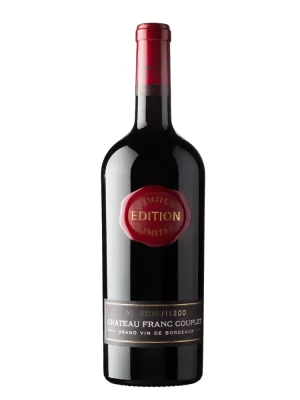
The Meynaud family owns both Château Franc Couplet and Château Laussac on the right bank of the Gironde. The young and talented Eric Meynaud took over the vineyard from his father in 1995 right after he finished his studies. Since then, the winery has grown from 10 to more than 100 hectares. Eric has always tried to get the best out of his vineyards and regularly sends his wines to competitions where they have won numerous awards, not only in France but all over the world.
Château Franc Couplet is spread over limestone and clay land in the Entre-Deux-Mers region, on the east side of Bordeaux. The natural quality of the wines comes from the excellent quality of the soil. This “Limited Edition” is a unique selection of the best plots in the vineyard, corresponding to a limited quantity of bottles of Château Franc Couplet. It is matured in French oak barrels for 12 months, softening the palate and making outstanding wine.
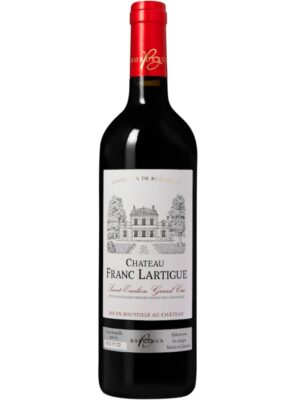
The SCEA des Vignobles Marcel Petit was created in 1986 by Mr. Marcel Petit with the acquisition of Château Pillebois from the Castillon Côtes-de-Bordeaux appellation.
In 1988, the vineyard grew with Châteaux Franc Lartigue and Grande Rouchonne, located in the Saint-Emilion appellation. It was that same year that the Vignobles Marcel Petit joined the Vignerons Indépendants de France.
In 1997, Mr. Marcel Petit retired, thus entrusting the vineyards to his daughter Elisabeth and his son-in-law Jean-Pierre Toxé.
The vineyard then reached 22 hectares of vines, divided between Saint-Emilion and Castillon.