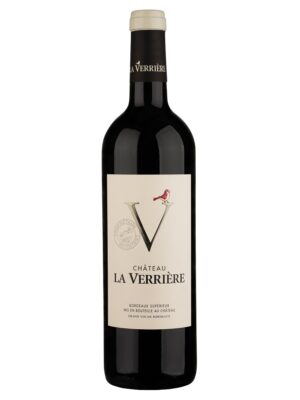
Demanding and passionate, Alain Bessette gave his father’s property the means to produce quality wines. Accessible and worn on the fruit, they tell the revolution undertaken in the vineyard and the cellar.
A good control of the vegetation and a rigorous follow-up of the maturity allows to obtain healthy and ripe grapes, of a great richness, while a careful aging for 18 months in barrels and vats allows this wine to express power and elegance.
Since 2012, Château La Verriere has embarked on an environmental approach by integrating the certification scope of the SME (Environmental Management System) and HVE (Exploitation of High Environmental Value).
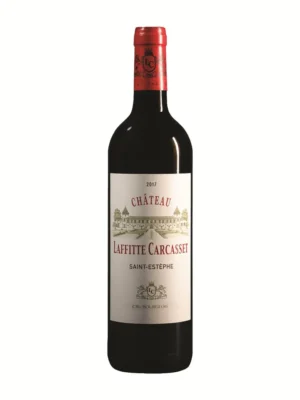
Château Laffitte Carcasset was founded in 1759 at «Le Carcasset», an area located at the heart of Saint-Estèphe appellation. In 1781
his owner, Jean Laffitte, lawyer and prosecutor of the King Louis XVI in Bordeaux, gave his name to the estate.
This beautiful chartreuse typical of the 18th century, is surrounded by the Classified Growths of Saint-Estèphe. The vineyard is on the gravellous plateau, near the Gironde estuary where the Cabernet and the Merlot best express their potential.
Château Laffitte Carcasset is a classic Saint-Estèphe red wine. A powerful, deep and well-structured wine, round and elegant, with excellent ageing potential.
For more info, visit Château Laffitte Carcassetwebsite.
VARIETALS
59% Cabernet Sauvignon, 40% Merlot, 1% Cabernet Franc
Château Lalande-Borie was created almost entirely in 1970, through the purchase of a 30 hectare third growth plot in the Saint Julien appellation. The name Lalande-Borie combines the names of the plot on the land register and a great winegrowing family who have been established in the Médoc for more than a century and own several prestigious grands crus: Ducru-Beaucaillou, Grand-Puy-Lacoste and Haut-Batailley.
Lalande-Borie’s wines are vinified and matured with the same techniques, the same care and same spirit as those produced by the Borie family’s other properties. The winery buildings were fully renovated in 1982. The modern vat room and cellar facilities are designed for optimal vinification.
Château Lalande-Borie has acquired a very good reputation in a relatively short space of time and produces fleshy and sappy wines, not overly tannic, where we find the balance and elegance of Saint-Julien wines.
VARIETALS
50% Cabernet Sauvignon, 45% Merlot, 5% Cabernet Franc
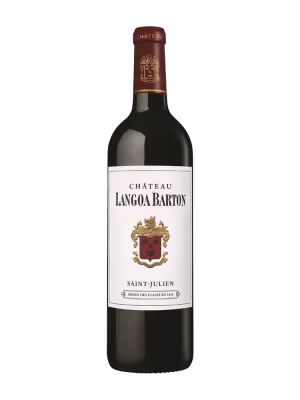
Château Langoa Barton, 3rd Classified Growth, was the first of the two Bordeaux wine estates bought by Hugh Barton in the 1820s, the other being Léoville-Barton, 2nd Classified Growth.
Both Langoa and Léoville wines are models of typical St Julien restraint and elegance, and for years, Langoa Barton was considered slightly lighter and more forward than Léoville. However, in the last decade it has become noticeably deeper in colour and richer and more concentrated on the palate. Langoa Barton is now often the equal of Léoville.
The plots that compose the Château Langoa Barton terroir overlook the river. The splendid slopes of quaternary gravel bring the grapes to full maturity and then they undergo a rigorous selection process before being chosen for the Langoa Barton. The plowing is traditional, without weeding or herbicide.
For more info, visit Château Langoa Bartonwebsite.
VARIETALS
67% Cabernet Sauvignon, 26% Merlot, 7% Cabernet Franc
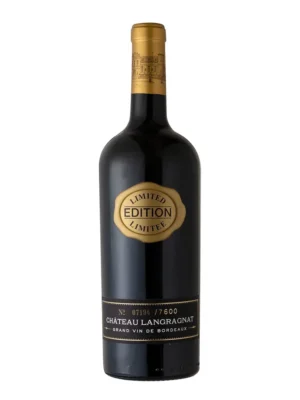
This “limited edition” is a unique selection of the 20 best oak casks, corresponding to 6000 bottles of Château Langragnat, corresponding to a limited quantity of bottles of Chteau Franc Couplet.
It is aged in french oak barrels for 12 months, softening the palate and adding delicate spices and coffee notes to the wine.
VARIETALS
70% Merlot, 20% Cabernet Sauvignon, 10% Cabernet Franc
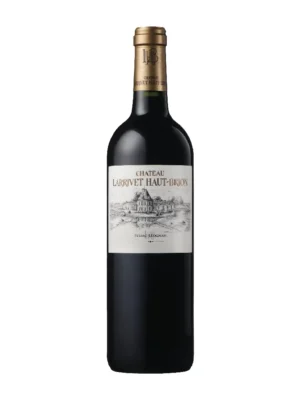
Called at various times Château de Canolle, La Rivette, and Château Brion-Larrivet, the estate was given its current name, château Larrivet Haut-Brion, in 1949 by Jacques Guillemaud (owner since 1941). Devoted and hard-working, he conscientiously managed the estate until 1982. Château Larrivet Haut-Brion was acquired by the Gervoson family in 1987. They restored the estate’s unity, once again combining the château, outbuildings, 13 hectares of grounds, and 42 hectares of vines under one owner, as well as replanting 18 hectares of land that had laid fallow.
Today a team of enthusiastic professionals has done a wonderful job of giving Château Larrivet Haut-Brion back its superb reputation, and the estate is once again universally recognized as one of the finest wines in the Pessac-Léognan appellation.
Great classic 2019 vintage, representative of the new style leaving a large part to the expression of the Cabernet Sauvignon.
For more info, visit Château Larrivet Haut-Brionwebsite.
VARIETALS
65% Cabernet Sauvignon, 20% Merlot, 15% Cabernet Franc
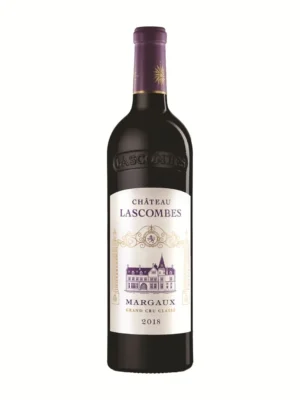
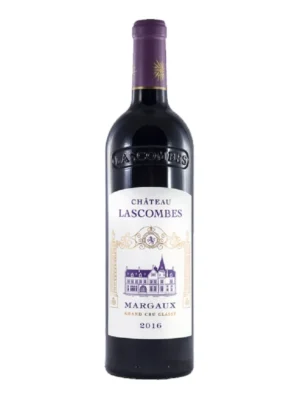
From the 17th century to the present day, ten generations of owners have followed one another and have left their mark on the history of Château Lascombes. A destiny marked by colorful characters who all worked for the excellence of Château Lascombes wines.
An alliance of power and elegance, smoothness and tannic richness, Château Lascombes is a complex wine. Young, its deep robe is still impressive. The palate combines finesse and softness with a grain of very noble tannins. Over the years, you have to rediscover Château Lascombes to fully appreciate its aromatic complexity and see its structure evolve, becoming more and more suave.
Depth, complexity and graceful power characterise this vintage, which reveals all its qualities after long ageing in the bottle. Predominantly Cabernet Sauvignon, it represents the Médoc’s winemaking tradition and embodies the great classicism of Margaux.
From the 17th century to the present day, ten generations of owners have followed one another and have left their mark on the history of Château Lascombes. A destiny marked by colorful characters who all worked for the excellence of Château Lascombes wines.
An alliance of power and elegance, smoothness and tannic richness, Château Lascombes is a complex wine. Young, its deep robe is still impressive. The palate combines finesse and softness with a grain of very noble tannins. Over the years, you have to rediscover Château Lascombes to fully appreciate its aromatic complexity and see its structure evolve, becoming more and more suave.
Depth, complexity and graceful power characterise this vintage, which reveals all its qualities after long ageing in the bottle. Predominantly Cabernet Sauvignon, it represents the Médoc’s winemaking tradition and embodies the great classicism of Margaux.
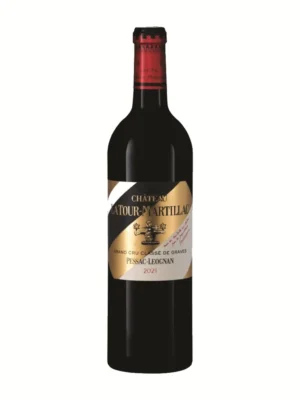
Thanks to the long involvement of generations of the Kressmann family, and the recognition shown in 1953 by the classification of Graves, the wines of Château LaTour-Martillac feature among the best of Pessac-Léognan. The expansion of the range was drawn up by Tristan and Loïc Kressmann. The second wines appeared at the end of the 1980’s under the label Lagrave-Martillac, followed by the Château Langlet, a magnificent property in the Graves appellation, acquired in 1999.
A particularly wet winter preceded a spring punctuated by episodes of frost and then strong mildew pressure that impacted the vineyard. This 2021 Château Latour-Martillac is the second vintage vinified in the property’s new winery and the first vintage drived by Edouard Kressmann.
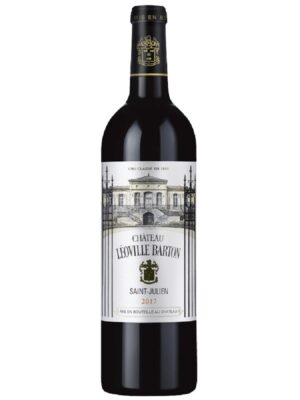
The Barton family’s passion for wine is reflected in the elegance and consistency of Château Léoville Barton. This estate was classified as a 2nd Grand Cru Classé in 1855 and lies within the iconic terroir of Saint Julien in the Médoc.
The Château was built in 1758 by Monsieur de Pontet. Beneath the private apartments lie the crypted vaulted cellars in which silence reigns eternal.The most renowned vintages of Léoville Barton are left to age in the peace and quiet of these cellars to reach their ultimate potential.
For more info, visit Château Leoville Barton website.
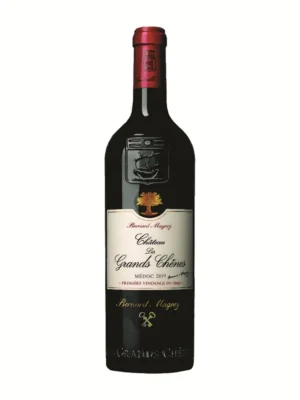
The first plantation in the history of the Château Les Grands Chênes, named Cru Bourgeois Supérieur, took place in 1880. This property was one of the first acquired by Bernard Magrez in the Médoc vineyards. This castle is often considered as “The Pearl of the Medoc”. It is located on the famous gravelly ridge of Saint Christoly du Médoc and is built around an old fortress dating from the sixteenth century.
At the tasting, Château Les Grands Chênes offers a full and fleshy wine with beautiful aromas of fruit and surprising volume.
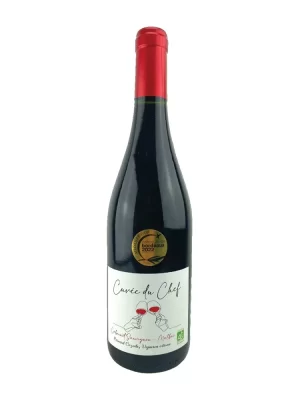
Bernard Cazade composed this harmonious, modern Bordeaux variant from Malbec and Cabernet.
Soft and approachable, like all Cazade organic wines, the grape varieties are easily recognizable and very finely rounded off with a little wood.
Bernard Magrez’s journey is that of passion, a constant desire for improvement, know-how and exceptional success which has its roots first in Bordeaux, in the Grands Crus Classés, then in other prestigious terroirs in France and around the world. Bernard Magrez’s journey is that of passion, a constant desire for improvement, know-how and exceptional success which has its roots first in Bordeaux, in the Grands Crus Classés, then in other prestigious terroirs in France and around the world.
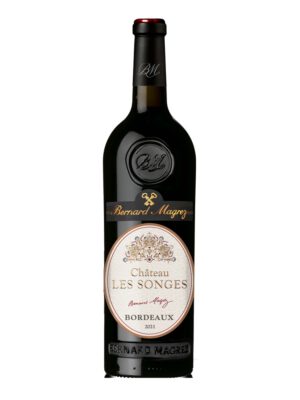
Located in the town of Pompignac, “Château Les Songes boasts a beautiful clay and limestone terroir where Merlot, the ‘king’ of grape varieties on
the Right Bank flourishes. This supple, fruity and full-bodied wine reflects the style of the area, lively and energetic.
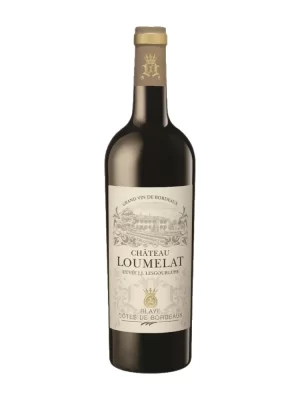
Château Loumelat was established in 1778. The Cuvée J.J. Lesgourgues is a limited production made from low yields with nice concentration and high complexity between red, black fruits, vanilla and spicy notes.
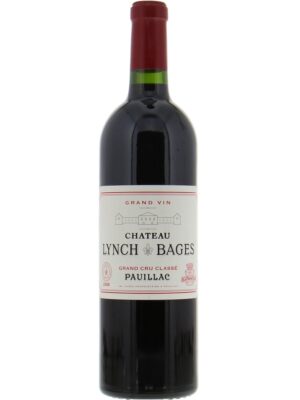
At the gates of Pauillac, Château Lynch-Bages now represents a symbolic history of the Medoc. Born in 1691 by the hand of John Lynch, an Irish nobleman in exile, the winery was implemented by John’s son, Thomas Lynch, who managed the company with wisdom and foresight from 1749 to 1824, producing excellent wines initially known as ” Cru de Lynch ”, later classified as Grand Cru at the Paris Exposition of 1855.
Having become the property of the Cazes family in 1939 and led by the outstanding Jean-Michel Cazes since 2007, Château Lynch-Bages’ style has established itself, and this reflects Pauillac’s identity with an extraordinary depth and richness, thanks above all to Jean-Michel Cazes.



 Download Tasting Note