
Tohu Wines is the world’s first Māori-owned wine company, which created ranges of award-winning, premium quality New Zealand wines that encapsulate their terroir and tūrangawaewae, their sense of place. Each range has been crafted with aroha (love) and is a gift from their land.
“We are Tangata Whenua – People of the land, intrinsically connected to our whenua that we protect, nurture and love.”
Whenua Awa, the Upper Awatere Valley vineyard, is one of these special sites and rich in history.
This single vineyard best expresses the uniqueness of this place and the relationship within it.
Intense ripe dark fruit aromas and soft silky tannins result from this unfined and unfiltered, complex and elegantly structured Pinot Noir.
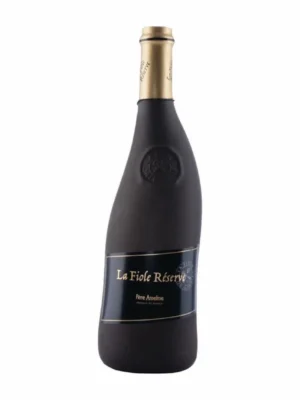
Casa Santos Lima was created to ensure the continuous development of Santos Lima’s wine producing activity created several generations ago. This activity was first started by Joaquim Santos Lima, who, by the turn of 19th century, was already a great producer and exporter of Portuguese wines. Still a family owned company, today is present in the regions of Lisboa, Algarve, Alentejo, Vinho Verde and Douro.
Lisboa hills have splendorous sightseeingat their top. An inspiration itself for a top wine mainly produced with this region’s traditional grape varieties. Aromatic, well balanced with oak notes, it offers a smooth finish.
Ancient legends recount tales of nymphs, giants and winged serpents in the encompassing Apennine mountains. During the 5th century BC, the most feared mythical dragon devastated Ate and Tixa, in the southern part of Abruzzo. St. Leucio, famed slayer was summoned to kill the dragon. Today St. Leucio Cathedral stands on the monster’s den and contains the dragon’s 2 meter rib as proof of the diocesan’s bravery.
Hand-harvested grapes from the Abruzzo region make up this fruit-forward red wine. Classic Italian varietal Sangiovese is combined with French Merlot and aged for three months in large vessels made from oak, to soften and round out the tannins. Sangiovese gives crunchy red fruits, brisk acidity and fine tannins for structure, while Merlot adds soft, fleshy red stone fruits, producing a plush, satisfying red.
Torre Mora is a small estate dedicated to organic and sustainable viticulture, the use of traditional methods, the authenticity of native grape varieties, and the culture of the territory. The estate’s two vineyards are located in Contrada Dafara Galluzzo in Rovittello and Contrada Alboretto Chiuse del Signore, within the Municipality of Linguaglossa.
Torre Mora’s philosophy embraces the principle of “one grape variety – one territory”: a perfect combination that serves as a source of inspiration for crafting wines that, with every sip, tell the story of grapes grown on the slopes of an active volcano.
The main grape variety is Nerello Mascalese, followed by Nerello Cappuccio.
Torre Mora is a small estate dedicated to organic and sustainable viticulture, the use of traditional methods, the authenticity of native grape varieties, and the culture of the territory. The estate’s two vineyards are located in Contrada Dafara Galluzzo in Rovittello and Contrada Alboretto Chiuse del Signore, within the Municipality of Linguaglossa.
Torre Mora’s philosophy embraces the principle of “one grape variety – one territory”: a perfect combination that serves as a source of inspiration for crafting wines that, with every sip, tell the story of grapes grown on the slopes of an active volcano.
The main grape variety is Nerello Mascalese, followed by Nerello Cappuccio.
With his pioneering spirit, Michel Chapoutier set off to discover the terroirs of the oldest continent, with an idea: growing Rhone grapes in Australia. This was the beginnings of a tremendous voyage of discovery, observation and eventually, affection for that land. On what he found to be very special terroir, he planted non-grafted vines from 19th century clonal selections, imported from Europe before phylloxera took its toll. The non-negligible advantage was that in Australia, the harvest coincides with the French spring: ideal timing.
For more info, visit Tournon by M. Chapoutierwebsite.
Maison Trenel has always sought authenticity for both its fruit liqueurs and its wines. Authenticity of the fruit, authenticity of the terroir. The purest expression of their origins. Born from a love of its land with its Burgundy traditions, there are numerous similarities between Maison Trenel and M. Chapoutier, their shared love of excellence being the first.
The Coteaux Bourguignons AOP, created in 2011, covers the whole of the Burgundy wine region, extending down as far as the outskirts of Lyon. Trenel’s Coteaux Bourguignons comes from vineyard plots in the Villefranche and Bois d’Oingt areas, limestone terroirs in southern Beaujolais. It is produced entirely from Gamay grapes grown on old, Gobelet-trained vines.
Trenel Coteaux Bourguignons 2024, made with carbonic maceration, is a burst of freshness and vitality with every sip.
Maison Trenel has always sought authenticity for both its fruit liqueurs and its wines. Authenticity of the fruit, authenticity of the terroir. The purest expression of their origins. Born from a love of its land with its Burgundy traditions, there are numerous similarities between Maison Trenel and M. Chapoutier, their shared love of excellence being the first.
The regional appellation “Beaujolais” was recognized in 1937 and is the most extensive of the region.
It produces fresh and fruity wines, perfect for the first days of summer.
Trenel’s Beaujolais Cuvée Rochebonneis produced on the east of the “Pierres Dorées” area, on three parcels east orientedand facing the Mont Blanc. They’re located in the village of Lucenay and are particularly ancient: the older one has been planted in 1922.
The soil is very clayey and gives roundness and structure to the wine.
Maison Trenel has always sought authenticity for both its fruit liqueurs and its wines. Authenticity of the fruit, authenticity of the terroir. The purest expression of their origins. Born from a love of its land with its Burgundy traditions, there are numerous similarities between Maison Trenel and M. Chapoutier, their shared love of excellence being the first.
The Fleurie appellation, located in the heart of the Beaujolais crus, is not a reference to the region’s lush vegetation but to the name of the Roman legionary Fleurus. Yet, its wines are often described as the finest in Beaujolais. They do indeed possess a fleshy, silky texture and aromas of violet, rose, or iris, imparted by the sandy soils derived from pink granite in which the vines are planted.
Maison Trenel has always sought authenticity for both its fruit liqueurs and its wines. Authenticity of the fruit, authenticity of the terroir. The purest expression of their origins. Born from a love of its land with its Burgundy traditions, there are numerous similarities between Maison Trenel and M. Chapoutier, their shared love of excellence being the first.
Located in the far northwest of Beaujolais, the Juliénas AOP lies at the crossroads of Beaujolais and Mâconnais. Vines are cultivated on a patchwork of terroirs, between 230 and 420 meters in altitude. Juliénas Trenel is a tribute to Marius Sangouard, a winemaker in the appellation and a steadfast partner of Maison Trenel, whose vineyards are now cultivated according to the same traditions and methods by his nephew. It comes from old vines located in the climats of “Les Capitans,” “La Croix Rouge,” and “Bois de la Salle.”
In the late 1990s, the Bolfo family decided to breathe new life into the ruins of an old convent located in the charming countryside of Pievasciata, a picturesque village in the municipality of Castelnuovo Berardenga (Siena). And it was from the vineyards of this monastery, lovingly and carefully transformed into the prestigious 5-star Hotel Le Fontanelle, that the story of Vallepicciola began.
Made from the purest grapes of the variety that represents Chianti Classico worldwide. A wonderful expression of Sangiovese with great acidity and aromas. The 2021 Chianti Classico was included by Wine Spectator in the prestigious Top 100 of the best wines in the world, ranking 37th .
In the late 1990s, the Bolfo family decided to breathe new life into the ruins of an old convent located in the charming countryside of Pievasciata, a picturesque village in the municipality of Castelnuovo Berardenga (Siena). And it was from the vineyards of this monastery, lovingly and carefully transformed into the prestigious 5-star Hotel Le Fontanelle, that the story of Vallepicciola began.
An elegant bottle, with a fresh and refined sip, which outlines the unmistakable character of the Chianti Classico area.
In the late 1990s, the Bolfo family decided to breathe new life into the ruins of an old convent located in the charming countryside of Pievasciata, a picturesque village in the municipality of Castelnuovo Berardenga (Siena). And it was from the vineyards of this monastery, lovingly and carefully transformed into the prestigious 5-star Hotel Le Fontanelle, that the story of Vallepicciola began.
A harmonious blend of three varietals: Sangiovese, Cabernet Sauvignon, and Cabernet Franc, Pievasciata is a full-bodied and intense, yet simple to drink.
The story of the Viberti winery begins when Cavalier Antonio Viberti buys the Locanda del Buon Padre. It was the year 1923 when Antonio began to produce wine for the guests of his Locanda in the basement of the Buon Padre.
This wine is only made with Nebbiolo grapes from the single vineyard Bricco delle Viole, planted in 1964. Produced exclusively in particular years, only if considered suitable for the long again of the Riserva version, this wine has characteristics of marked minerality, freshness and evident balsamic notes.
Historical label of the Viberti family, it represents the essence of Barolo in its most classical and traditional expression. Born in 1923 by Cavalier Antonio Viberti, the wine was marketed under the name of the family restaurant: Il Buon Padre. Served exclusively on the tables of the inn, shortly after the end of the Second World War, Antonio began selling to the patrons and customers of the inn itself. Born from the union of Nebbiolo grapes from the vineyards of La Volta and Bricco delle Viole, today this label at a distance of almost a century, is the result of the skillful assemblage of 8 different crus, included between the municipalities of Barolo, Monforte d’Alba and Verduno. The grapes of different origins are harvested and vinified separately. The wines produced are aged in vats and barrels of French and Slavonian oak, which are not roasted exclusively; then the various wines are assembled and a few weeks after bottling. The style is characterized by a fresh acidity that comes from the highest vineyards, extremely traditional aromas and an impressive structure, but with soft and elegant tannins.