
Château Brane-Cantenac stands proudly in the heart of the prestigious Margaux appellation. Renowned for its wines of remarkable elegance and finesse, this 75-hectare property is an emblem of quality and excellence in the world of fine wines.
Since Henri Lurton took over in 1992, he has made it his mission to produce the best possible wine, reinforcing Brane’s position as a second classified growth in 1855. The Château de Brane-Cantenac vineyard is unique in that the terroir of the Brane plateau contributes to the elegant and aromatic signature of the estate’s wines.
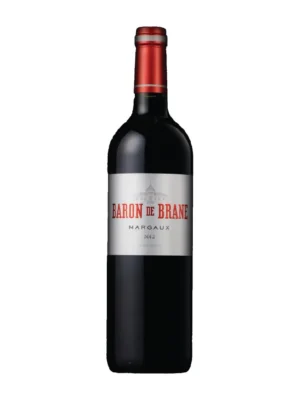
Baron de Brane is the second wine from Château Brane-Cantenac. This wine is a tribute to Baron Jacques-Maxime de Brane, who owned the vineyard in the 19th century. This second wine is made from deep gravel plots of clay gravel.
For more info, visit Château Brane-Cantenacwebsite.
VARIETALS
60% Cabernet Sauvignon, 33% Merlot, 7% Cabernet Franc
Tied to the Seigneuries of Lafite and Mouton (future First Classified Growths belonging to two different branches of the Rothschild family), Château Clerc Milon derives its name from its historic owners, the Clerc family, who acquired it when it was sold as a national asset after the French Revolution.
Today, the third generation, represented by Camille and Philippe Sereys de Rothschild and Julien de Beaumarchais de Rothschild, perpetuates Baron Philippe de Rothschild’s values and expertise and continues to develop Château Clerc Milon with the same dynamism and desire for modernity. Thanks to over 50 years of continuous work and a dedicated team with cutting-edge technical facilities, Château Clerc Milon is more than ever a benchmark of Médoc excellence.
2015 vintage in Pauillac is very similar in its heft and opulence to the 2005 vintage. The wines immediately showed plenty of colour and a complete array of very intense aromas ranging from red and black fruit to spice and incense.
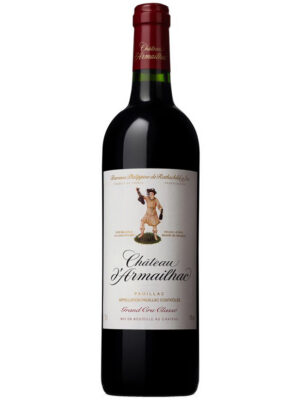
Château d’Armailhac is not only a beautiful setting but also a vibrant working and meeting place for the three Pauillac estates and their beating heart.
A place that reflects the identity of Château d’Armailhac, a combination of timelessness, local roots and elegant sobriety. The owners wanted to create buildings that would look as though they had always been there. As a result, Château d’Armailhac blends seamlessly into the Pauillac winegrowing landscape.
Typically for a Pauillac wine, Cabernets predominate in the blend. However, the relatively high proportion of Cabernet Franc is a hallmark of Château d’Armailhac. The wine is defined by a kind of elegant classicism, discernible whatever the vintage.
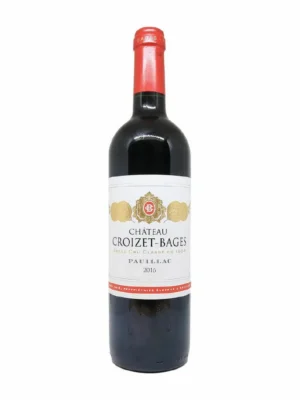
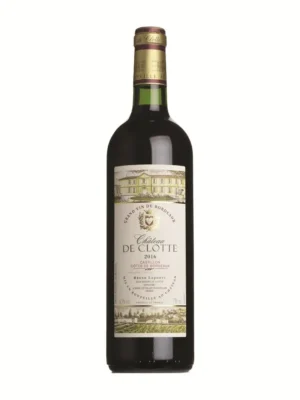
The vineyards around Chateau de Clotte may date back to the 13th century, while the chateau was built in 1782 by Mr. Roy de Clotte, after whom the estate is named. The current owner is Bruno Laporte, who purchased the chateau in 2002 and also owns a number of other properties in the area.
The blend of 4 varieties in the 2016 vintage gives the wine complexity. Merlot brings aromas of red fruit and silky tannins. Cabernet Franc gives the wine a distinctive color and aroma of black fruit, while Cabernet Sauvignon balances with character and structure. Finally Malbec adds a hint of spice, which is enhanced by aging in oak barrels.
The flagship of the estate, this wine is simply the expression of the best terroir that Fontesteau can offer.
No vintage is ever the same as another. The magic of blending confers a unique style to each: the Cabernet Sauvignon is always the dominant variety in the Château Fontesteau blend, a deep and elegant wine. Château Fontesteau wines are at their best after 5 to 10 years in the cellar yet never disappoint those patient enough to wait 20 years or even more.
“This 2016 is a vintage characterised by its richness and harmony.” – Dominique Fouin
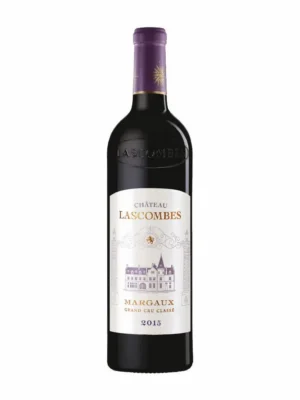
From the 17th century to the present day, ten generations of owners have followed one another and have left their mark on the history of Château Lascombes. A destiny marked by colorful characters who all worked for the excellence of Château Lascombes wines.
An alliance of power and elegance, smoothness and tannic richness, Château Lascombes is a complex wine. Young, its deep robe is still impressive. The palate combines finesse and softness with a grain of very noble tannins. Over the years, you have to rediscover Château Lascombes to fully appreciate its aromatic complexity and see its structure evolve, becoming more and more suave.
Depth, complexity and graceful power characterise this vintage, which reveals all its qualities after long ageing in the bottle. Predominantly Cabernet Sauvignon, it represents the Médoc’s winemaking tradition and embodies the great classicism of Margaux.
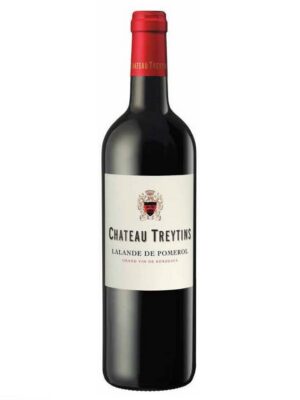
On a vineyard created in the middle of the 19th century by the Count of Kermartin, Léon Nony founded Château Treytins in the 1950s. After his death in 1959, his son Michel and then his grandson Jean-Marc continued his work by developing his vineyards. During the 1990s, the cellars were enlarged and completely renovated to take into account new techniques and the latest knowledge in winemaking and maturing, while respecting traditional achievements. Château Treytins, vinified on the fruit, benefits fully from the temperature regulation in these air-conditioned cellars.
Like all the greatest wines of the appellation, Château Pédesclaux has the complexity that reflects the terroir it springs from. On this mosaic of soils, the clays convey power while the gravels express pure elegance. Pédesclaux embodies the depth that is the quintessence of Pauillac, balanced by a unique sensuality with each vintage, the painstaking work on these excellent plots pays off, while the revolutionary equipment in the winery enables the wine to develop its own unique personality.
Ethereal, fresh, appealing to both the nose and the palate, Pédesclaux’s second wine is a flower that unfurls as you approach. Unusually for Pauillac, the Fleur de Pedesclaux is predominantly made from Merlot along with a dash of Cabernet Sauvignon, Cabernet Franc and Petit Verdot depending on the vintage.
Exhibiting a more high-spirited elegance yet nonetheless showing remarkable length, Fleur de Pédesclaux 2016 is a delight. In this more floral expression, the marvellous complexity of our terroir is once again evident, but in a mouth-watering style that is instantly festive.
Located in the heart of the Haut-Médoc appellation, on the edge of the Saint-Julien appellation, the Château de Camensac covers 75 hectares. Purchased in 2005 by the Merlaut family, he benefits from the experience and know-how of the Château Chasse Spleen team, it regains its glory of 1855, when it was ranked 5th Grand Cru in the Bordeaux classification and its wines renew with the traditional quality of the castle.
La Closerie de Camensac is the second wine of Château de Camensac and it is a cuvée from the young vines which it enjoys the same careful care during the vinification as the great wine.
A wine with a captivating personality, La Closerie de Camensac offers the opportunity to taste a vintage from a Médoc classified vintage at a very affordable price.
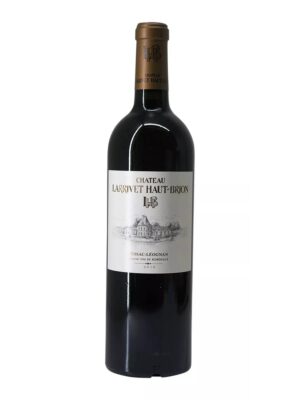
Thanks to the long involvement of generations of the Kressmann family, and the recognition shown in 1953 by the classification of Graves, the wines of Château LaTour-Martillac feature among the best of Pessac-Léognan. The expansion of the range was drawn up by Tristan and Loïc Kressmann. The second wines appeared at the end of the 1980’s under the label Lagrave-Martillac, followed by the Château Langlet, a magnificent property in the Graves appellation, acquired in 1999.
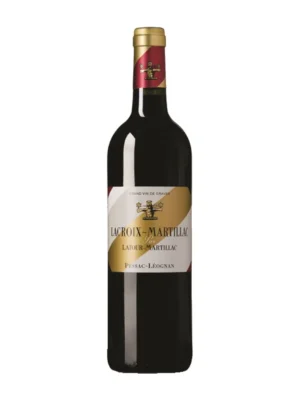
Lacroix-Martillac comes from selected plots at Château LaTour-Martillac, highlighting the Merlot in the red wines blending.
With each new vintage, the Kressmann family strive to achieve in these wines the best from this true Graves terroir by prioritising a quality yield, in keeping with traditional viticulture practices.
For more info, visit Château LaTour-Martillacwebsite.
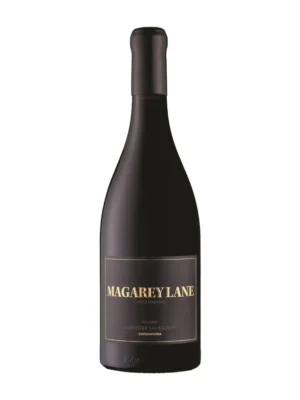
Magarey Lane offers a selection of premium wines from the Coonawarra & Limestone Coast. The Magarey Lane vineyard, planted in 1989, has supplied grapes to many famous brands such as Reschke, and over the past 30 years, the largely unirrigated vines have matured and are producing wonderfully ripe and concentrated wines.
Vines for this bottling are 30 years old, from Terra Rossa soils and destemmed berries, offers this impressively composed and styled wine.
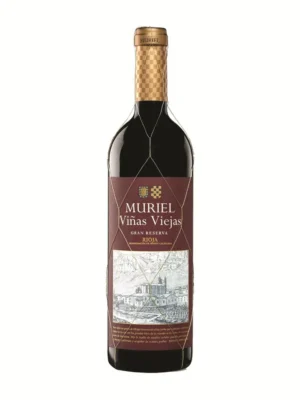
Muriel Wines was created as a family business with strong links to its place of origin. Today, it has become a large global company with an important part of its business dedicated to exports. But it remains very connected to its roots: one foot in the vineyard and the other in the rest of the world.
Made from vineyards in the heart of Rioja Alavesa and select areas of Rioja Alta, these old vines are cultivated using the traditional goblet-training system. Giving the greatest prominence to the DOCa Rioja’s star variety and following the traditional guidelines that have made it so well known, Muriel Gran Reserva Viña Viejas is a classic to enjoy the expertise of this community that is so attached to their land.
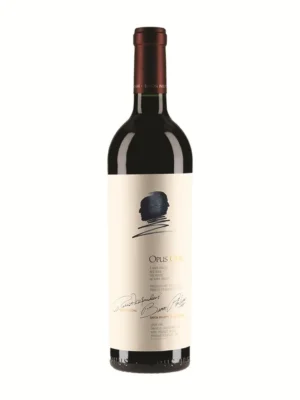
Opus One is the realized dream of two men: Baron Philippe de Rothschild of Chateau Mouton Rothschild in Bordeaux and Napa Valley vintner Robert Mondavi. Together, our founders set out to create a single wine dedicated to the pursuit of uncompromising quality. This singular mission shapes every vintage, today and for generations to come.
The “Opus One” is the result of a careful selection of the best Cabernet Sauvignon bunches, which are combined with small percentages of other varieties of Bordeaux origin. It matures in new oak barrels for about 17 months. The result is a red wine of incredible depth and elegance. Long and enveloping, it probably represents the best that California wine has been able to express for decades.
Tied to the Seigneuries of Lafite and Mouton (future First Classified Growths belonging to two different branches of the Rothschild family), Château Clerc Milon derives its name from its historic owners, the Clerc family, who acquired it when it was sold as a national asset after the French Revolution.
Living testimony to the considerable improvements in quality achieved at the property since the arrival of Baron Philippe and his descendants, Château Clerc Milon now has a second wine. Pastourelle de Clerc Milon has joined the dance and already accomplished its first very confident steps in the company of fine Pauillac wines. Its name comes from a traditional dance, the pastourelle, which evokes a knight’s romantic encounter with a shepherdess: the name echoes the pair of dancers that adorn the label of the Grand Vin. Made of gold, enamel and pearls, this precious miniature from the Museum of Wine in Art at Château Mouton Rothschild belonged to Catherine II, the empress of Russia, and is inspired by characters of the Commedia dell’Arte. Baroness Philippine de Rothschild chose it as the Clerc Milon emblem because of her love of the theatre.
2012 was a year of contrasts. The conditions of the vintage favoured superb expression of the Merlot, here mostly planted on clay-limestone parcels.
Rocca delle Macìe was established in 1973, when Italo Zingarelli, a film-maker, producer and director, decided to realize his lifelong dream by acquiring the “Le Macìe” estate, in order to create a winery in the heart of the Chianti Classico zone and to produce wines that, thanks to their balance between the tannic structure, fruit and pleasantness, can be appreciated by young people and wines that are able to give over the years a great evolution.
Italo’s children, Fabio, Sandra and Sergio, dedicate to their father a limited-edition Magnum of Chianti Classico Gran Selezione, the apex of the estate’s production, donning a label in tribute to “They Call Me Trinity”. This special magnum represents the completion of a journey begun 50 years ago, when Italo (Roman by birth) fell deeply in love with the hills of Castellina in Chianti.